Multipitch Atlas

Méduse

Barberine (Vallorcine) · Chamonix valley · France

Easy to bailBolting confidence: high

A direct line up the big south-facing slabs of Barberine: three pitches of friction slab to warm up, then steeper, technical walls on small holds. The two top pitches are graded 6b+ and 6c+ if you step round the bolts and 7a if you climb straight up them; 6c is obligatory.

The Barberine wall with the line of Méduse drawn in redPhoto: Stéphane · CC BY-NC-ND 3.0

Photo

The Barberine wall with the line of Méduse drawn in redPhoto: Stéphane · CC BY-NC-ND 3.0
Hardest pitch
7a
Pitches
7
Length
230 m
Approach
20 min
Aspect
S
South-facing
Rope
2×50 m

The route

Overview

Méduse starts from the ledge that crosses the Barberine wall above its lower slabs and climbs seven pitches almost in a straight line. The first three are slabby and friendly; from pitch 4 the wall steepens and the climbing becomes fingery and intense, with a short athletic passage on crimps and two long top pitches whose cruxes come late. Parties rate it among the best routes on the crag, with reliable bolting and a safe abseil descent. The obligatory grade is 6c, so this is not a route to aid your way up.

The climbing

Pitch by pitch

Pitches of Méduse
PitchGradeLengthNotes
P16b15 mHard only at the start; a little reachy.
P26a+35 mFairly sustained slab climbing with several moves that are not obvious.
P36b40 mSteeper and more varied, still with some slab moves. At the top do not go to the obvious belay: follow the ledge right to a belay below a big steep wall.
P46c20 mA short athletic passage, then crimps, early in the pitch. Not easy to read on sight; reports say moving right finds good edges, an undercling and a jug.
P55c15 mA short link pitch. Some parties join it to pitch 4 with slings and extended quickdraws.
P66b+45 mEasy to start. Where the rock steepens and turns orange, clip one more bolt, then pass left of the bolts to keep it at 6b+ (straight up is 7a). The technical crux on small holds comes after.
P76c+35 mA fine corner, then a steep slab. At the foot of the vertical wall traverse right to good side-pulls and come back into the line (straight up is 7a). The crux is higher, slightly left, on small holds; 6c is obligatory. Camptocamp grades the pitch 6c/6c+.

Getting there

Approach

To the parking

Barberine is a hamlet of Vallorcine, 400 m before the Le Châtelard border post on the road from Chamonix. Turn left (north), drive down and park at the end of the descent before the bridge (about 15 to 20 spaces); the road beyond is for residents only. By train, the Mont-Blanc Express stops at Le Châtelard-Frontière, from where you walk to the hamlet.

On foot · about 20 min

From the top of the hamlet take a path on the right towards the cliff and cross a footbridge; paths then fan out to the different sectors, 10 to 20 min in all. For Méduse go as for Vipère au pied. Either climb two easy slab pitches (about 5c, 80 m, often done moving together) or take the fixed ropes and cable from the right to reach the intermediate ledge. Follow the handrail to its end, continue about 20 m, climb 2 m with a fixed rope, and the start is on the left: two grey Fixe bolts in sound rock beside a tree, the right-hand line. A route to the left has the same grey bolts; it is not Méduse. Parties in 2026 found the access not obvious.

Finding the route · 2 photos

Approach photo

Map of the walk-in

  • Crag
  • Parking

Loading map

The point marks the crag, not the exact start of the route.

Coordinates · crag

46.05347, 6.94289

Parking

46.05027, 6.94166

Barberine (camptocamp waypoint 104221)

Point from camptocamp waypoint 41521

For your phone or watch

Download GPX

Contains the route point and parking. Opens in most mapping apps and GPS watches.

Points are compiled from published sources, with the precision stated above. They were not surveyed on the ground: check them against a current topo.

Getting down

Descent

Abseil the route, which is fully equipped for it; a 2025 party calls the abseils safe. Alternatively walk down by the path that climbs to Giétroz, going right at the top; one 2026 party did this.

Retreat

Bailing off the route

Easy to bail

The route is fully equipped for abseiling and that is the usual descent, so you can retreat from any belay with two 50 m ropes. From the starting ledge you return along the handrail and fixed ropes, or abseil the lower slabs.

Retreat from
Any belay.
Point of no return
None.
Carry
2×50 m ropes; the longest pitch is 45 m.
Basis
Stated in the sourcesCamptocamp states the route is fully equipped for abseil; Gulliver states chained belays with maillons and two 50 m ropes.

Safety

Hazards

  • The grades in the upper half are stiff according to several parties, and the last pitch has an obligatory 6c section.
  • A leader fell at the mantel on pitch 4 in 2025 and warned of the landing.
  • Finding the start from the ledge takes care; an adjacent route has identical bolts.

Sun and weather

Conditions

South-facing, with the base at about 1200 m. Reports run from April to October, and several from late May and September complain of heat, so spring and autumn are the best times.

Usual season · Apr to Jun, Sep to Oct

Sun on the wall · S-facing

Working out the sunlit hours for this month.

  • January: not yet worked out
  • February: not yet worked out
  • March: not yet worked out
  • April (usual season): not yet worked out
  • May (usual season): not yet worked out
  • June (usual season): not yet worked out
  • July: not yet worked out
  • August: not yet worked out
  • September (usual season): not yet worked out
  • October (usual season): not yet worked out
  • November: not yet worked out
  • December: not yet worked out

Sun on the wallDaylight, wall in shade● Usual season

Estimated from the wall's aspect only. Ignores surrounding terrain, gullies and the wall's exact shape. Clock times are local to the wall (Central European time), for the 15th of each month.

Climate figures for Chamonix valley are not available yet

What to carry

Gear

13 quickdraws on camptocamp; Gulliver says 14 and a 2026 party suggests about 15 with five extendable. Two 50 m ropes for the abseils. Helmet.

Checklist

Quickdraws
13
Rope
2×50 m
Helmet
One each
Abseil device and prusik
The descent or the retreat involves abseiling

Derived from the route data; check it against a current topo

From climbers

Reader reports

Reader reports are not being collected yet. Until they are, check a current topo and the local club or guidebook publisher for recent changes to Méduse.

Worth knowing

Tips

  • Allow 5 to 6 hours for a relaxed ascent.
  • The first three slab pitches are gentle for the grade and good for settling in.
  • Take long slings for pitches 4 to 6 to control rope drag.

Open questions

Where sources disagree

  • Overall grade: camptocamp and Gulliver both headline 7a, but camptocamp's pitch list tops out at 6c/6c+ if you avoid the two direct 7a passages. The pitch grades here follow camptocamp. Obligatory grade is 6c on camptocamp and 6b on Gulliver.
  • Pitch count: camptocamp lists 7 pitches from the ledge; Gulliver counts 9 by including two approach pitches (6a+, 6a) and grades the two top pitches 7a.
  • Length: 230 m on camptocamp (pitch lengths add to 205 m); 300 m on Gulliver including the lower slabs.
  • Rock: camptocamp's crag page speaks of granite; the wall is generally described as gneiss.

Provenance

Sources

Same area

More in Chamonix valley

All routes in Chamonix valley
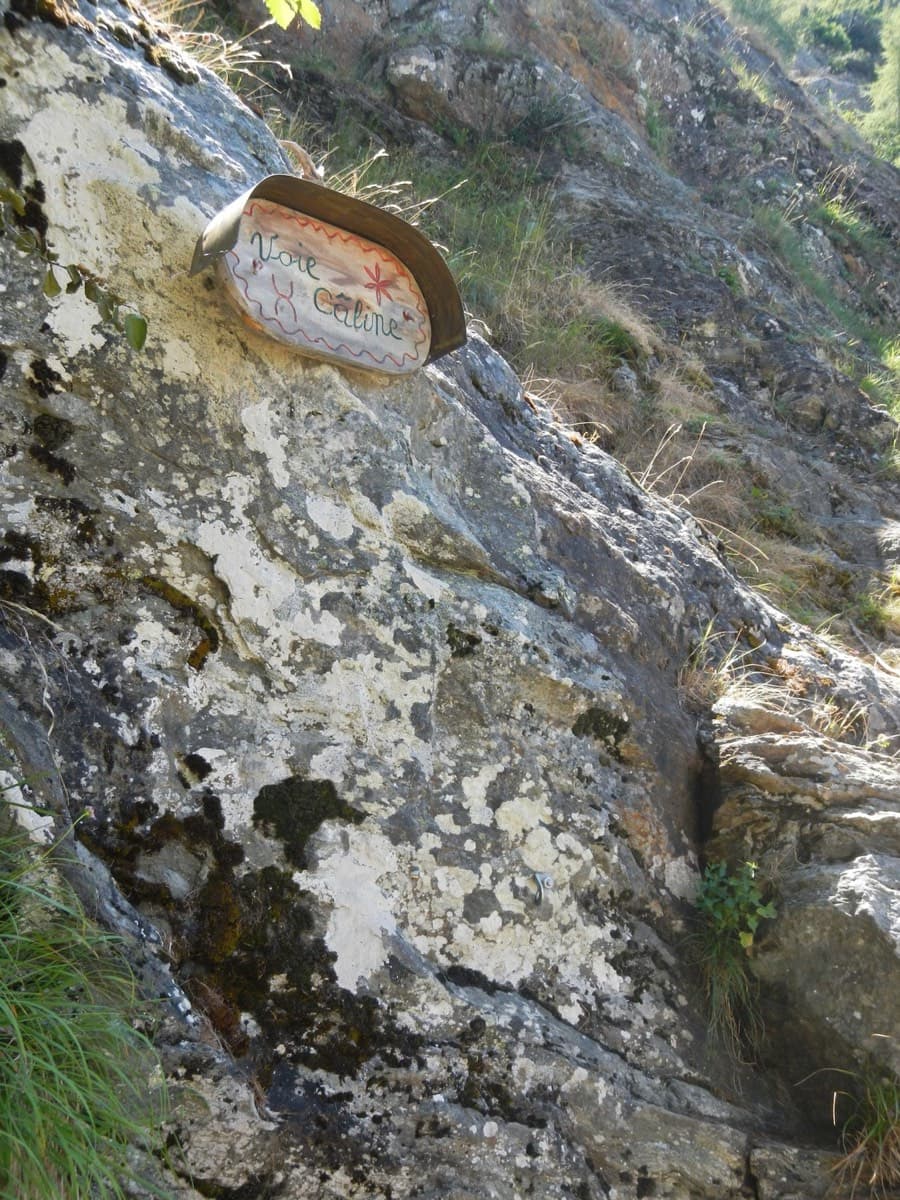
The painted sign marking the start of the Voie Câline on the Rocher des Mottets

France · Chamonix valley

Voie Câline

Nineteen very short pitches of easy slab above Les Bois, never harder than 4b and bolted like a climbing school. It is the standard first multipitch of the Chamonix valley, long enough to feel like a real outing and finishing at a mountain café with a view of the Mer de Glace.

4b19 pitches260 m
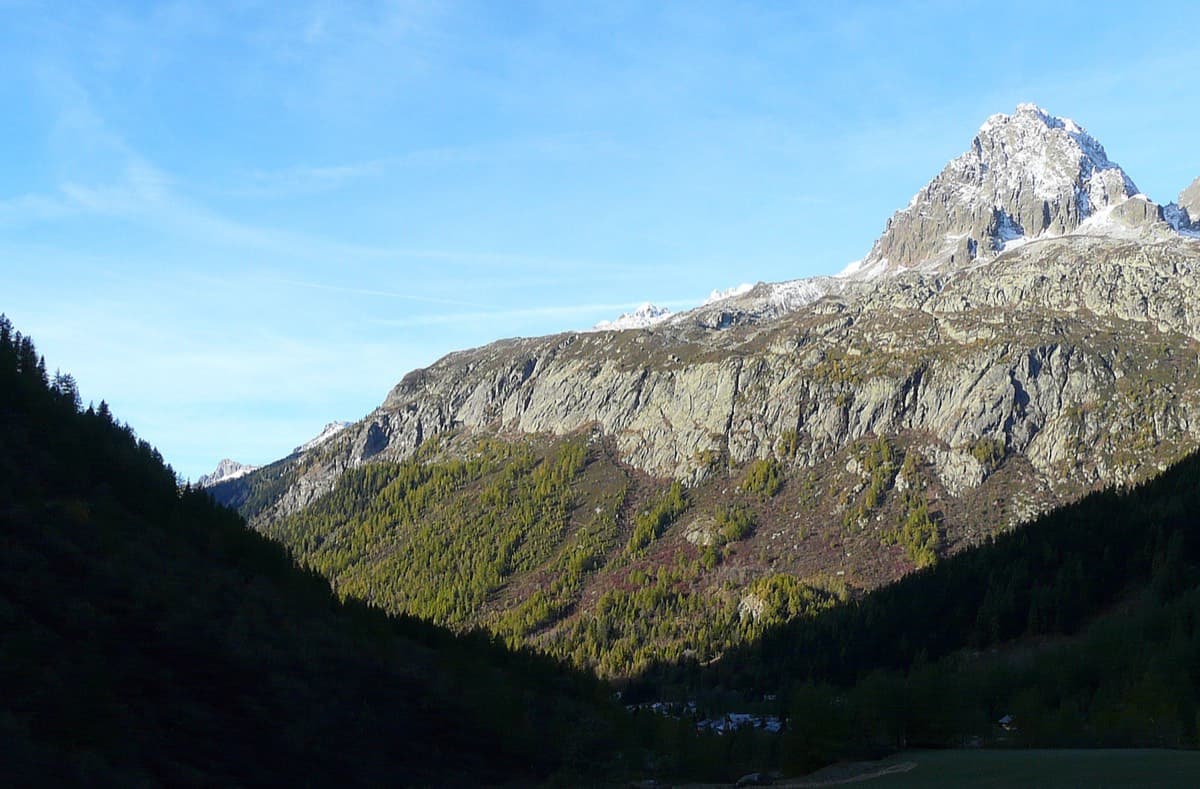
The Chéserys slabs above the forest, below the Aiguilles Rouges

France · Chamonix valley

Voie Jaune

A short, friendly slab route on the sunny gneiss of the Chéserys, facing the Mont Blanc range. Five pitches with one vertical step of 4c, chain belays and an abseil descent make it a standard introduction to multipitch climbing.

4c5 pitches150 m

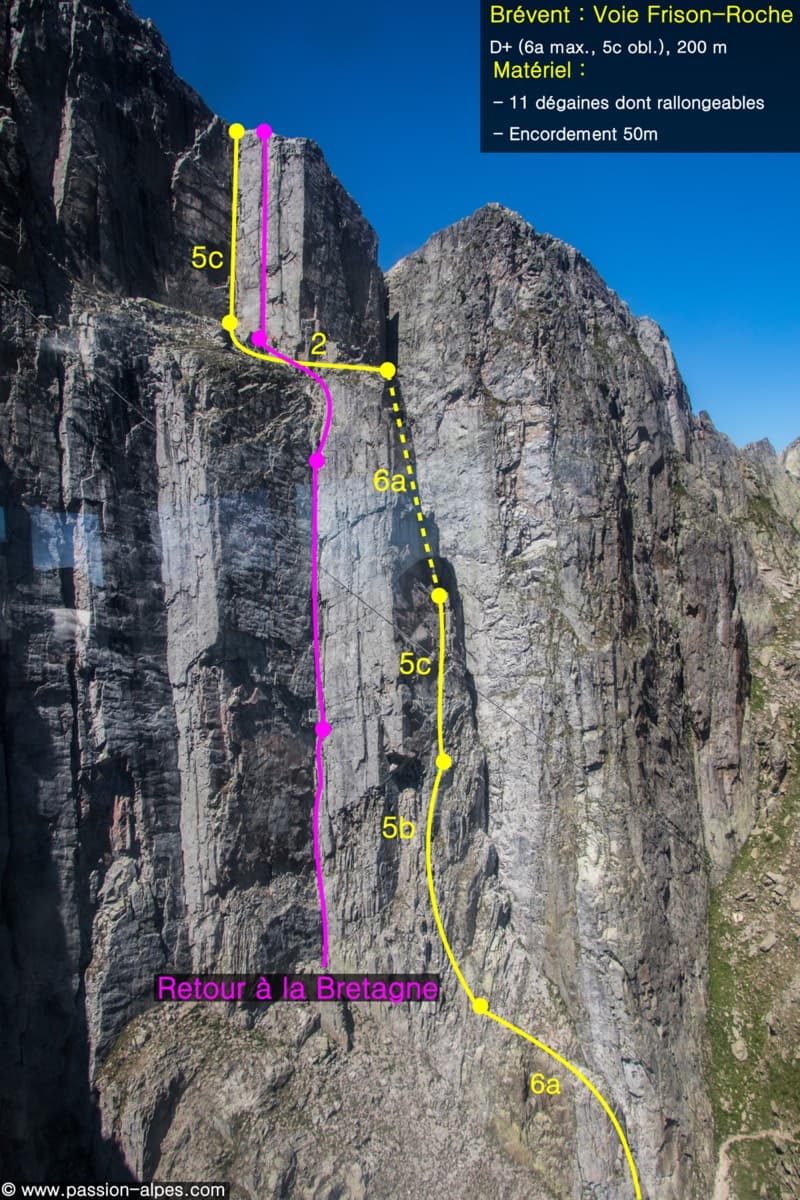
Photo-topo of the Voie Frison-Roche on the Brévent (yellow line), with the neighbouring Retour à la Bretagne

France · Chamonix valley

Voie Frison-Roche

The great classic of the Aiguilles Rouges: six varied pitches of gneiss, ten minutes downhill from the Brévent cable car and finishing at its top station, with Mont Blanc opposite. The crux is a short, physical corner crack and the last pitch is a long, clean corner. It is extremely popular.

6a+6 pitches200 m

Around 7a · about 7 pitches

Similar elsewhere

The start of Alfredo Alfredo at the foot of the east face of Monte Oddeu

Italy · Sardinia

Alfredo Alfredo

Two pitches of bridging up a 60 m corner hung with tufas and stalactites (6c+, 6c), then grey water-drop walls and a short roof at 7a that goes in three moves of aid. Seven pitches of varied climbing on perfect, unpolished rock.

7a7 pitches220 m

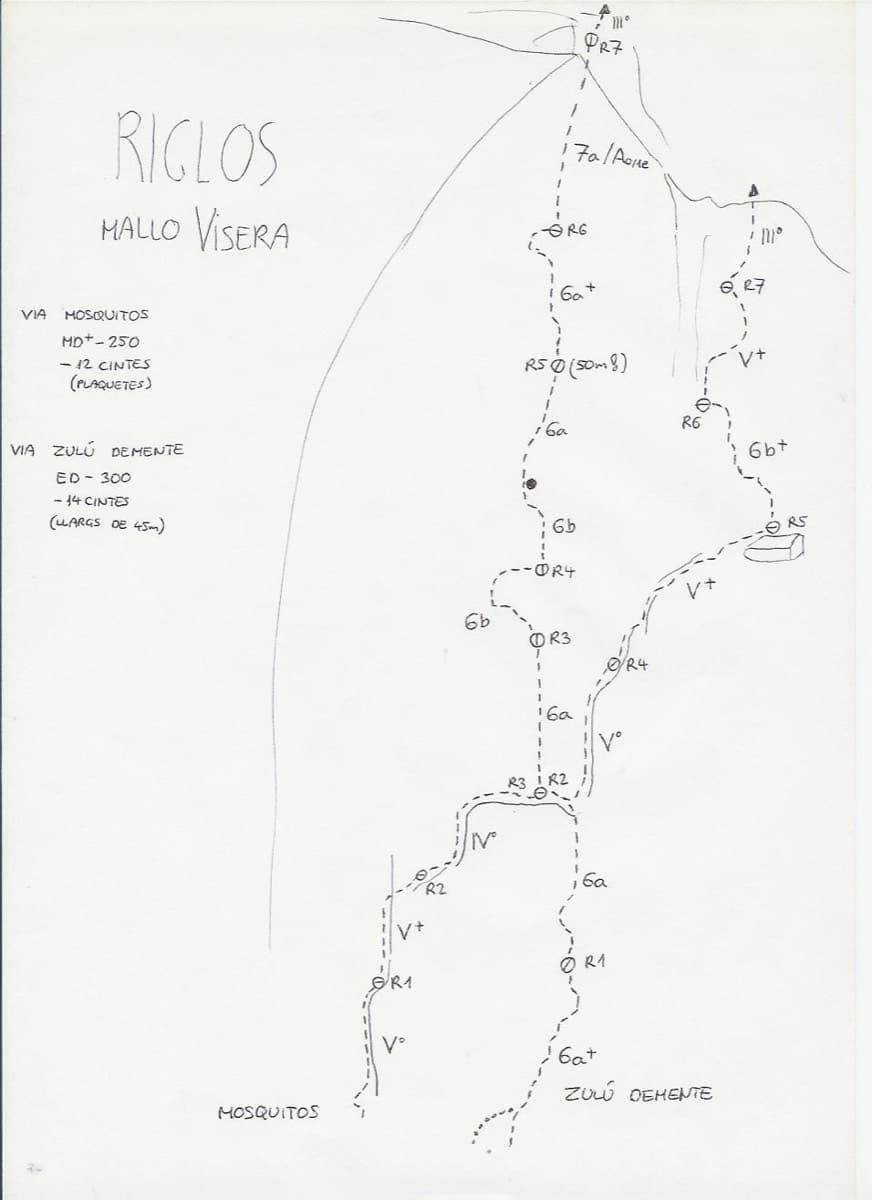
Hand-drawn topo of the Visera at Riglos showing Zulú Demente (right) and Moskitos (left)

Spain · Riglos & Agüero (Mallos)

Zulú Demente

The other great line of the Visera, on a concave wall that leans further out the higher you go. Six pitches at 6a to 6b on big cobbles lead to the vulture ledge, then one short, very overhanging crux pitch above enormous exposure. That last pitch is about 7a free, or roughly 6b to 6c with rests on its closely spaced bolts.

7a7 pitches250 m

Read the cautionsCommitting

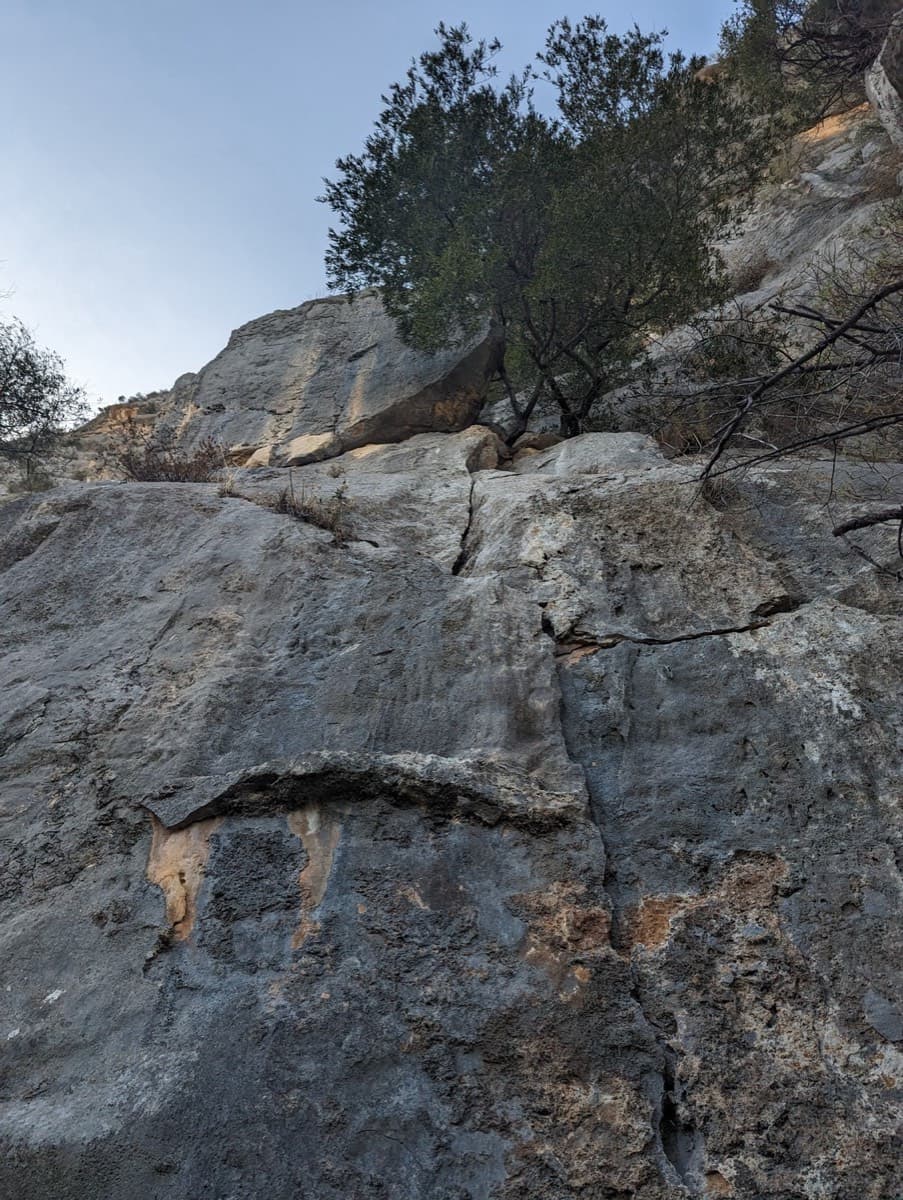
Looking up pitch 2 (7a) of Jardins secrets from the first belay on the Grande Face of the Baou de Saint-Jeannet

France · Baou de Saint-Jeannet

Jardins secrets

One of the essential long routes of the Baou: seven pitches that hardly drop below the sixth grade, each with a different problem, from thin slab to a steep bulge and a superb layback corner at 6c. The single 7a section on pitch 2 is closely bolted and can be aided. Expect a few loose blocks and a scrappy link pitch across the Vernet ledge.

7a7 pitches200 m

Read the cautions

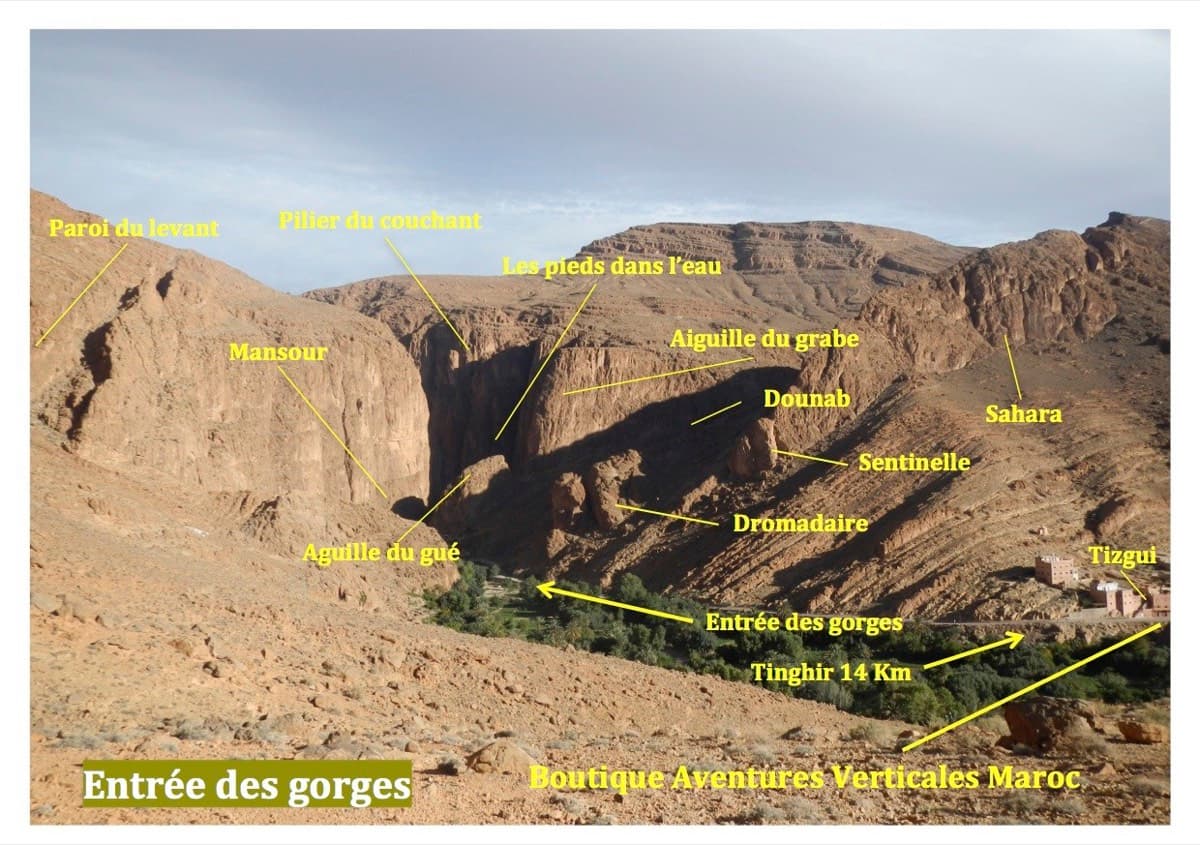
The entrance to the Todra Gorge with the Mansour wall labelled; China Perdida is on its right-hand part

Morocco · Todra Gorge (Todgha)

China Perdida

Steep, fingery wall climbing that starts with your feet almost in the stream at the gorge entrance. The 7a second pitch is hard for only 2 to 3 metres and can be swapped for a 6b pitch on the neighbouring route, after which three pitches of 6b+ to 6c+ on pocketed and edgy rock lead to the top. Abseil descent.

7a6 pitches200 m

Read the cautions

Compiled from published sources and last verified October 2026. Bolts, anchors and access change. Climbing is dangerous and you are responsible for your own decisions: check a current topo and read the disclaimer.