Multipitch Atlas

Vía del Bolo

Mallo Cored, Riglos · Riglos & Agüero (Mallos) · Spain

Read the cautionsBail with caveatsBolting confidence: medium

An arm-pumping 6a to start and a superb 6a to finish, with easier ground between. Skip the bolt-and-thread stance under the overhang on pitch 4 and belay 5 m higher.

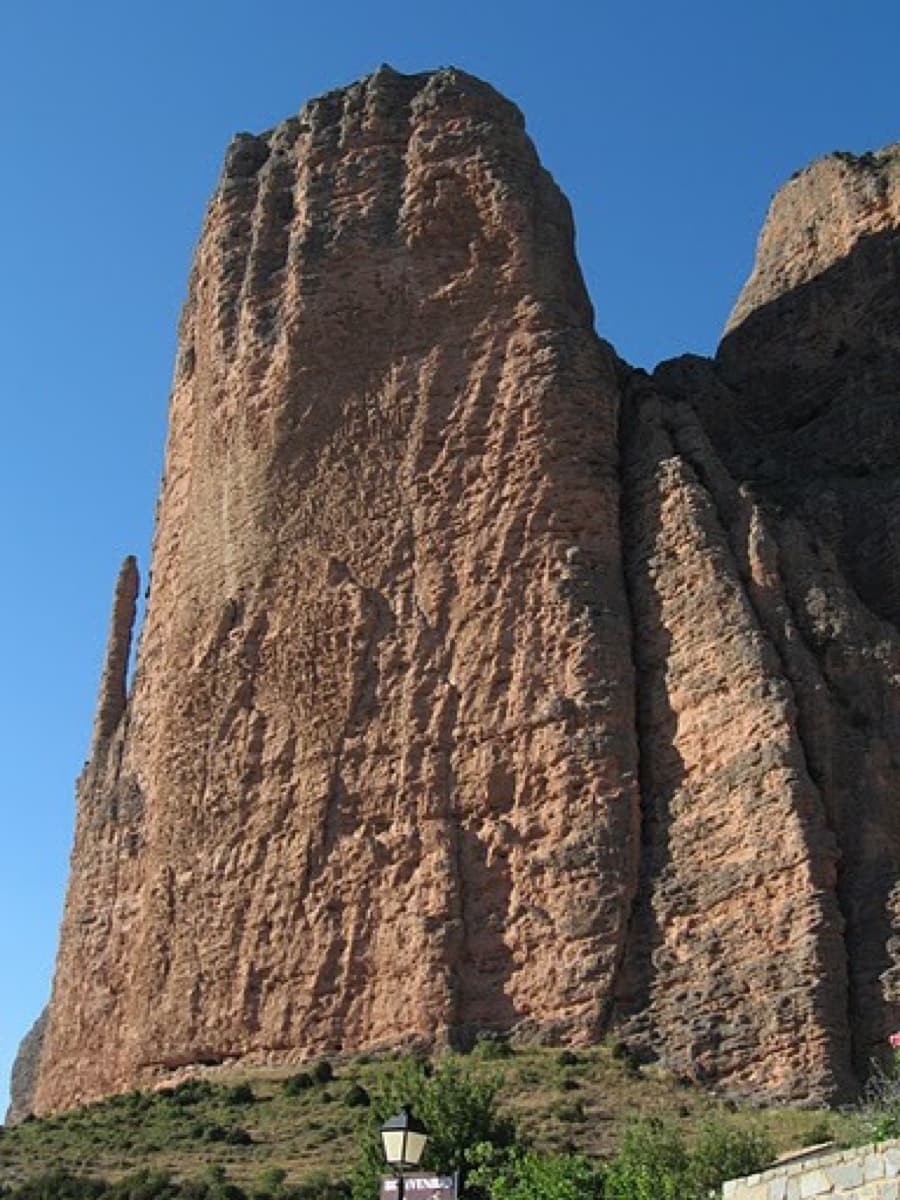
Mallo Cored (centre) with the Aguja Roja to its right, RiglosPhoto: Decôme · CC BY-NC-ND 3.0

Photo

Mallo Cored (centre) with the Aguja Roja to its right, RiglosPhoto: Decôme · CC BY-NC-ND 3.0
Hardest pitch
6a
Pitches
5
Length
125 m
Approach
20 min
Aspect
W
West-facing
Rope
2×60 m
Read before you go

Fully bolted, but the R3 belay was reported damaged in November 2025, belays are unchained, the abseil descent is stonefall-prone and the face has had a spring nesting ban.

The route

Overview

A five-pitch bolted route on the west face of Mallo Cored, one of the small mallos to the right of the main Riglos towers. It starts over the huge cobble (the 'bolo') set in the wall, with a short, steep, arm-pumping first pitch that is the hardest of the route, then eases to grade 5 before a steep 6a finish on good holds. Climbing is vertical and sustained at 5/6a and, according to trip reports, not polished. It is a short outing, but the unchained belays, a damaged third belay and a stonefall-prone abseil descent make it feel more serious than its length suggests.

The climbing

Pitch by pitch

Pitches of Vía del Bolo
PitchGradeLengthNotes
P16a15 mClimb onto the big cobble, then a short overhang that pulls hard on the arms, and exit left. The belay is slightly left. This is the hardest pitch; one Spanish source gives it 6a+ or V+/A0.
P25c20 mV+ in the Spanish sources. A wall on good holds, then a wide corner, skirting round to the left. There is a delicate move just below the belay.
P35b20 mGrade V. Leave the belay leftwards, then straight up on easier but somewhat loose ground. In November 2025 the R3 belay was reported damaged: one hanger backed up by a piece of rope jammed in the rock.
P45b35 mGrade V. Sustained climbing on good holds, rated the best pitch by one source. Do not stop at the first stance (one bolt plus a thread) under the overhang. Continue about 5 m higher and belay on the wide ledge above the shoulder, at the start of pitch 5.
P56a35 mStraight up a steep to overhanging wall on good holds, then easy ground (about grade II, walking) to the summit. Belay at a juniper.

Getting there

Approach

To the parking

Base is Riglos (Huesca). One source parks at the 'Arcaz' interpretation centre and the Riglos cemetery, reached by a road that turns off to the right two bends before the village. No public transport details were found in the sources read.

On foot · about 20 min

About 20 min. From the interpretation centre car park, take the track east for about 100 m, turn right at the crossing, keep left at the next fork, pass a pond and join another track going right. After roughly 400 m, take the path on the left (north, marked by a cairn); at the next fork go left to the foot of the west face. Camptocamp describes the same ground from the village: follow the GR1 out of Riglos past the water reservoir and take the second path on the left, the one after Mallo Cored. The route starts at an enormous cobble embedded in the wall. In October 2023 a sling with the route name hung from the first hanger. The Oeste Clásica (1955) chimney line is just to the left.

Finding the route · 1 photo

Approach photo

Map of the walk-in

  • Crag

Loading map

The point marks the crag, not the exact start of the route.

Coordinates · crag

42.34531, -0.71532

Point from camptocamp route 1335149

For your phone or watch

Download GPX

Contains the route point. Opens in most mapping apps and GPS watches.

Points are compiled from published sources, with the precision stated above. They were not surveyed on the ground: check them against a current topo.

Getting down

Descent

By abseil down the east side. From the top, walk along the summit ridge to its far end and find a juniper with a cable and ring, slightly below the crest on the right. Abseil about 55 to 60 m in one go, or 35 m then 25 m using an intermediate anchor at a tree. Camptocamp says you then clip into a handrail it calls dangerous for two sections of about 10 m. The other source describes following the foot of the wall north to the gully between Mallo Cored and Mallo Carilla, where a further anchor gives a 25 m abseil to the base of the west face, and a small path leads back to the start. Camptocamp also mentions an alternative 50 m abseil down the north-east face. One party took 1 h 30 for the abseil and walk down.

Retreat

Bailing off the route

Bail with caveats

Retreat is possible but you would be leaving gear. Camptocamp says the belays are not chained, the normal descent is from the summit down the far side of the mallo, and belay 3 was reported in November 2025 as a single hanger backed up by a piece of rope jammed in the rock. No source describes anyone abseiling the route itself.

Retreat from
The first three belays are low: about 15 m, 35 m and 55 m up by the published pitch lengths, so belays 1 and 2 are within a single abseil of the ground on two ropes (inference). Belay 3 is the damaged one and should not be trusted alone. The pitch 4 belay is on a wide ledge above the shoulder.
Point of no return
None is documented. From the ledge at the top of pitch 4 one 35 m pitch (6a, then walking) leads to the summit and the standard abseil, and retreating would mean passing the damaged belay 3, so going up is likely the better choice from there (inference).
Carry
2×60 m, which you need for the normal 55 to 60 m summit abseil anyway. Cord and two maillons or karabiners per belay; extra to reinforce belay 3.
Basis
Part stated, part inferredCamptocamp states the belays are unchained and a November 2025 report describes the damaged R3; no source covers retreat, so the heights and the advice about pitch 4 are inferred from the pitch lengths.

Partly inferred from the route facts

Safety

Hazards

  • R3 was reported in November 2025 as apparently ripped out: the belay was a single hanger joined to a piece of rope jammed in the rock as the second point. The report says it is hard to belay anywhere else, so do not miss it and be ready to reinforce it.
  • Belays are not chained.
  • Stonefall on the descent: the crag page says the east-face abseil sector is not cleaned and sends stones down very easily; the route page also warns of falling stones.
  • The handrail below the first abseil is described on Camptocamp as dangerous.
  • The Camptocamp crag page records a climbing ban in spring 2022 because of nesting on the two west-face routes. Check for current restrictions before going in spring.
  • Some loose rock, mainly on pitch 3; one source advises checking holds in places.
  • The crag page notes that bolting on Mallo Cored's 'equipped' routes can be spaced, although trip reports for this route call it well or very well equipped.

Sun and weather

Conditions

West face: shade in the morning, sun in the afternoon. The Camptocamp crag page lists April to June and September to October as the best period. A November party found it cold in the wind despite blue sky.

Usual season · Feb to May, Oct to Dec

Sun on the wall · W-facing

Working out the sunlit hours for this month.

  • January: not yet worked out
  • February (usual season): not yet worked out
  • March (usual season): not yet worked out
  • April (usual season): not yet worked out
  • May (usual season): not yet worked out
  • June: not yet worked out
  • July: not yet worked out
  • August: not yet worked out
  • September: not yet worked out
  • October (usual season): not yet worked out
  • November (usual season): not yet worked out
  • December (usual season): not yet worked out

Sun on the wallDaylight, wall in shade● Usual season

Estimated from the wall's aspect only. Ignores surrounding terrain, gullies and the wall's exact shape. Clock times are local to the wall (Central European time), for the 15th of each month.

Monthly climate averages for Riglos & Agüero (Mallos), 1991-2020
MeasureJanFeb (usual season)Mar (usual season)Apr (usual season)May (usual season)JunJulAugSepOct (usual season)Nov (usual season)Dec (usual season)
Mean daily high °C9101416202629292418129
Mean daily low °C1135913161612942
Rain days 1 mm or more97910107678998

● marks the usual climbing season. Averages for 1991-2020 at about 612 m. Area climate from Open-Meteo reanalysis. Temperatures are adjusted to the height of the crag; rain comes from a grid cell of about 10 to 25 km, and summer highs on sea cliffs can read a few degrees low. The wall and valley can differ. Data: Open-Meteo, CC BY 4.0.

What to carry

Gear

Two 60 m ropes for the single long abseil; a single rope only works if you split the abseil at the tree anchor (35 m + 25 m per one source; the neighbouring route's page says 70 m single, with the second abseil on one point). 14 to 15 quickdraws. Slings or cord to link the belays, which are not chained. Helmet.

Checklist

Quickdraws
14
Rope
2×60 m
Helmet
One each
Abseil device and prusik
The descent or the retreat involves abseiling
Maillons or spare karabiners
To leave behind if you retreat
Cord
Mentioned for retreat

Derived from the route data; check it against a current topo

From climbers

Reader reports

Reader reports are not being collected yet. Until they are, check a current topo and the local club or guidebook publisher for recent changes to Vía del Bolo.

Worth knowing

Tips

  • Run pitch 4 past the bolt-and-thread stance under the overhang and belay on the big ledge 5 m higher.
  • One party climbed it on a single 70 m rope with a beginner in 4 h; another took 3 h 30.
  • The first pitch is the crux and can be aided (V+/A0 according to one source).

Open questions

Where sources disagree

  • Pitch 1 is 6a on Camptocamp and 6a+ (V+/A0) on the Costra y Pus blog. Trip reports agree it is the hardest pitch. The 6a grade is kept here, but expect a stiff start.
  • Quickdraws: 14 (Camptocamp) versus 15 (Costra y Pus).
  • Descent: Camptocamp gives a 55 m abseil then a handrail; Costra y Pus gives 60 m (or 35 + 25 m) then a further 25 m abseil in the gully north of the mallo; the crag page says a 60 m abseil then walk down a stony gully. The lines appear to be the same first abseil with different ways off the terrace.

Provenance

Sources

Same area

More in Riglos & Agüero (Mallos)

All routes in Riglos & Agüero (Mallos)
The Adamelo spur on Mallo Pisón, Riglos

Spain · Riglos & Agüero (Mallos)

Espolón del Adamelo

This is the gentlest way to sample Riglos. Polished pockets and two bulging 'panzas' lead to a 6a crux that can be pulled through on the bolts (A0). The upper spur is easy, and the Pisón towers loom close by.

6a7 pitches175 m

Read the cautions
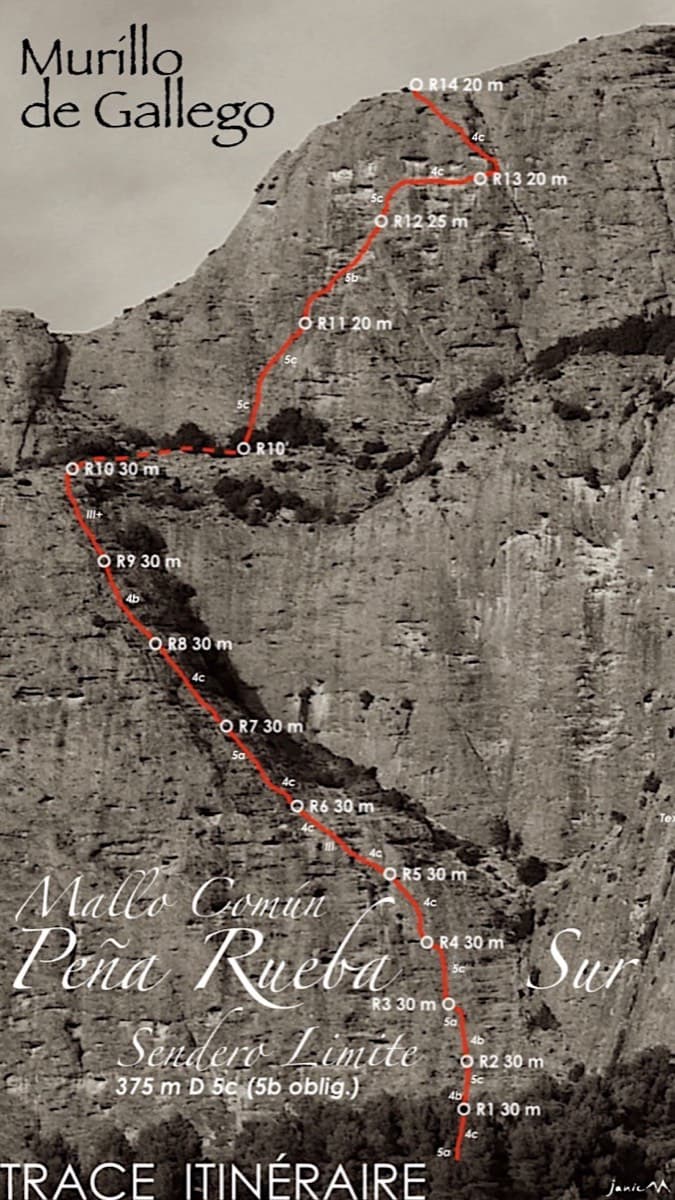
Topo of Sendero Límite on the south face of Peña Rueba (Mallo Común)

Spain · Riglos & Agüero (Mallos)

Sendero Límite

A long beginner's big route on good conglomerate at a moderate angle. Pitches can be linked in pairs with a 60 m rope. A four-pitch headwall with a couple of panzas finishes high above the Gállego valley.

5c14 pitches375 m

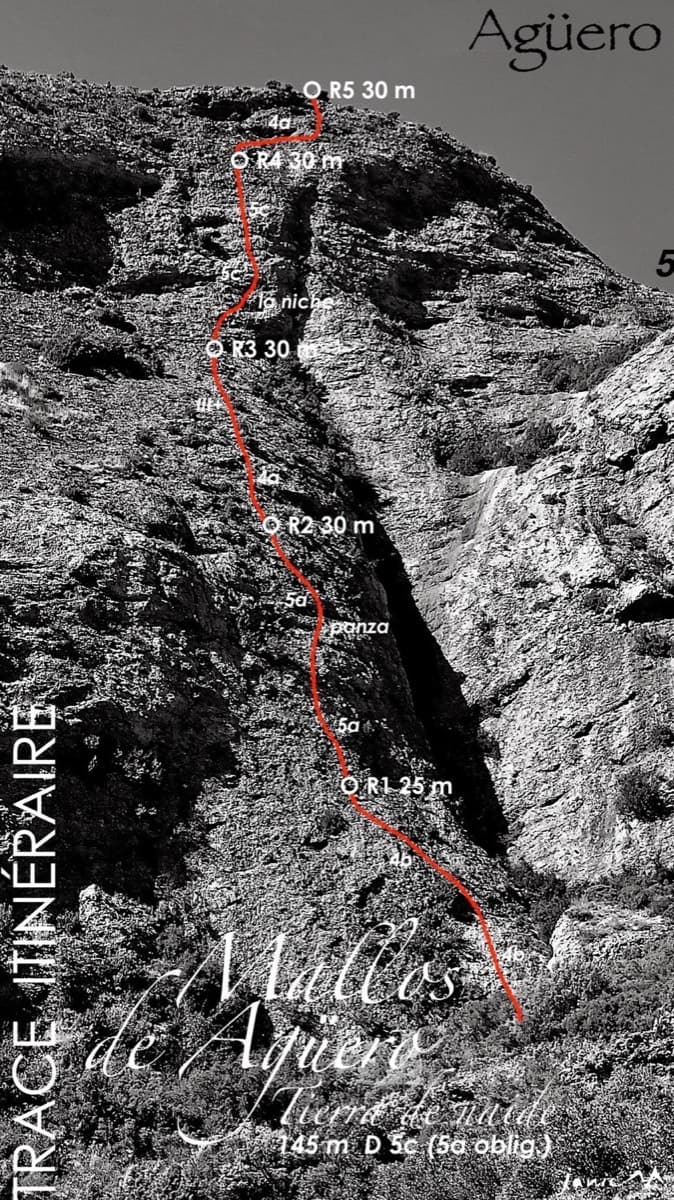
Topo of Tierra de Naide, Mallos de Agüero

Spain · Riglos & Agüero (Mallos)

Tierra de Naide

A morning-sun route at the quieter Agüero mallos. Easy slabs separate two fine steep walls, including a superb vertical 5c plaque on pitch 4. Take care with some loose cobbles on the last traverse.

5c5 pitches145 m

Around 6a · about 5 pitches

Similar elsewhere

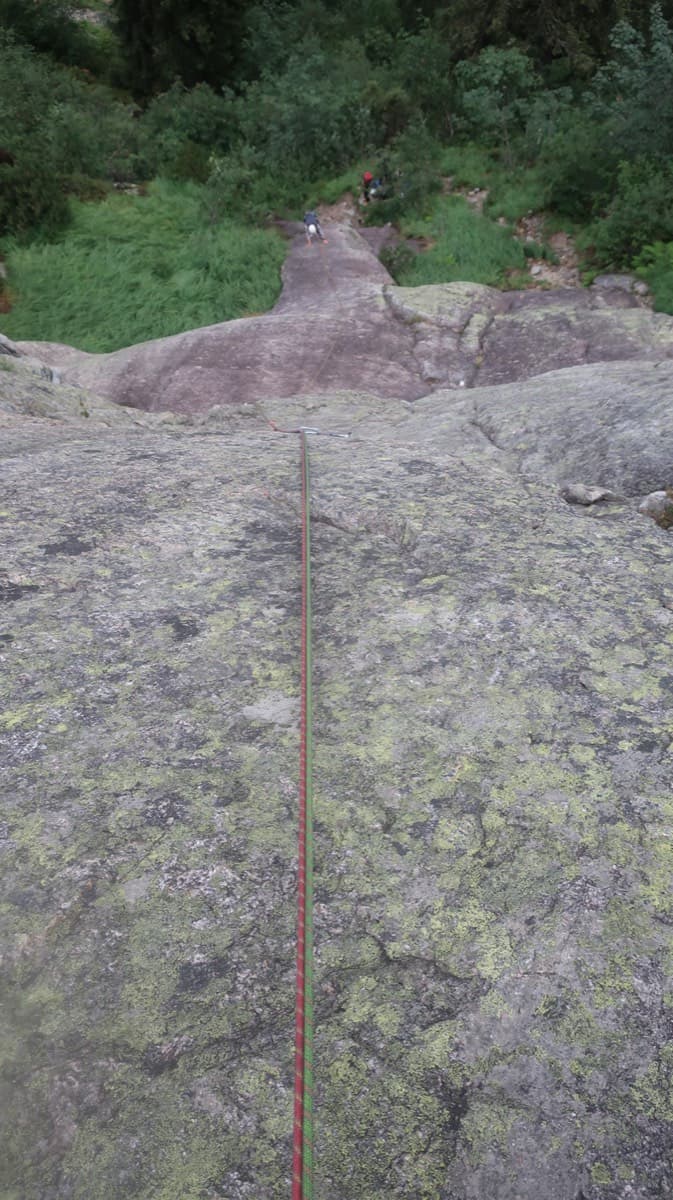
Looking down the lichen-covered granite slab of Bügeleisen towards the forest at Handegg

Switzerland · Grimsel

Bügeleisen

A short, varied granite route up a pale, smooth pillar across the valley from the Handegg slabs: a corner crack, then friction and edge slabs that get harder pitch by pitch. Grades are stiff, and the last pitch is sustained and tricky. A good half day or uncertain-weather route with a 15-minute approach.

6a5 pitches200 m

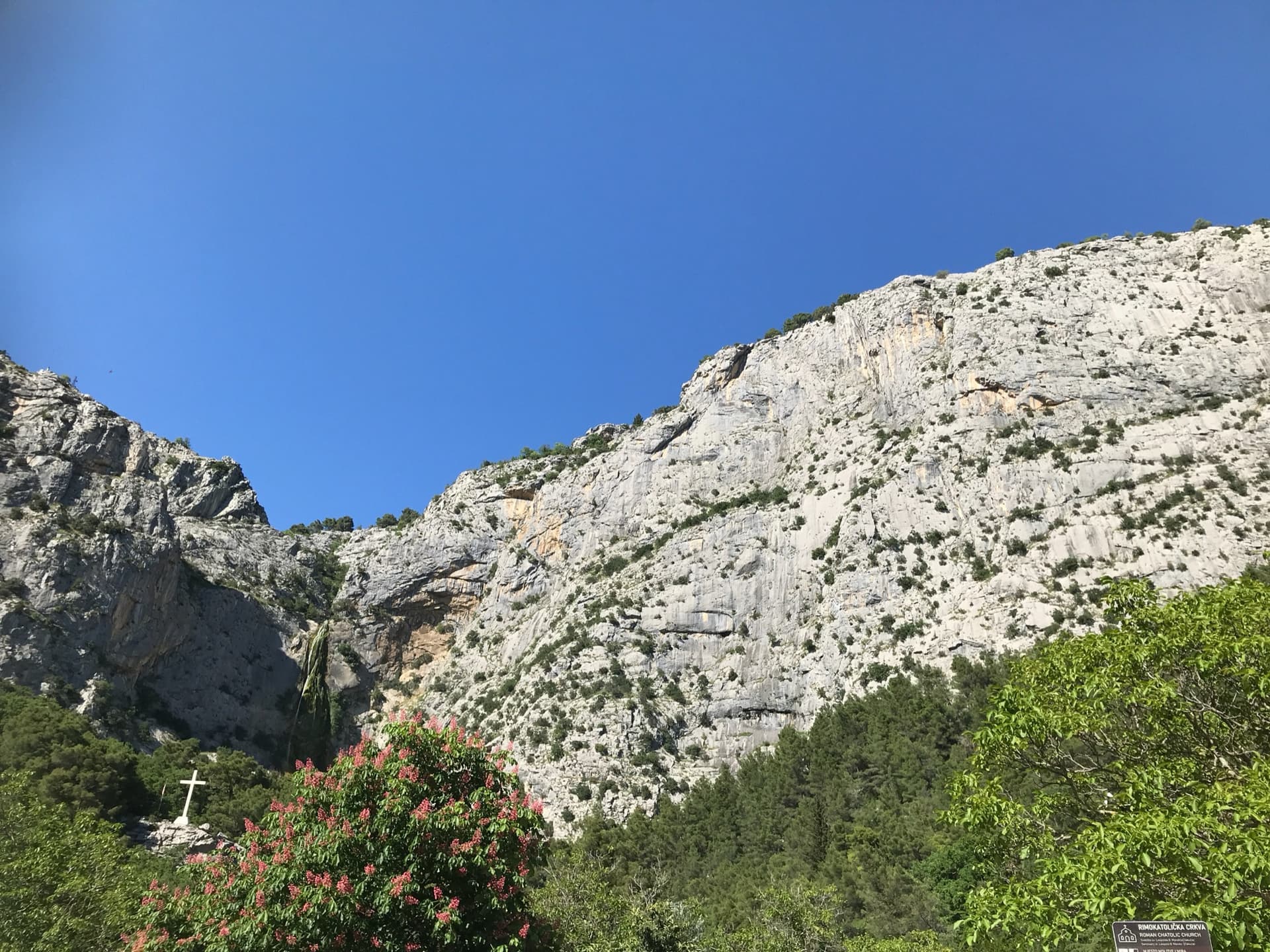
The Ilinac wall above the Cetina just upstream of Omiš, seen from the roadside chapel car park; Rambo takes the centre of the face, but the line is not marked.

Croatia · Omiš

Rambo

Omiš's signature moderate: long, slabby pitches on knobbly grey limestone with big views over the Cetina mouth and the Adriatic. The crux is a short crack on the final pitch.

6a6 pitches230 m

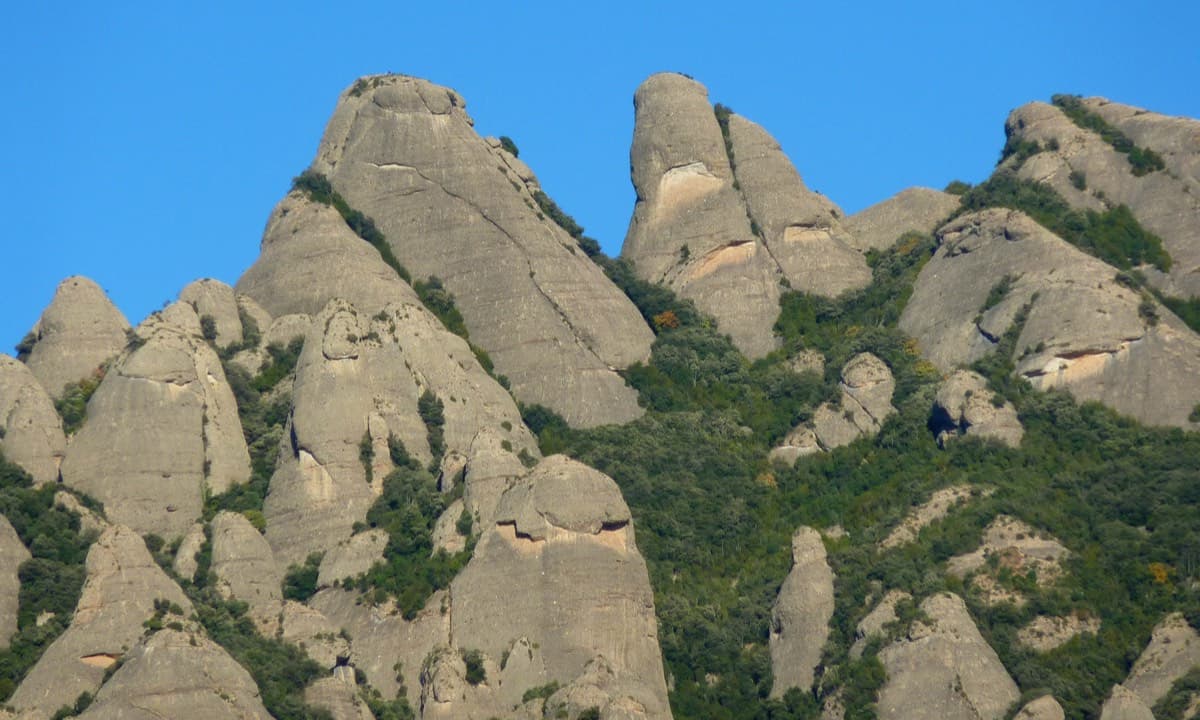
Gorra Frígia and Magdalena Superior seen from the south-west, Montserrat

Spain · Montserrat

98 Octanos

An exposed, airy line with unusually good holes and jugs for Montserrat, shaded in the afternoon. The 6a pitch is a sustained vertical 20 m. Going straight up instead of following the line is closer to 6b+.

6a4 pitches140 m

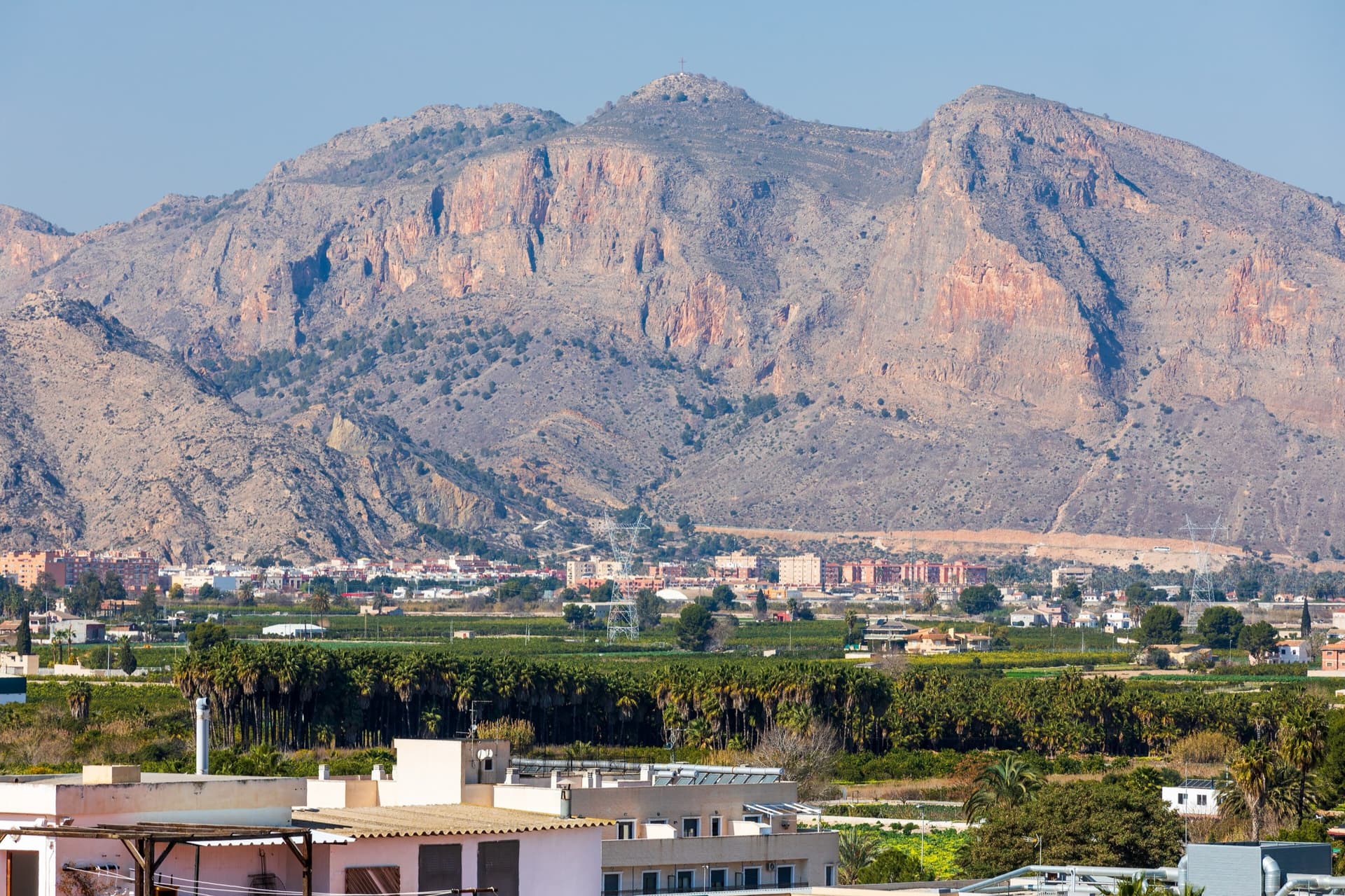
The south-east flank of the Sierra de Orihuela below the Cruz de la Muela, seen across the Vega Baja from Bigastro; Pared Negra is one of the walls on this flank (the exact wall is not marked).

Spain · Vega Baja (Orihuela & Callosa)

Código Vertical

A popular modern four-pitch classic on Pared Negra's compact grey limestone, around UIAA 6/6+ (about French 6a). Best on cool, sunny winter days.

6a4 pitches150 m

Compiled from published sources and last verified October 2026. Bolts, anchors and access change. Climbing is dangerous and you are responsible for your own decisions: check a current topo and read the disclaimer.