Multipitch Atlas

Espolón Gallego (optionally + Espolón Fuertes)

Peña Rueba east face, Murillo de Gállego · Riglos & Agüero (Mallos) · Spain

Bail with caveatsBolting confidence: high

An airy spur with sustained 5b–5c climbing, a single 6a step on pitch 7, and big views over the Mallos de Riglos and the Pyrenees.

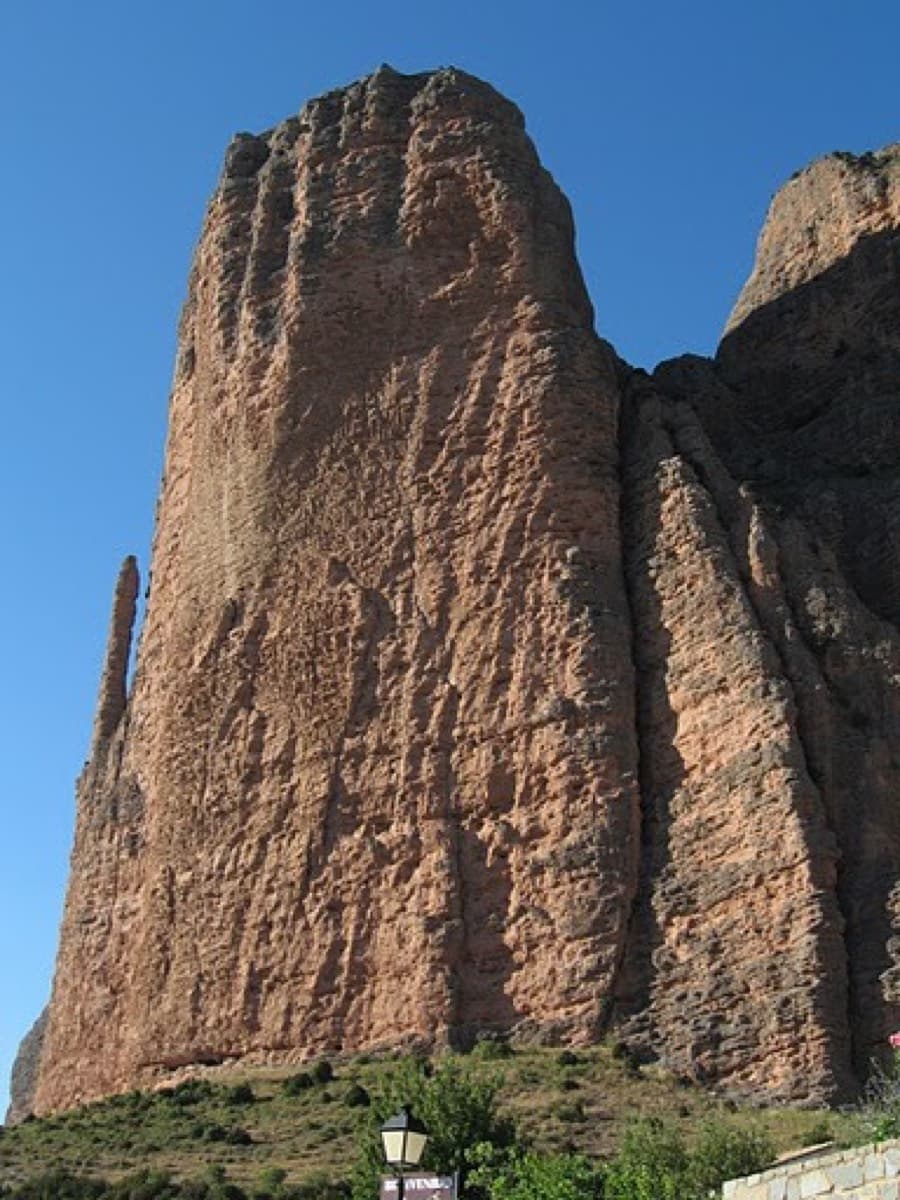
Topo of Espolón Gallego and Espolón Fuertes on the east face of Peña RuebaPhoto: janic · CC BY-SA 3.0

Topo

Topo of Espolón Gallego and Espolón Fuertes on the east face of Peña RuebaPhoto: janic · CC BY-SA 3.0
Hardest pitch
6a
Pitches
9
Length
230 m
Approach
35 min
Aspect
E
East-facing
Rope
2×60 m

The route

Overview

An airy bolted spur on the east face of Peña Rueba, facing the Mallos de Riglos across the Gállego. The Espolón del Gállego gives nine or ten pitches of wall and slab climbing, mostly on the left side of the spur, at a steady V with one short 6a/6a+ wall on pitch 7 that can be aided. It ends on the Punta de la Ralla, from where you abseil, or continue up the older Espolón Fuertes (five or six more pitches to about V) to the summit for a 430 m outing. The lower spur is on good rock and very well bolted; the Fuertes is more fragile and was re-bolted in 2016.

The climbing

Pitch by pitch

Pitches of Espolón Gallego (optionally + Espolón Fuertes)
PitchGradeLengthNotes
P14b25 mEasy warm-up (IV); belay on the right beside some trees.
P25b25 m5b then 4c (V): an odd move shortly after the start, then a left-right dogleg.
P35b30 mV. Finishes with a traverse left to the belay. Route-finding is confusing here: a 2026 party ended up at a belay in an old vulture nest (2 bolts joined by old black cord) and had to traverse left on new bolts to regain R5. Do not link with pitch 4 (rope drag).
P45c25 mV+. A thin start, then a short overhang on arm-pulls a little higher.
P54c25 m4c then 4b; no difficulty.
P65c20 mFollow the line of bolts up a wall (V to V+).
P76a25 mThe crux: a short wall straight above the belay. The right looks easier to start but is no gift; the left is hard too, with a long reach to clip. Well bolted, not sustained, and aidable. Given 6a+ on the Luichy topo.
P85c30 m5c then 4c, up a chimney with a tree in it. Some doubtful rock.
P94c25 mEasy and on good rock again, ending by a niche whitewashed by vultures (an old nest). Belay 2–3 m right above the niche, or 5 m higher. To finish here, exit onto the plateau and find a handline on the left of the crest that leads to the first abseil. Optional 10th pitch to the Punta de la Ralla (5c, 30 m): 5b then 5c on somewhat doubtful rock, ending with an overhanging move on big holds; follow the right-hand bolts on the final rib, since stray bolts on the left lead onto rotten rock.

Getting there

Approach

To the parking

Base is Murillo de Gállego on the A-132. Drive north from the village for about 2–2.2 km; at the end of a straight, just before a sharp left-hand bend, take a rough track on the left (a rockfall warning sign marks it). Park almost at once: there is room for a car straight away and a slightly larger flat area a little higher, after about 200 m. Beyond that the track is in very poor condition.

On foot · about 35 min

35–45 min. Walk up the track, which climbs above a rock pinnacle, to its end (about 20 min). Continue on the cairned path heading north. Near the wall the path forks at two cairns; take the branch that contours, crosses a gully and climbs a little on the far side, then cuts back left to the foot of the wall in the wooded gully (about 15 min from the end of the track). Where the path passes between two boulders, go between them rather than up left; 'Espolón del Gállego' is written on one of them. A common mistake is to turn up left too early. The route starts on the left flank of the spur at the foot of a tree (a strawberry tree on the Luichy topo), at a bolt with a tape on it.

Finding the route · 3 photos

Approach photo

Map of the walk-in

  • Crag
  • GPS line

Loading map

The point marks the crag, not the exact start of the route.

GPS line: a line of the whole day, including the climb and the descent drawn by its source, not a recorded track. Line drawn on the camptocamp route page, not a GPS recording: a loop from the roadside parking north of Murillo de Gállego up the track and path to the spur, the climb (including Espolón Fuertes), and the descent. Do not follow it blindly.

GPS line: camptocamp contributors · CC BY-SA 3.0

Coordinates · crag

42.35812, -0.75402

Point from camptocamp waypoint 752239

For your phone or watch

Download GPX

Contains the route point and a GPS line. Opens in most mapping apps and GPS watches.

Points are compiled from published sources, with the precision stated above. They were not surveyed on the ground: check them against a current topo.

Getting down

Descent

From the Punta de la Ralla (Espolón Gállego only): abseil from the col between the Punta and the Espolón Fuertes. Camptocamp gives a 25 m abseil into a niche on the left (facing the wall); a 55 m abseil trending right, which you can stop at 50 m to grab a fixed rope on a tree leading to a belay 5 m lower; then 20 m straight down to a ledge. Follow the path with a handline, then make two more abseils straight down. Komando Kroketa (2014) describes the same line as one 60 m abseil with an intermediate station for single ropes, fixed ropes, a 30 m abseil to a ledge, a cable leftwards (facing the wall), then a set of three 30 m abseils; at the bottom go left for 5 min to the approach path. The Luichy topo shows it as abseils of about 30 m. You can also abseil the route. From the summit (after the Espolón Fuertes): go down left from the top to pick up green waymarks and follow the ridge south on a cairned path towards a col; do not follow the crest straight on to the main summit. At the second notch there is a chained station with a large ring at ground level (reported in May and September 2026). Abseil 45–50 m on the east side to a wide ledge, follow it left (back to the wall) along a thin steel cable to a tree, and abseil 20 m from an anchor on the rock. Go down a gully (one fixed rope; do not follow an old fixed rope off right) for about 20 m to a tree with slings and abseil 30 m, only just reaching the ground. Then down right on scree to the approach path near the end of the track. Alternatively stay on the green waymarks south to a series of fixed ropes that lead down to a path back to the track; parties took 1 h to 1 h 15 this way.

Retreat

Bailing off the route

Bail with caveats

Probably, on the Espolón Gallego itself. The guide notes that you can abseil the route, and the lower spur has bolted, numbered belays with pitches of 20 to 30 m, but no source gives the abseil sequence or says how the belays are rigged. The line doglegs and traverses in places and has stray bolts and extra belays that confuse. On the Espolón Fuertes continuation the belays are not chained and the rock is more fragile, so retreat there is harder.

Retreat from
Belays of the Gallego spur, by abseil. At the top of pitch 9 you can stop without climbing pitch 10: exit onto the plateau and take the handline on the left of the crest to the first abseil of the descent from the Ralla col.
Point of no return
Starting up the Espolón Fuertes from the col. Its belays are unchained and its rock delicate, and the documented ways down are from the summit ridge, so once on it going up is the practical way off. This is inferred from the equipment description.
Carry
The descents from the Ralla col need 2×60 m (55 to 60 m abseil). For abseiling the spur itself a 60 m rope should cover the 30 m pitches by inference; carry maillons and cord, since belay rigging is not described.
Basis
Part stated, part inferredCamptocamp states the exit and abseils from the top of pitch 9 and that the Fuertes belays are not chained; 'you can also abseil the route' comes from the guide's descent notes without detail, and the rope and gear advice is inferred.

Partly inferred from the route facts

Safety

Hazards

  • The descents rely on abseils of 45–60 m. With a single rope you must find the intermediate stations.
  • The first summit-ridge abseil anchor had lost its rings in 2023 (bare hangers only); parties in May and September 2026 found a chained station with a large ring in place again. Be ready to use the waymarked fixed-rope descent if it is missing.
  • The final abseil from the tree is 30 m and only just reaches the ground; knot the rope ends. The tree anchor is slings and cord.
  • Griffon vultures nest on this spur: the line passes an old nest at the top of pitch 9 and a vulture cave on the Fuertes, and birds were on the route in September 2026. Climb quietly, and check locally for nesting restrictions; none was stated in the sources read.
  • Extra bolts placed close beside the route cause confusion on pitches 3, 9 and 10; the left-hand bolts on the last rib lead onto rotten rock.
  • Doubtful rock on pitches 8 and 10 and more generally on the Espolón Fuertes, where some sheets of conglomerate are fragile.
  • The Espolón Fuertes was re-bolted in November 2016 with 10 mm bolts (some 8 mm remain) but its belays are not chained, and traces of the old pegs, threads and 8 mm bolts are still there. A 2023 party still found its equipment more dated than the lower spur.
  • The scramble down from the Punta de la Ralla to the col is exposed.
  • Linking pitches 10 and 11 with 2×60 m forced one party to move together for 5–6 m.

Sun and weather

Conditions

East-facing, so morning sun and afternoon shade. The spur sits in a valley that funnels wind from the Pyrenees: Komando Kroketa and the Luichy topo both say to avoid it on windy days. Spring and autumn are the usual seasons. Several parties share the route on good days, but it is quieter than Riglos.

Usual season · Mar to Jun, Sep to Nov

Sun on the wall · E-facing

Working out the sunlit hours for this month.

  • January: not yet worked out
  • February: not yet worked out
  • March (usual season): not yet worked out
  • April (usual season): not yet worked out
  • May (usual season): not yet worked out
  • June (usual season): not yet worked out
  • July: not yet worked out
  • August: not yet worked out
  • September (usual season): not yet worked out
  • October (usual season): not yet worked out
  • November (usual season): not yet worked out
  • December: not yet worked out

Sun on the wallDaylight, wall in shade● Usual season

Estimated from the wall's aspect only. Ignores surrounding terrain, gullies and the wall's exact shape. Clock times are local to the wall (Central European time), for the 15th of each month.

Climate figures for Riglos & Agüero (Mallos) are not available yet

What to carry

Gear

12–15 quickdraws plus belay gear; spare cord for the threads on the Luichy topo's advice. For the climbing a single 55 m rope is enough, but the descents need two ropes: 2×60 m covers the 55–60 m abseil from the Ralla col and the 45–50 m abseil from the summit ridge. Cams are not needed (2026 report). Helmet.

Checklist

Quickdraws
15
Rope
2×60 m
Helmet
One each
Abseil device and prusik
The descent or the retreat involves abseiling
Maillons or spare karabiners
To leave behind if you retreat
Cord
Mentioned for retreat

Derived from the route data; check it against a current topo

From climbers

Reader reports

Reader reports are not being collected yet. Until they are, check a current topo and the local club or guidebook publisher for recent changes to Espolón Gallego (optionally + Espolón Fuertes).

Worth knowing

Tips

  • Continuing to the summit: from the Punta de la Ralla scramble down to the col (exposed; you can stay roped) to a belay 5–6 m up the next wall, then climb the Espolón Fuertes in five pitches according to Camptocamp: 5a (30 m), 4c/5a (20 m), 5a (20 m), 5b (35 m, past a vulture cave then a steep wall on better rock) and 3b (20 m) to a juniper belay just below the summit. The Luichy topo draws six.
  • All pitches can be linked except 3 and 4, at the cost of rope drag; parties have linked 1+2, 4+5, 6+7, 8+9 and 13+14.
  • Belay numbers are written on the rock on the lower spur.
  • If you are short of time, stop at the Punta de la Ralla; one 2025 party abseiled from there.
  • Typical times for the full route: 35–45 min approach, 4–5 h 30 climbing, 1 h to 1 h 45 down.
  • The Luichy topo on lanochedelloro.es comes in three sheets, including one for the descents.

Open questions

Where sources disagree

  • Crux grade: 6a on Camptocamp and Komando Kroketa (V+/A0); 6a+ (V obligatory) on the Luichy topo and in a September 2026 outing.
  • Pitch count: Camptocamp ends the Gállego after 9 pitches with an exit left to the abseils, and counts a 10th to the Punta de la Ralla as part of the link-up; Komando Kroketa and the Luichy topo count 10 pitches (250 m) to the Punta de la Ralla. Komando Kroketa notes the guidebook also says 9.
  • First ascent year of the Gállego spur: 2008 (Camptocamp) or 2010 (Luichy topo).
  • Descent from the Ralla col: Camptocamp lists 25 m, 55 m and 20 m abseils, a handline path and two more abseils; Komando Kroketa lists 60 m, 30 m and then three 30 m abseils; the Luichy topo shows abseils of about 30 m. Both are given here, and two 60 m ropes are recommended.
  • Summit-ridge abseil: unequipped in 2023 (Camptocamp note and outing), re-equipped by 2026 (two outings).
  • Rock on the Fuertes: 'mediocre' or delicate on the Luichy topo and in a 2023 outing; 'very good' according to a May 2026 party.
  • Approach: 35 min (Komando Kroketa, two outings), 40–45 min (two outings).

Provenance

Sources

Same area

More in Riglos & Agüero (Mallos)

All routes in Riglos & Agüero (Mallos)
The Adamelo spur on Mallo Pisón, Riglos

Spain · Riglos & Agüero (Mallos)

Espolón del Adamelo

This is the gentlest way to sample Riglos. Polished pockets and two bulging 'panzas' lead to a 6a crux that can be pulled through on the bolts (A0). The upper spur is easy, and the Pisón towers loom close by.

6a7 pitches175 m

Read the cautions
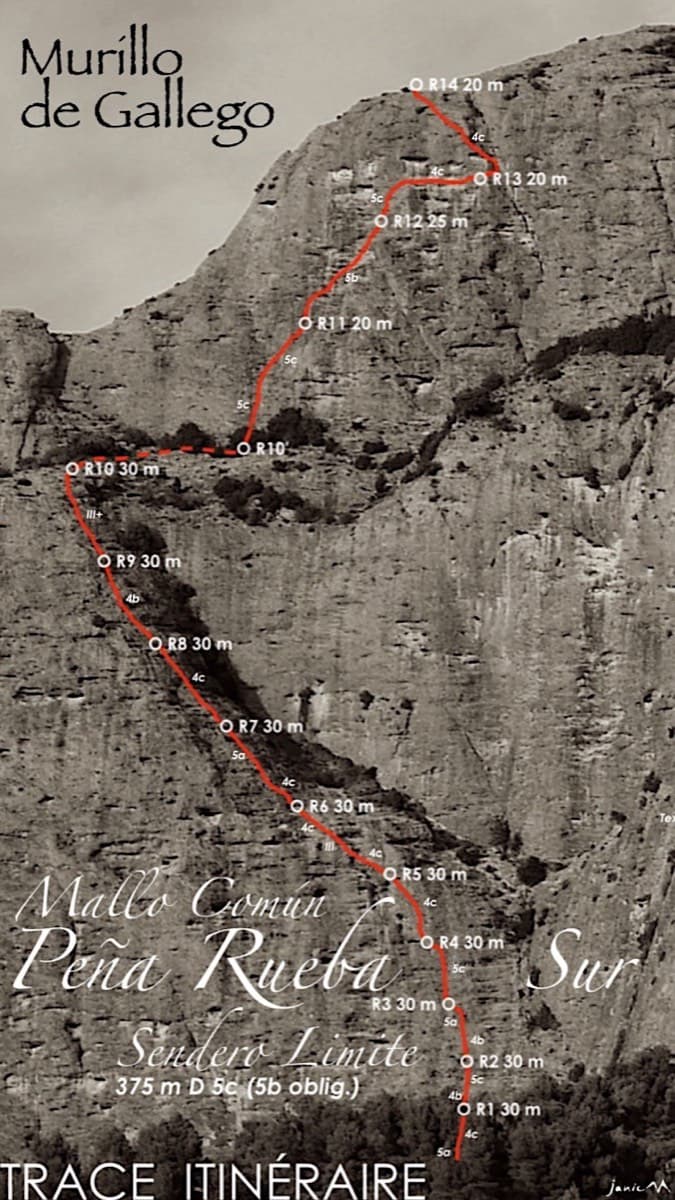
Topo of Sendero Límite on the south face of Peña Rueba (Mallo Común)

Spain · Riglos & Agüero (Mallos)

Sendero Límite

A long beginner's big route on good conglomerate at a moderate angle. Pitches can be linked in pairs with a 60 m rope. A four-pitch headwall with a couple of panzas finishes high above the Gállego valley.

5c14 pitches375 m

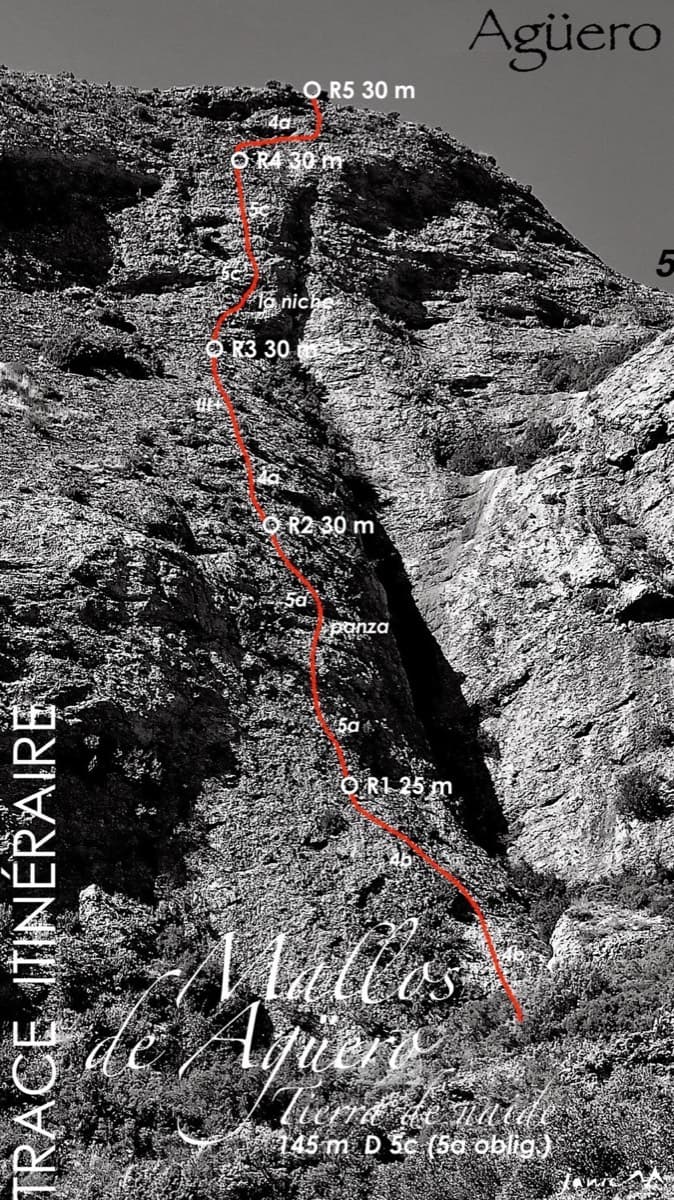
Topo of Tierra de Naide, Mallos de Agüero

Spain · Riglos & Agüero (Mallos)

Tierra de Naide

A morning-sun route at the quieter Agüero mallos. Easy slabs separate two fine steep walls, including a superb vertical 5c plaque on pitch 4. Take care with some loose cobbles on the last traverse.

5c5 pitches145 m

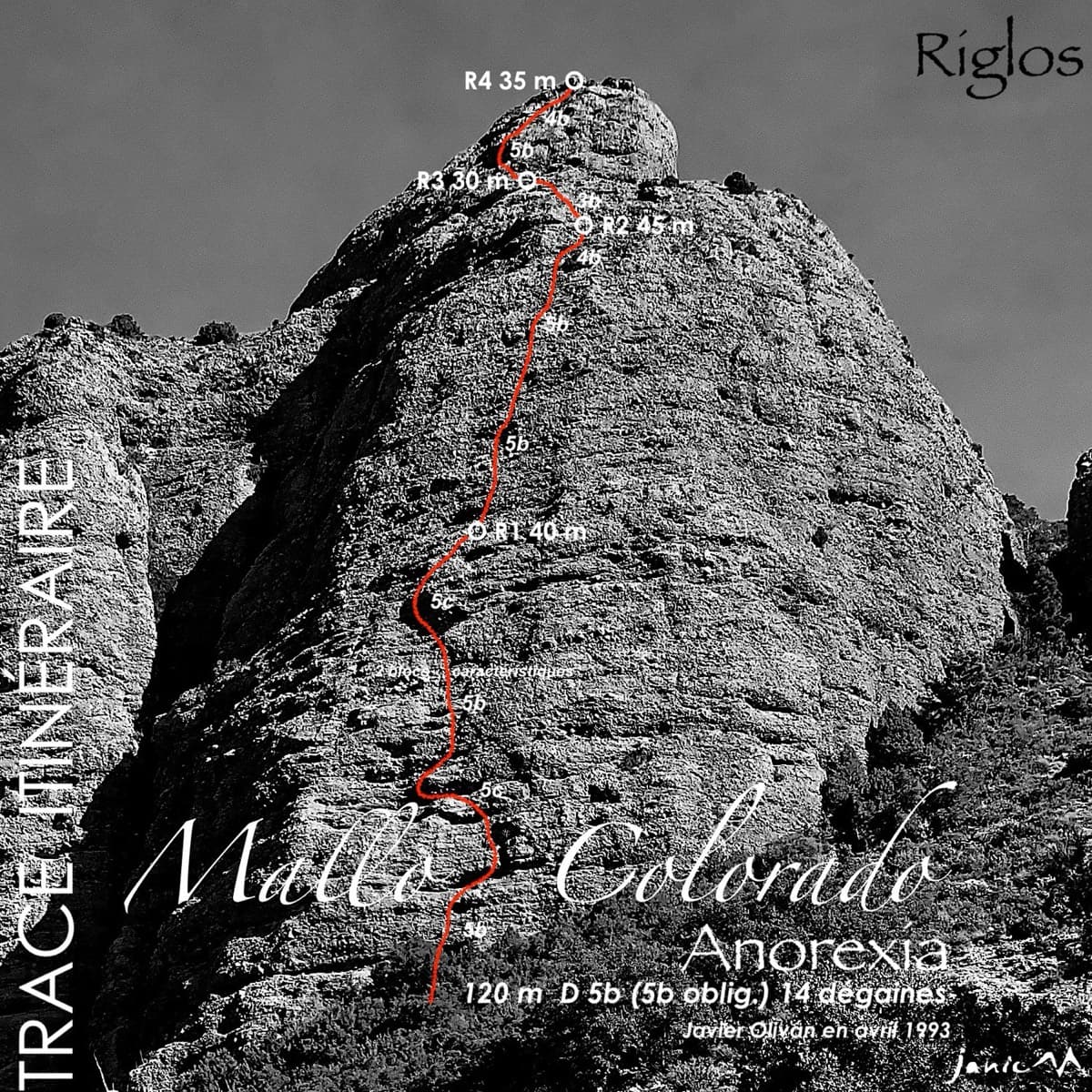
Topo of Anorexia on Mallo Colorado, Riglos

Spain · Riglos & Agüero (Mallos)

Anorexia

The best-known route on the Mallo Colorado. Two steep, juggy panza pitches have a well-protected boulder move, giving a short taste of real Riglos steepness at a friendly grade.

5c4 pitches150 m

Around 6a · about 9 pitches

Similar elsewhere

The Amptrax wall on Frontales, El Chorro

Spain · El Chorro

Amptrax

The absolute El Chorro classic: a physical, sustained line that feels tough for the grade, with a 6a traverse right under the roof. Polished in places from heavy traffic.

6a9 pitches182 m

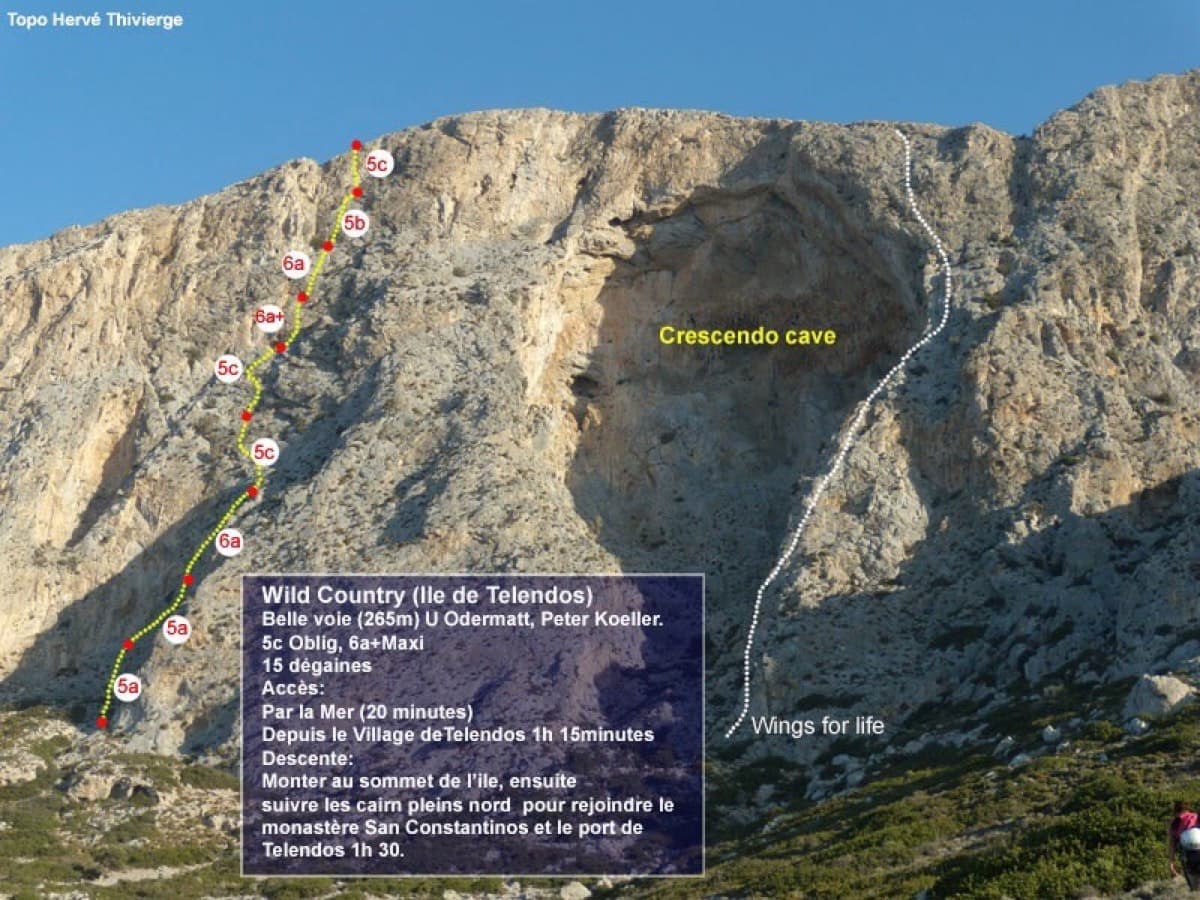
Topo of Wild Country, left of the Crescendo cave, Telendos south face

Greece · Kalymnos & Telendos

Wild Country

A sustained, varied line on sculpted limestone. It starts with an easy slab and builds to slightly overhanging jugs with huge exposure on the top pitch. Mountain Project and camptocamp grade the crux 6a+ (Rockfax says 6a). With a 70 m rope you can link several pairs of pitches.

6a9 pitches265 m

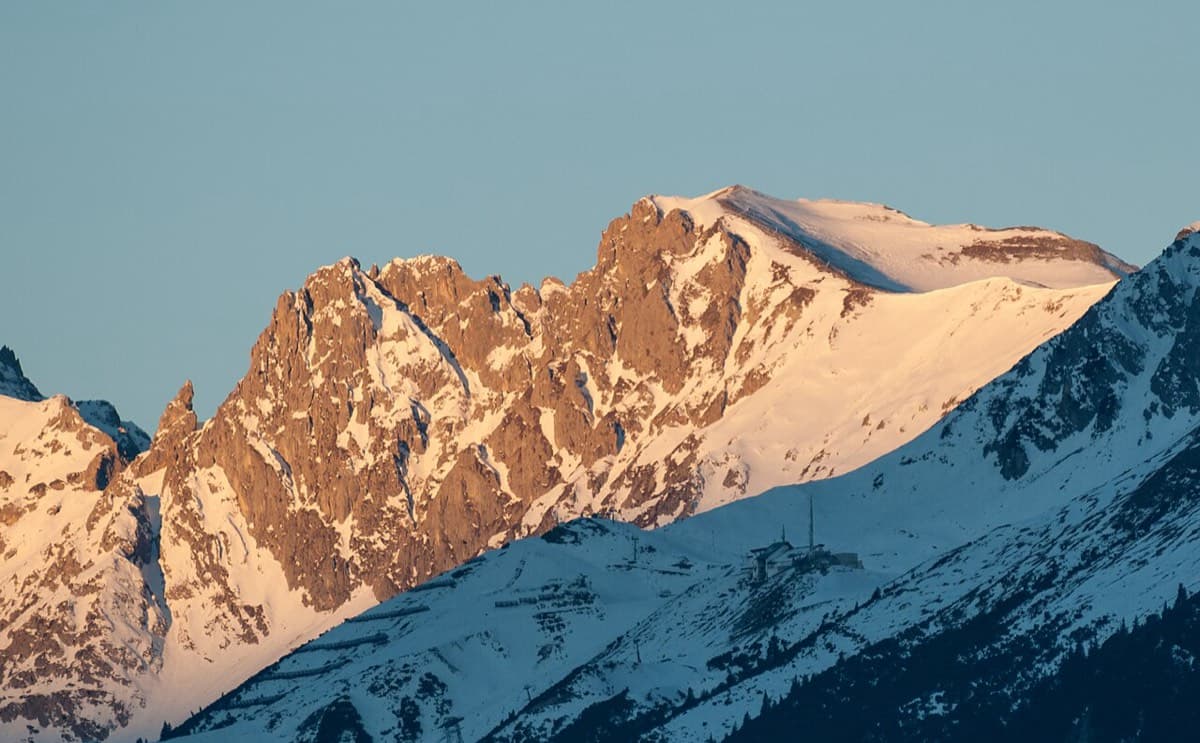
Frau Hitt and the Westliche and Östliche Sattelspitze on the Innsbruck Nordkette, seen from the east

Austria · Karwendel (Innsbruck Nordkette)

Mit Vergnügen – avec plaisir

A plaisir line straight above Innsbruck, reached by cable car. Two pitches are UIAA 6-/6 (5+/A0) and the rest is mostly grade 4–5. The upper pitches are grassy, so avoid it when wet.

6a9 pitches300 m

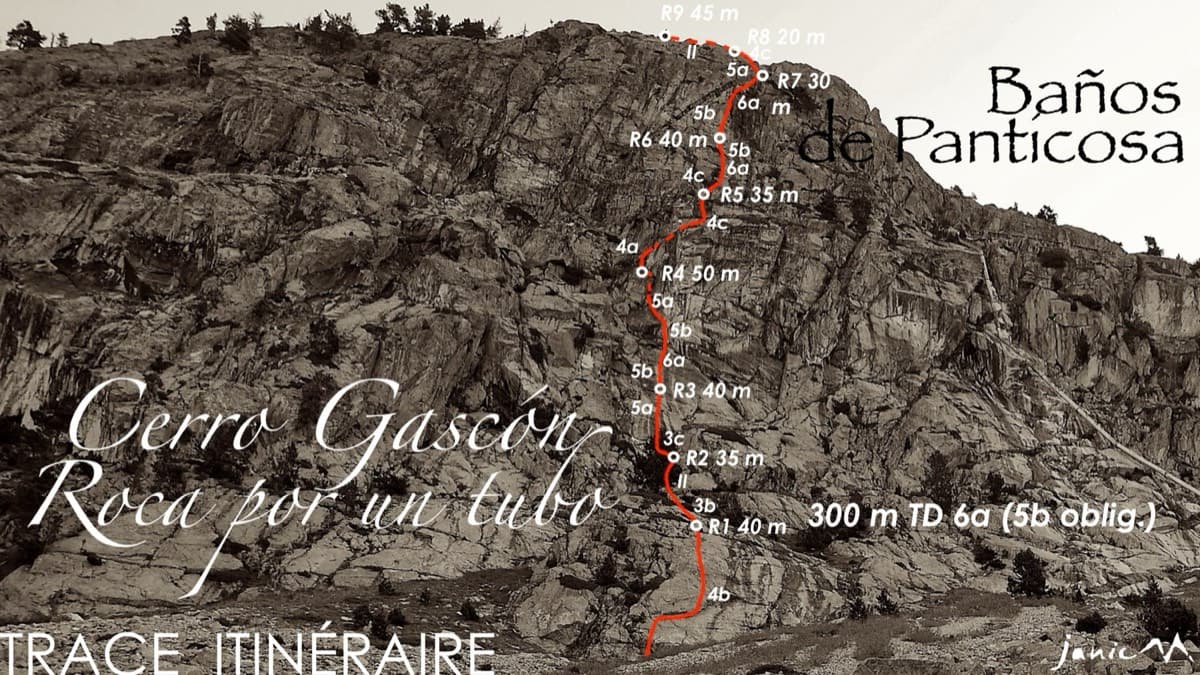
Topo of Roca por un Tubo, Pared de la Tubería (Cerro Gascón), Baños de Panticosa

Spain · Aragonese Pyrenees (Tena & Canfranc valleys)

Roca por un Tubo

High-mountain granite slabs and dihedrals above the Panticosa spa. Three 6a cruxes mix friction slab with a short flaky roof on pitch 7.

6a9 pitches300 m

Read the cautions

Compiled from published sources and last verified October 2026. Bolts, anchors and access change. Climbing is dangerous and you are responsible for your own decisions: check a current topo and read the disclaimer.