Multipitch Atlas

Oceano Mare

Scogliera di Biddiriscottai (Cala Gonone) · Sardinia · Italy

Easy to bailBolting confidence: high

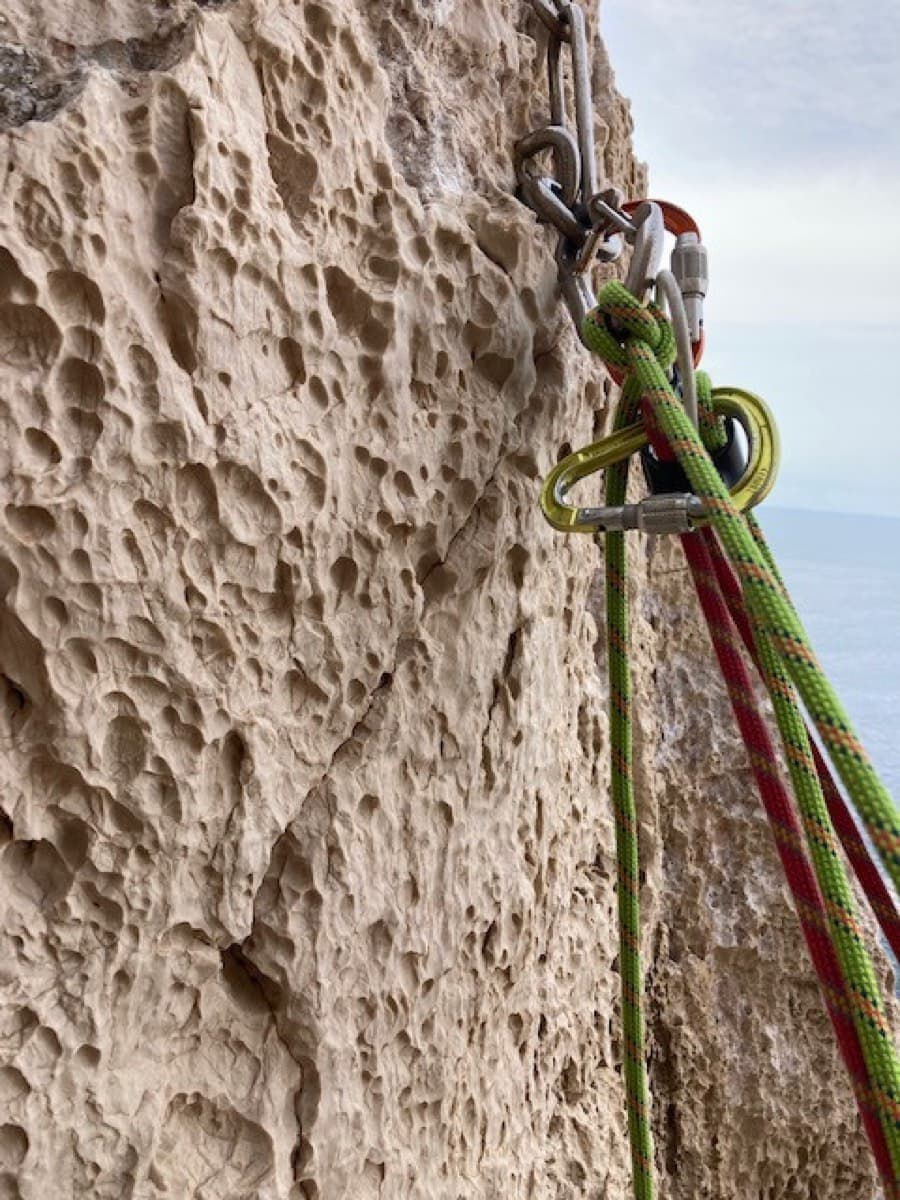
Five steep, sustained pitches at 6b to 6b+ straight out of the sea on new titanium bolts, on abrasive, pocketed limestone. Bulges, a smooth roof, a corner and a thin finishing crack, with a cave belay after pitch 1.

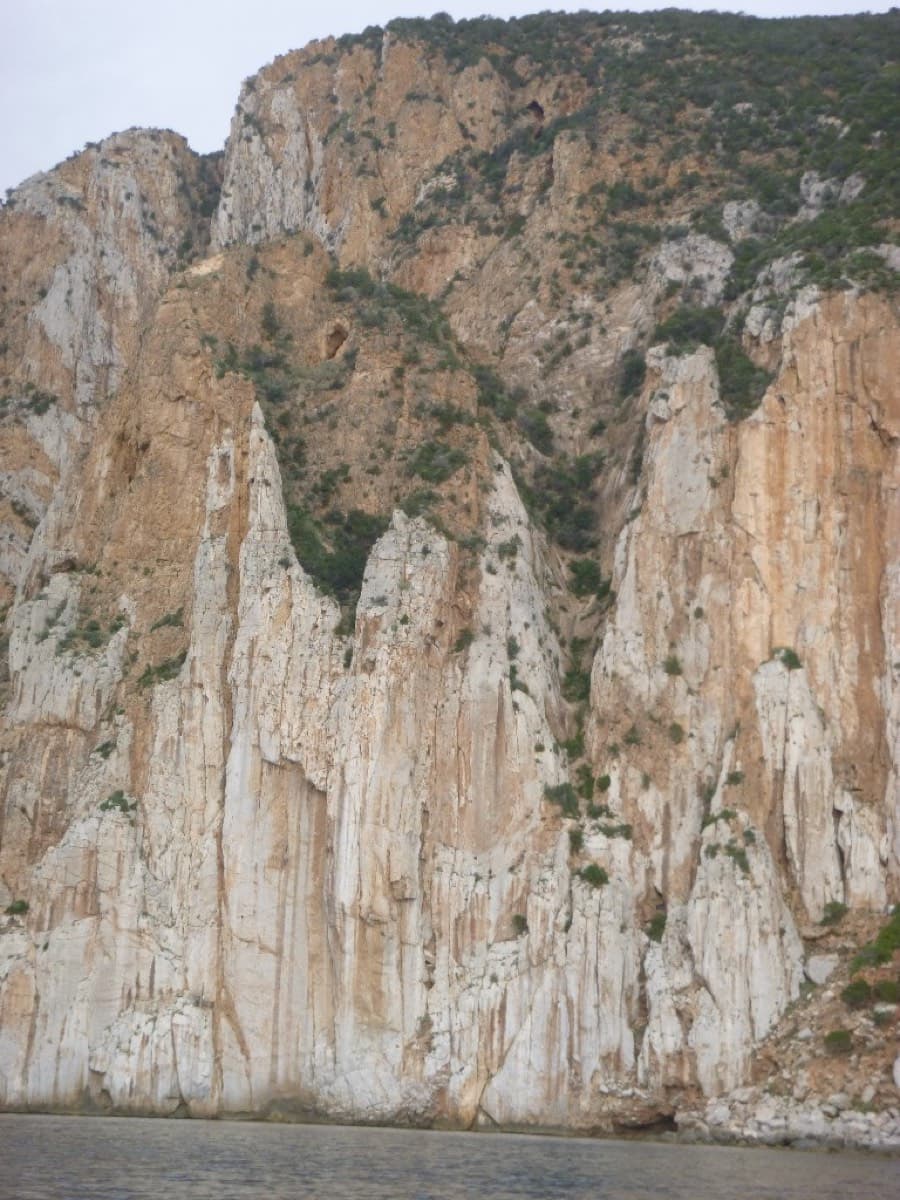
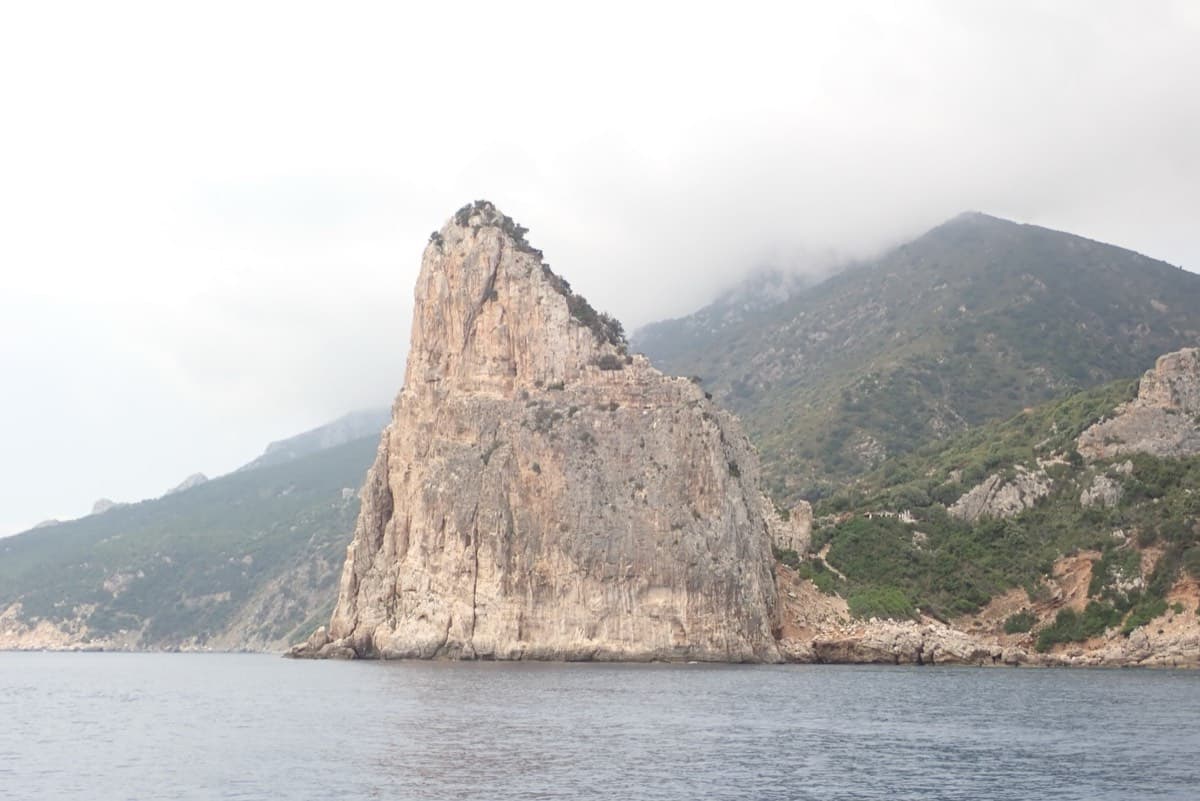
The Biddiriscottai sea cliff north of Cala Gonone, seen from the approach path to Oceano MarePhoto: samouelo69 · CC BY-NC-ND 3.0

Photo

The Biddiriscottai sea cliff north of Cala Gonone, seen from the approach path to Oceano MarePhoto: samouelo69 · CC BY-NC-ND 3.0
Hardest pitch
6b+
Pitches
5
Length
160 m
Approach
60 min
Aspect
SE
South-east-facing
Rope
2×50 m if you abseil in
a single rope if you walk in from below

The route

Overview

Oceano Mare is one of five long routes on the Biddiriscottai sea cliff north of Cala Gonone that were made safe again in 2022 with glued titanium anchors. First equipped by Lecis in 1996, it had been left alone because of corroded hardware. It is now a very homogeneous route: every pitch is 6a+ to 6b+ and steep, on rock that recent parties describe as like new. You can reach it either by abseiling the line from the track above or, more pleasantly, by walking down the Millennium cave path and along the shore.

The climbing

Pitch by pitch

Pitches of Oceano Mare
PitchGradeLengthBoltsNotes
P16b+40 m13 boltsWhite, rounded, overhanging rock to start (6a), then a hard wall with a bouldery 6b+ move and a slab to a comfortable belay in the mouth of a cave. The first bolt is about 5 m up.
P26b+30 m9 boltsEasily to another hollow (6a), an awkward clip leaving it, then over a bulge and up a sustained vertical wall on good holds to an uncomfortable belay on a sloping slab. Some sources give 6b.
P36b20 m6 boltsA wall full of small pockets, then a smooth roof with one stubborn move to a belay on a small step a little higher.
P46a+30 m9 boltsLeft into a corner and up it (6a+), then slant right up a magnificent sculpted slab (5b) to a belay on a good step. One party thought it worth 6b.
P56b+40 m13 boltsA wall on good holds (6a), then a smooth slab with an obligatory 6b+ move to gain a thin crack on the left. Layback it on superb rock (6a) and finish up a sculpted wall to the top belay.

Getting there

Approach

To the parking

Base is Cala Gonone (Dorgali). From the village follow the road up towards Cartoe and Osalla, which turns into a dirt track along the top of the cliffs. For the abseil approach stop after about 1.5 km of track at a left-hand bend (a cairn marks the way down on the right; there is a rock with four bolts on the left of the track). For the walk-in continue to the start of the Millennium cave descent.

On foot · about 60 min

Two options. On foot (recommended by camptocamp): continue along the track and take the descent to the Millennium cave on the right; the path starts between two cairns, with 'Millenium' written on a rock. Follow the path and its fixed-rope via ferrata section to the level of the cave, then take the path down right to the sea and follow the foot of the walls south to the last route before the shore becomes impassable. A 2024 party took about an hour. By abseil: from the bend, an obvious path leads down to the abseil station of Black Cimigniones; a few metres further right, facing the sea, is belay 5 of Oceano Mare. Four abseils: R5 to R4, R4 to R2, R2 to R1 (traversing right with your back to the sea), R1 to the ground. A 2024 party could not find the cairn from the track and walked down.

Map of the walk-in

  • Crag

Loading map

The point marks the crag, not the exact start of the route.

Coordinates · crag

40.31321, 9.65522

Point from camptocamp waypoint 131888

For your phone or watch

Download GPX

Contains the route point. Opens in most mapping apps and GPS watches.

Points are compiled from published sources, with the precision stated above. They were not surveyed on the ground: check them against a current topo.

Getting down

Descent

From the top belay go right to the belay of Black Cimigniones, then follow the cairns and the path up to the track, which is only about 100 m away.

Retreat

Bailing off the route

Easy to bail

Every belay is equipped for abseiling and the abseil line down the route is a documented approach. Camptocamp states that if you cannot get up, you abseil off and walk back up by the Millennium via ferrata.

Retreat from
Any belay: R5 to R4, R4 to R2, R2 to R1 (traversing), R1 to the ground.
Point of no return
None.
Carry
Two 50 m ropes for the abseils (R4 to R2 covers 50 m of climbing). With a single rope you would have to use every belay, and pitches 1 and 5 are 40 m.
Basis
Stated in the sourcesCamptocamp remarks and Climbing Italy notes; the single-rope caveat is inferred from pitch lengths.

Safety

Hazards

  • Sea cliff start: the base is reached along the shore or by abseil to the waterline, and the shore route ends at this climb. No source discusses swell, so judge the sea before committing.
  • The grades are stiff and the hard moves cannot be aided past easily; pitch 5 has an obligatory 6b+ slab move.
  • The fourth abseil of the approach traverses, and the abseil path from the track is hard to find from above.
  • Only some routes at Biddiriscottai have been re-bolted. PlanetMountain reports that on untreated routes most old anchors came out with a single hammer blow, so stay on the five restored long routes (Oceano Mare, L'Alchimista, Zanahoria, La Vita Nuova, Innocenti Deviazioni).
  • Very sharp rock: tape and skin care for a multi-day trip.

Sun and weather

Conditions

South-east facing sea cliff. Reports are from March to May and September to November. Rain showers pass quickly and the cave at the first belay gives shelter. In a strong maestrale the wind funnels up this stretch of coast and the routes are exposed to it. The rock is very abrasive.

Usual season · Mar to May, Oct to Nov

Sun on the wall · SE-facing

Working out the sunlit hours for this month.

  • January: not yet worked out
  • February: not yet worked out
  • March (usual season): not yet worked out
  • April (usual season): not yet worked out
  • May (usual season): not yet worked out
  • June: not yet worked out
  • July: not yet worked out
  • August: not yet worked out
  • September: not yet worked out
  • October (usual season): not yet worked out
  • November (usual season): not yet worked out
  • December: not yet worked out

Sun on the wallDaylight, wall in shade● Usual season

Estimated from the wall's aspect only. Ignores surrounding terrain, gullies and the wall's exact shape. Clock times are local to the wall (Central European time), for the 15th of each month.

Climate figures for Sardinia are not available yet

What to carry

Gear

14 quickdraws. A 50 m abseil rope (two strands) if you approach by abseil; a single rope is enough if you walk in. PlanetMountain's crag page lists two 60 m ropes for the long routes here. Cams are not needed. Helmet.

Checklist

Quickdraws
14
Rope
2×50 m if you abseil in; a single rope if you walk in from below
Helmet
One each

Derived from the route data; check it against a current topo

From climbers

Reader reports

Reader reports are not being collected yet. Until they are, check a current topo and the local club or guidebook publisher for recent changes to Oceano Mare.

Worth knowing

Tips

  • Walking in via Millennium lets you see the line and keeps the day to a single rope; you can detour into the cave on the way.
  • If you cannot climb out, abseil the route and walk back up by the Millennium via ferrata.
  • Linking is not needed: the belays are well placed and the pitches are 20 to 40 m.

Open questions

Where sources disagree

  • Length: 160 m of climbing on camptocamp (pitches add up to 160 m), 180 m on Climbing Italy.
  • Pitch grades: camptocamp gives 6b+, 6b+, 6b, 6a+, 6b+; a 2024 party logged 6b+, 6b, 6b, 6b, 6b+.
  • Bolt spacing: 'every 3 to 4 m' and 'a little spaced' on camptocamp; 'fairly close' and 'never demanding' in Climbing Italy logbook entries.
  • Approach time: the camptocamp text measures the track in kilometres; one party took about an hour on foot.

Provenance

Sources

Same area

More in Sardinia

All routes in Sardinia
Pedra Longa, Baunei, seen from the sea

Italy · Sardinia

Marinaio di Foresta

An airy, mostly left-rising traverse that spirals round the Pedra Longa sea stack to its summit, on water-runnelled grey walls and pocketed white rock right above the sea. It has become one of the most popular routes in Sardinia, so expect queues.

6a+7 pitches190 m

Committing
The Aguglia di Goloritzè above Cala Goloritzè, seen from the sea

Italy · Sardinia

Easy Gymnopédie

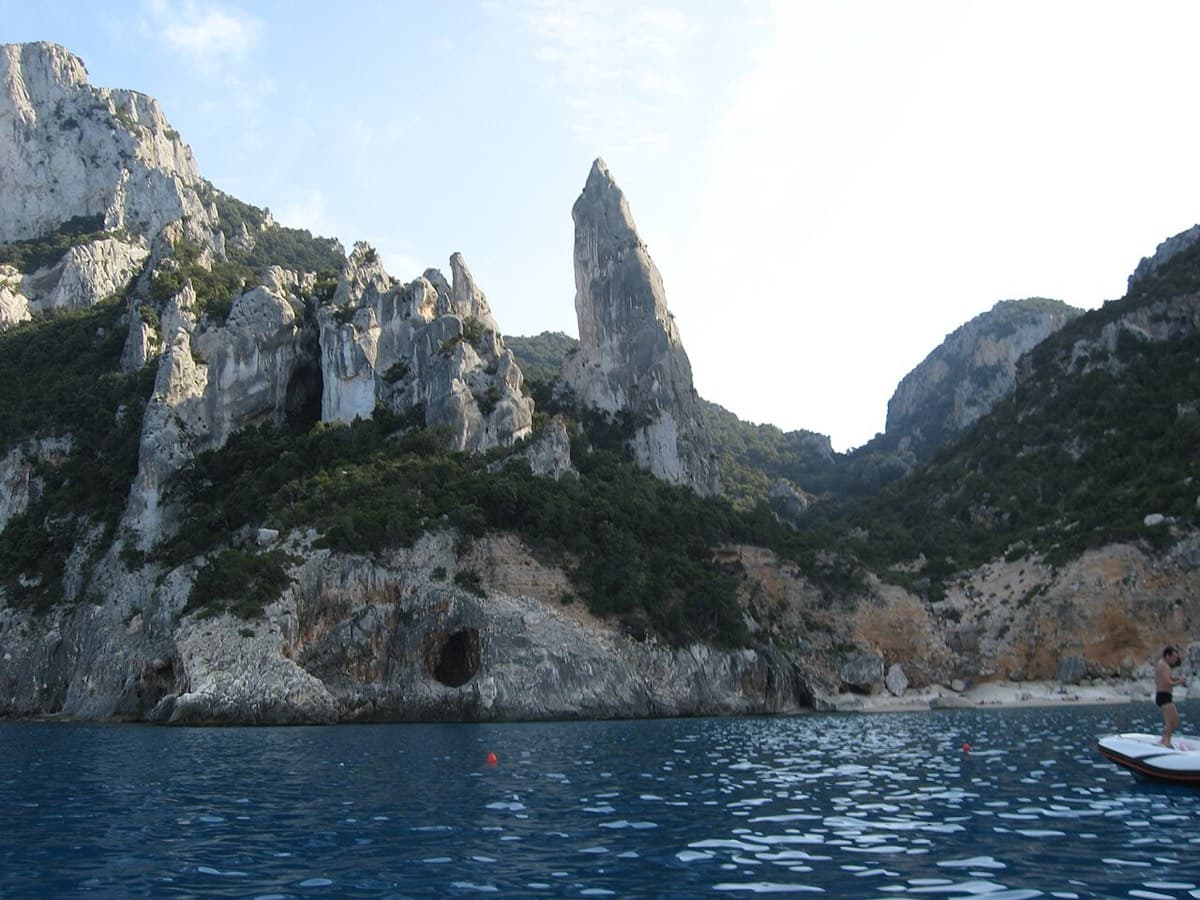
This is the easiest way to the top of Sardinia's iconic 140 m pinnacle above Cala Goloritzè. Short technical bulges and walls lead to a fine slab finish, and the harder overhangs can be aided. Gulliver splits it into 4 pitches; camptocamp gives 5. Check seasonal access rules for Cala Goloritzè before going.

6b5 pitches150 m

Read the cautions

The Masua sea cliffs seen from the water

Italy · Sardinia

L'Italia Liberata

A short but superb sea-cliff route on beautifully sculpted limestone in an incredible setting near Pan di Zucchero. Corners and an airy pillar lead to a steep, rounded 6a wall. Camptocamp rates it 'great'.

6a4 pitches120 m

A chained belay on the pocketed limestone of Powaqqatsi, Capo Caccia

Italy · Sardinia

Powaqqatsi

The easiest line on the Capo Caccia sea cliff: six pitches of 4b to 4c on pocketed, sharply sculpted limestone above the open sea. You abseil in from the top and climb out. The first two pitches are vegetated; the climbing proper starts on the pitch 3 slab.

4c6 pitches145 m

Read the cautionsCommitting

Around 6b+ · about 5 pitches

Similar elsewhere

No photo yet

Austria · Ötztal

Caipirinha

A mix of slabs and steep, juggy passages in the Sonnenblume sector, mostly around 5b to 5c+. The one hard move is a small roof on pitch 4 (6b+), which goes easily on aid.

6b+5 pitches170 m

No photo yet

Austria · Zillertal

Schwarzer Teufel

A slab route on the left side of the Wiegelwand with steep passages on small edges; UIAA 7/7+ at the crux on pitch 3, 6 to 6+ obligatory. The easier pitches are a bit grassy. Often wet, so look from below first.

6b+5 pitches110 m

The wall of the Princesa sector at Sa Gubia just left of Sol Solet.

Spain · Mallorca (Sa Gubia)

Sol Solet

Steep walls of beautifully sculpted grey and orange limestone immediately right of Princesa, even at 6b from bottom to top. Rockfax calls it more adventurous than its neighbour. Several belays are hanging, and the pitches can be split or linked in many ways.

6b+5 pitches200 m

The foot of Tribo on La Pancha, Redován, with the route's name plate on the rock.

Spain · Vega Baja (Orihuela & Callosa)

Tribo

Five pitches up the centre of La Pancha, the main wall above Redován. The second pitch climbs the middle of a red pillar with a polished crux on flat holds; the 40 m last pitch is an elegant slab that looks much harder than it is. Outside the bird closure that affects Botri.

6b+5 pitches150 m

Compiled from published sources and last verified October 2026. Bolts, anchors and access change. Climbing is dangerous and you are responsible for your own decisions: check a current topo and read the disclaimer.