Multipitch Atlas

Easy Gymnopédie

Aguglia di Goloritzè (Baunei) · Sardinia · Italy

Read the cautionsBail with caveatsBolting confidence: medium

This is the easiest way to the top of Sardinia's iconic 140 m pinnacle above Cala Goloritzè. Short technical bulges and walls lead to a fine slab finish, and the harder overhangs can be aided. Gulliver splits it into 4 pitches; camptocamp gives 5. Check seasonal access rules for Cala Goloritzè before going.

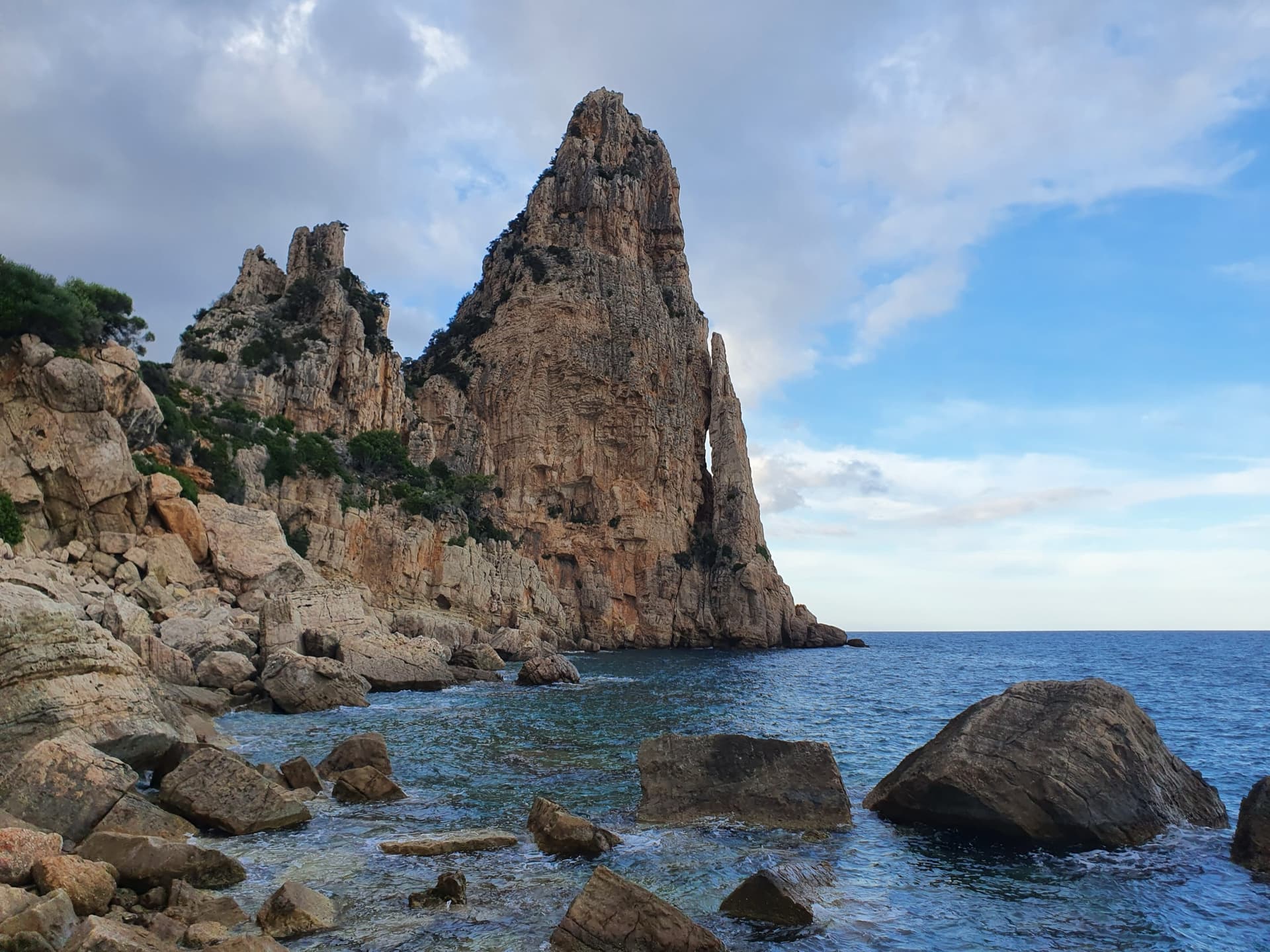
The Aguglia di Goloritzè, the 140 m limestone spire above Cala Goloritzè, seen from the approach path with the Gulf of Orosei behind.Photo: Unukorno · CC BY 4.0

Photo

The Aguglia di Goloritzè, the 140 m limestone spire above Cala Goloritzè, seen from the approach path with the Gulf of Orosei behind.Photo: Unukorno · CC BY 4.0
Hardest pitch
6b
Pitches
5
Length
150 m
Approach
60 min
Aspect
NW
North-west-facing
Rope
1×70 m or 2×50 m
Read before you go

Bolted and aidable at the cruxes, but polished, run out on easy ground with a few old pegs, stiffly graded, and subject to a paid daily-quota permit for Cala Goloritzè.

The route

Overview

The easiest route to the summit of the Aguglia, the limestone spire above Cala Goloritzè. Five short pitches of about 140 to 150 m in total mix bouldery starts and small overhangs with easier stepped ground and a fine slab to finish. Nobody rates the climbing as the best on the tower, and it is polished, but standing on the summit above the cove is the point. Despite the name it is not a soft touch: grades are stiff, the hard moves are well bolted but the easier ground is run out, and you should be comfortable at 6a+ even if you aid the overhangs.

In pictures

Photos

Approach photo

The climbing

Pitch by pitch

Pitches of Easy Gymnopédie
PitchGradeNotes
P16aBouldery, polished start up a smooth crack (big handholds, poor feet), then easy flakes and blocks trending right. The first metres are the greasiest on the route.
P26bCrux pitch, 6b+ on Gulliver and in a 2020 blog. Delicate climbing leads to a technical, hard-to-read bulge or roof, then easy steps to a belay in a small corner. The overhang can be passed on aid by pulling on the quickdraws (A0).
P36a6a on camptocamp, 6a+ to 6b elsewhere. Start left up a corner, then a technical cracked slab (one move protected by a peg), exit right onto a big ledge and finish over a small overhang on large holds. The last physical section is above the ledge, so a fall there is not clean.
P46a+Very bouldery start straight off the ledge (6a+ to 6b; a recent report says this move is protected by an old peg), then an easy section and a fine featured wall at about 6a. Gulliver describes a flake on the right, a slab with a threaded sling and an optional 0.75 cam placement, then a corner best climbed out on its left on good but exposed holds. Run out where it is easy. Check which belay you use: one party stopped at the first belay visible on a ledge to the left and doubted it was the right one.
P55cStraight up the crest of the spur through blocks; one report puts the first bolt about 10 m up on very easy but no-fall ground. Then traverse right to the compact final slab (friction, spaced bolts that cannot be supplemented) and a last wall to the top. The bolt line can pull you off route here; watch rope drag. Two belays on top: the right-hand one is rusty, the left-hand one is new and sits about 3 m below the true summit, where there is also a chain.

Getting there

Approach

To the parking

Base is Baunei. From the main street, just past the church if coming from the south, take the road signed for Golgo (large brown sign). It climbs in hairpins to the plateau; after about 4 to 5 km of tarmac turn right on a dirt road signed Su Porteddu and Cala Goloritzè. The dirt road is fine for a normal car except possibly after heavy rain. Park at the Su Porteddu bar-campsite (paid, guarded; 5 euros a day in 2015); there is a free parking area about 500 m before it.

On foot · about 60 min

About 1 h down (45 to 50 min if quick), 1 h 15 to 1 h 30 back up. From Su Porteddu follow the well-marked, cairned Cala Goloritzè path, first up to a small col and then down the valley to the foot of the spire. The route starts at the lowest point of the Aguglia, left of the big overhang, in a 6 to 8 m crack just right of Sole Incantatore (which also starts up a crack).

Finding the route · 2 photos

Approach photo

Map of the walk-in

  • Crag
  • Parking

Loading map

The point marks the crag, not the exact start of the route.

Coordinates · crag

40.10733, 9.69007

Parking

40.08323, 9.67844

Su Porteddu (camptocamp access point)

Point from camptocamp waypoint 43235

For your phone or watch

Download GPX

Contains the route point and parking. Opens in most mapping apps and GPS watches.

Points are compiled from published sources, with the precision stated above. They were not surveyed on the ground: check them against a current topo.

Getting down

Descent

Abseil Sole Incantatore from the summit. Parties report three abseils (2015, 2020, 2024) or four with a single 80 m rope (2025); none of the sources gives the individual lengths. Other equipped lines on the spire can also be abseiled. Then walk back up to Su Porteddu in 1 h 15 to 1 h 30 (a steady climb).

Retreat

Bailing off the route

Bail with caveats

Retreat down this route is not described. The normal descent abseils a different line, Sole Incantatore, from the summit. The belays are bolted and the pitches average about 30 m, so abseiling from them should be feasible if you are ready to leave gear. If the climbing is the problem, the hard moves on P2 and P4 can be aided to keep going.

Retreat from
Not documented. By inference, any bolted belay. P3 exits right onto a big ledge and P5 traverses right near the top, so abseils from the upper belays will not follow the line exactly. On P4 one party was unsure which of two belays was the right one.
Carry
1×70 m or 2×50 m ropes, as for the route. Maillons and cord in case the belays are not rigged for abseil.
Basis
Inferred from the route factsCamptocamp and Gulliver state only the abseil descent of Sole Incantatore or other lines on the spire; retreat from this route's belays is inferred from them being bolted.

Partly inferred from the route facts

Safety

Hazards

  • Access to Cala Goloritzè is regulated: 250 passes a day and a 7 euro per person fee in 2025, to be booked and paid in advance on the Heart of Sardinia site (a QR code is checked). There is also a set time to leave the beach (about 15:00 in late October, about 17:00 in summer), in theory.
  • Not uniformly sport-bolted. The hard moves are well protected on stainless bolts, but easier ground is run out, a couple of key moves rely on old pegs (pitch 3 slab, pitch 4 start), and the first bolt of pitch 5 is high above the belay on easy no-fall terrain. Recent reports say the spacing is longer than the S1 it is given.
  • Polished rock, especially the start of pitch 1 and the crux of pitch 2.
  • The 5c obligatory grade is misleading. Parties repeatedly say you need to climb 6a to 6b comfortably or you will be pulling on most bolts.
  • One of the two summit anchors is rusty; use the newer one or the summit chain.

Sun and weather

Conditions

North to north-west facing; in shade in the morning and for most of the day, which makes it possible in warm months. Climbable (just) the day after heavy rain, but the polish gets very slippery in humid air. Opinions on the polish vary from "like a cathedral forecourt" (September 2025) to no problem at all (winter and spring reports). Popular: expect other parties on the spire and many people on the beach in season.

Usual season · Apr to Jun, Sep to Oct

Sun on the wall · NW-facing

Working out the sunlit hours for this month.

  • January: not yet worked out
  • February: not yet worked out
  • March: not yet worked out
  • April (usual season): not yet worked out
  • May (usual season): not yet worked out
  • June (usual season): not yet worked out
  • July: not yet worked out
  • August: not yet worked out
  • September (usual season): not yet worked out
  • October (usual season): not yet worked out
  • November: not yet worked out
  • December: not yet worked out

Sun on the wallDaylight, wall in shade● Usual season

Estimated from the wall's aspect only. Ignores surrounding terrain, gullies and the wall's exact shape. Clock times are local to the wall (Central European time), for the 15th of each month.

Monthly climate averages for Sardinia, 1991-2020
MeasureJanFebMarApr (usual season)May (usual season)Jun (usual season)JulAugSep (usual season)Oct (usual season)NovDec
Mean daily high °C141417202530343428241815
Mean daily low °C77911151922221916129
Rain days 1 mm or more9910118433771010

● marks the usual climbing season. Averages for 1991-2020 at about 100 m. Area climate from Open-Meteo reanalysis. Temperatures are adjusted to the height of the crag; rain comes from a grid cell of about 10 to 25 km, and summer highs on sea cliffs can read a few degrees low. The wall and valley can differ. Data: Open-Meteo, CC BY 4.0.

What to carry

Gear

Single 70 m rope (one party used an 80 m) or 2×50 m. 10 quickdraws. A sling to back up a thread on pitches 4 or 5. Gulliver lists cams 0.5 and 0.75 as useful but not essential; several recent parties used none. Helmet. Snug shoes help on the technical moves.

Checklist

Quickdraws
10
Rope
1×70 m or 2×50 m
Helmet
One each
Abseil device and prusik
The descent or the retreat involves abseiling
Maillons or spare karabiners
To leave behind if you retreat
Cord
Mentioned for retreat

Derived from the route data; check it against a current topo

From climbers

Reader reports

Reader reports are not being collected yet. Until they are, check a current topo and the local club or guidebook publisher for recent changes to Easy Gymnopédie.

Worth knowing

Tips

  • Go early: you climb in the shade, beat the crowds and have no stress about the beach curfew.
  • The overhangs on pitches 2 and 4 go on aid if needed.
  • Su Porteddu has a bar and cheap camping.
  • Pairs well with Marinaio di Foresta at Pedra Longa in the afternoon for an all-shade day.
  • If you climb harder, Sole Incantatore is said to be the better route to the same summit.

Open questions

Where sources disagree

  • Grades per pitch. Camptocamp: 6a, 6b, 6a, 6a+, 5c. Gulliver: 6a, 6b+, 6b, 6a, (no grade). Vertical Evasion blog (2020): 6a, 6b+, 6a+, 6a+, 5c. A 2015 party says the Oviglia guidebook grades are about one notch harder than camptocamp throughout. Camptocamp's grades are kept, with 6b+ noted for pitch 2.
  • Pitch count: all three descriptions read give five pitches (Gulliver has been quoted as giving four; its current page lists L1 to L5).
  • Bolting: camptocamp trip reports call it very well equipped; Gulliver's page suggests optional cams and recent Gulliver reports stress spaced bolts and old pegs. The more cautious, more recent view is followed.
  • Descent: three abseils according to most, four with an 80 m single rope according to a 2025 party.
  • Length 150 m (camptocamp) or 140 m (Gulliver, blog). Aspect N (camptocamp) or NW (Gulliver).

Provenance

Sources

Same area

More in Sardinia

All routes in Sardinia
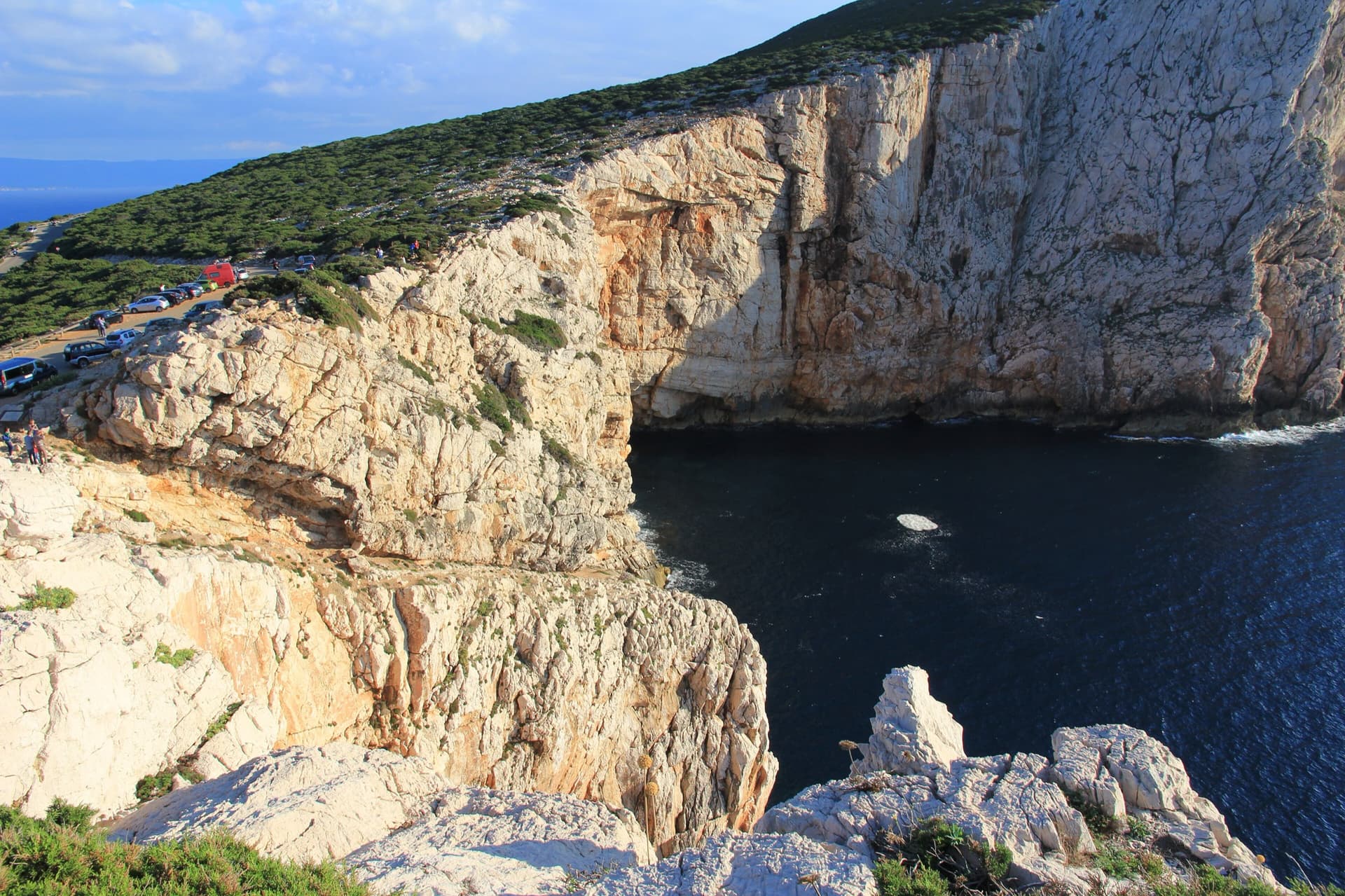
Pedra Longa, the 128 m limestone tower on the Baunei coast, seen from the shoreline rocks at its foot.

Italy · Sardinia

Marinaio di Foresta

An airy, mostly left-rising traverse that spirals round the Pedra Longa sea stack to its summit, on water-runnelled grey walls and pocketed white rock right above the sea. It has become one of the most popular routes in Sardinia, so expect queues.

6a+7 pitches190 m

Committing
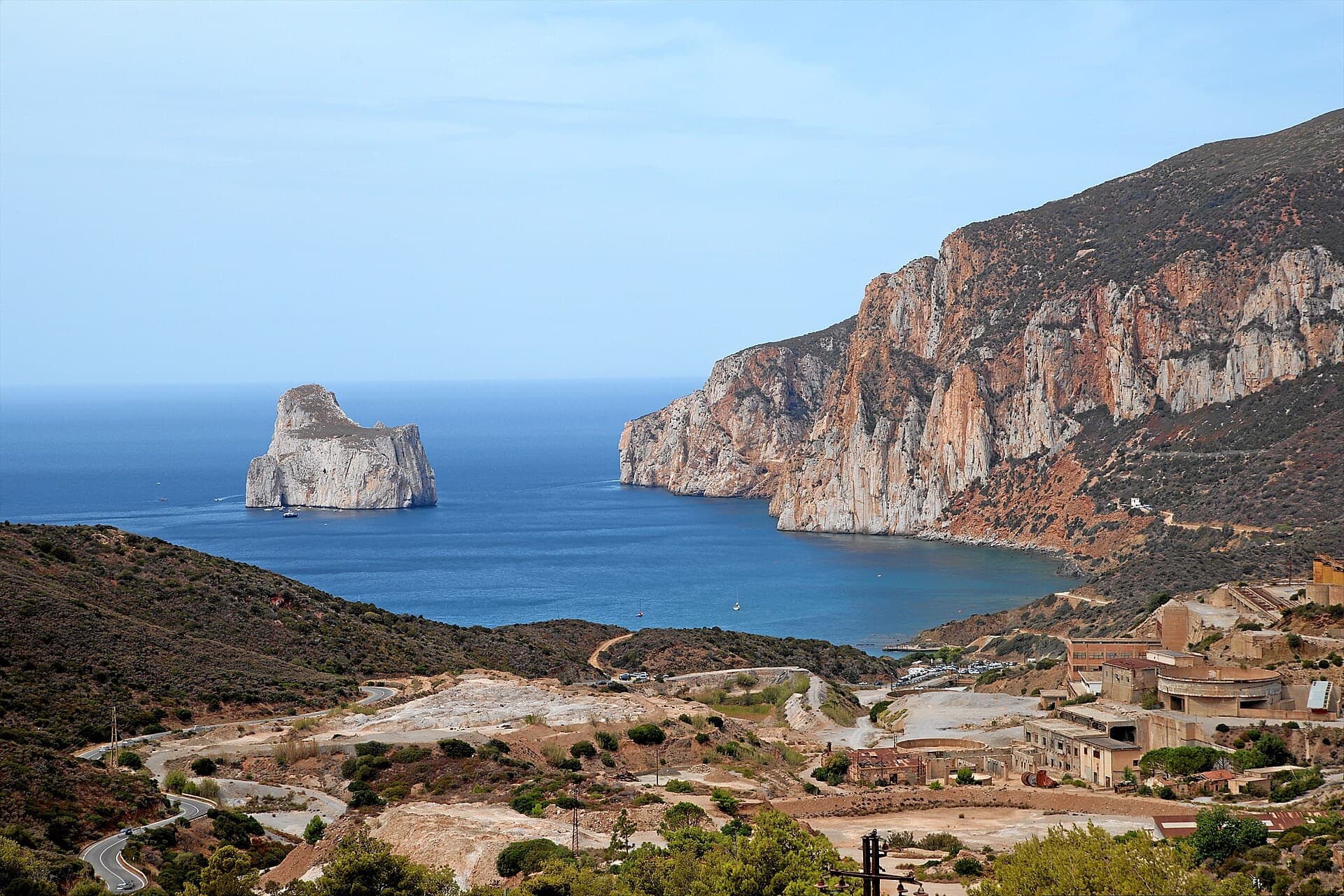
The orange limestone cliffs of Masua (right) above the old mine workings, with the Pan di Zucchero sea stack offshore.

Italy · Sardinia

L'Italia Liberata

A short but superb sea-cliff route on beautifully sculpted limestone in an incredible setting near Pan di Zucchero. Corners and an airy pillar lead to a steep, rounded 6a wall. Camptocamp rates it 'great'.

6a4 pitches120 m

The limestone sea cliffs of Capo Caccia below the Foradada viewpoint car park, dropping straight into the sea.

Italy · Sardinia

Powaqqatsi

The easiest line on the Capo Caccia sea cliff: six pitches of 4b to 4c on pocketed, sharply sculpted limestone above the open sea. You abseil in from the top and climb out. The first two pitches are vegetated; the climbing proper starts on the pitch 3 slab.

4c6 pitches145 m

Read the cautionsCommitting

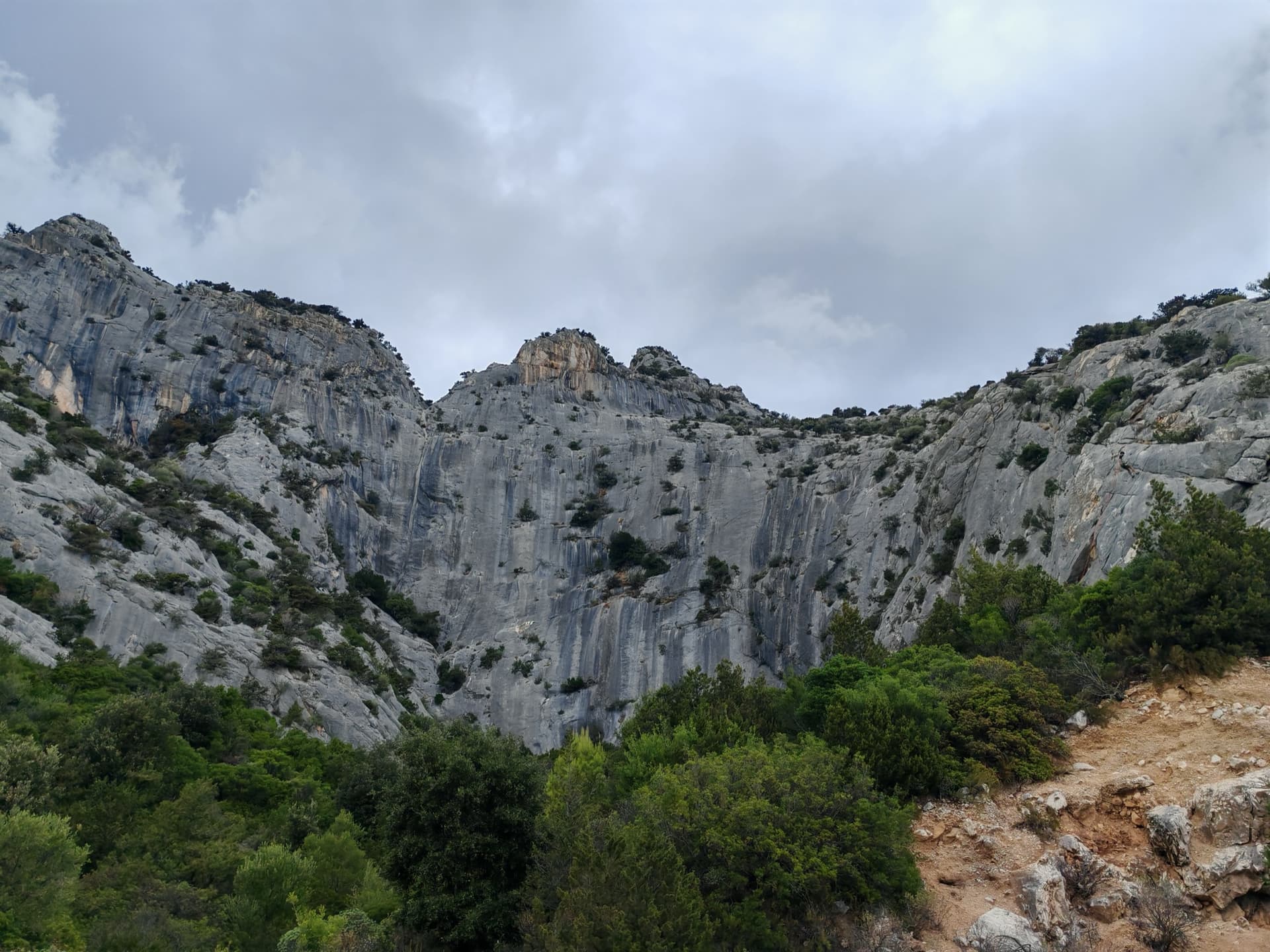
The grey limestone amphitheatre of La Poltrona above Cala Gonone, seen from the approach path.

Italy · Sardinia

Lilith

An easy and popular line on the big amphitheatre above Cala Gonone: three 4c pitches of juggy steps and easy-angled slabs, a short walk left through bushes, then a 35 m wall of heavily sculpted rock at 5a. Expect queues.

5a4 pitches120 m

Around 6b · about 5 pitches

Similar elsewhere

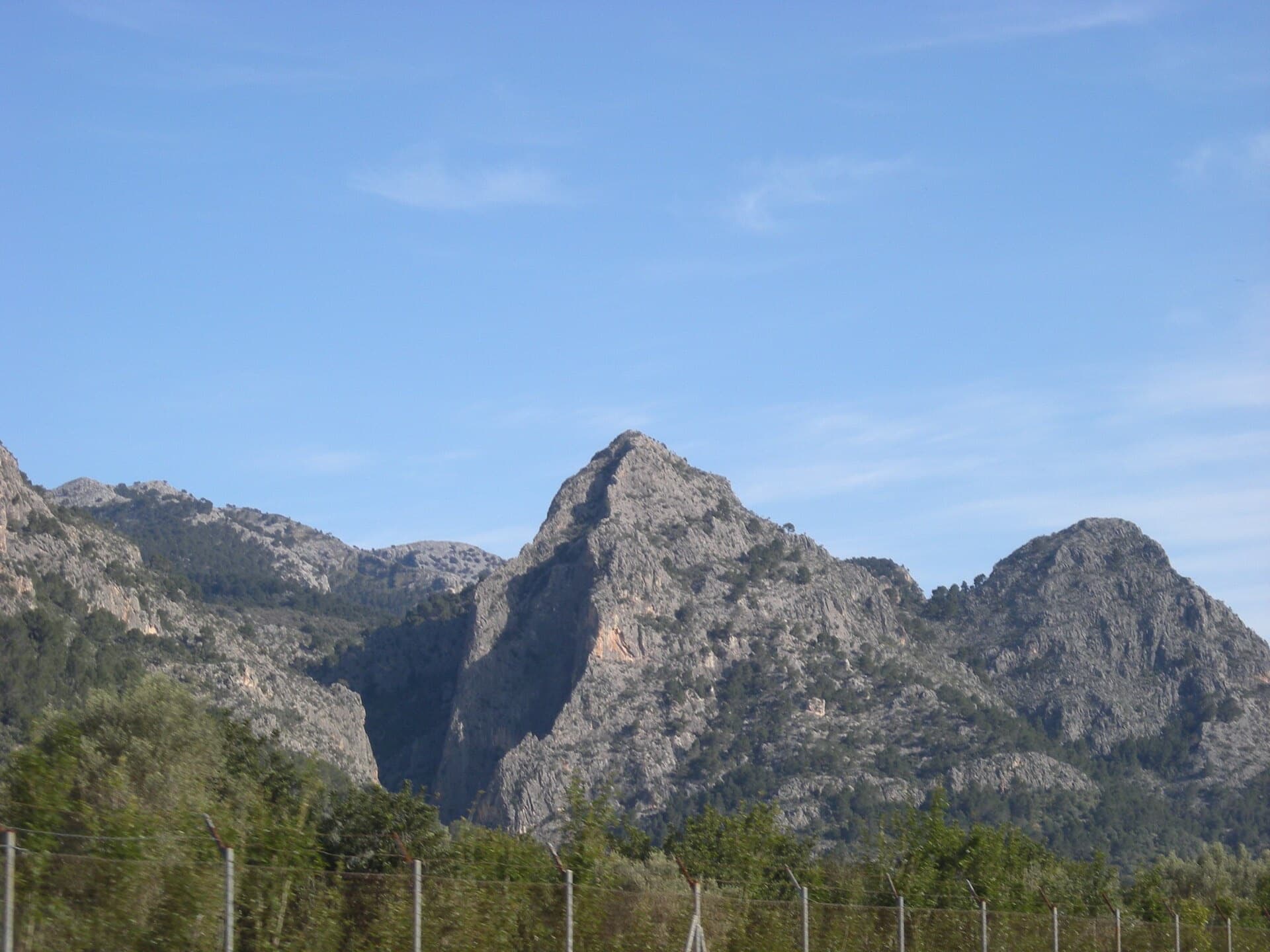
Sa Gubia seen from the Palma to Sóller road: the pointed Puig de s'Alqueria and the gorge that splits it, whose walls hold the multipitch sectors. The exact line is not identifiable at this distance.

Spain · Mallorca (Sa Gubia)

Via Llum de Lluna

Technical, sustained wall climbing on positive holds up the left side of the Princesa wall, ending in a memorable powerful finish.

6b5 pitches216 m

Read the cautions

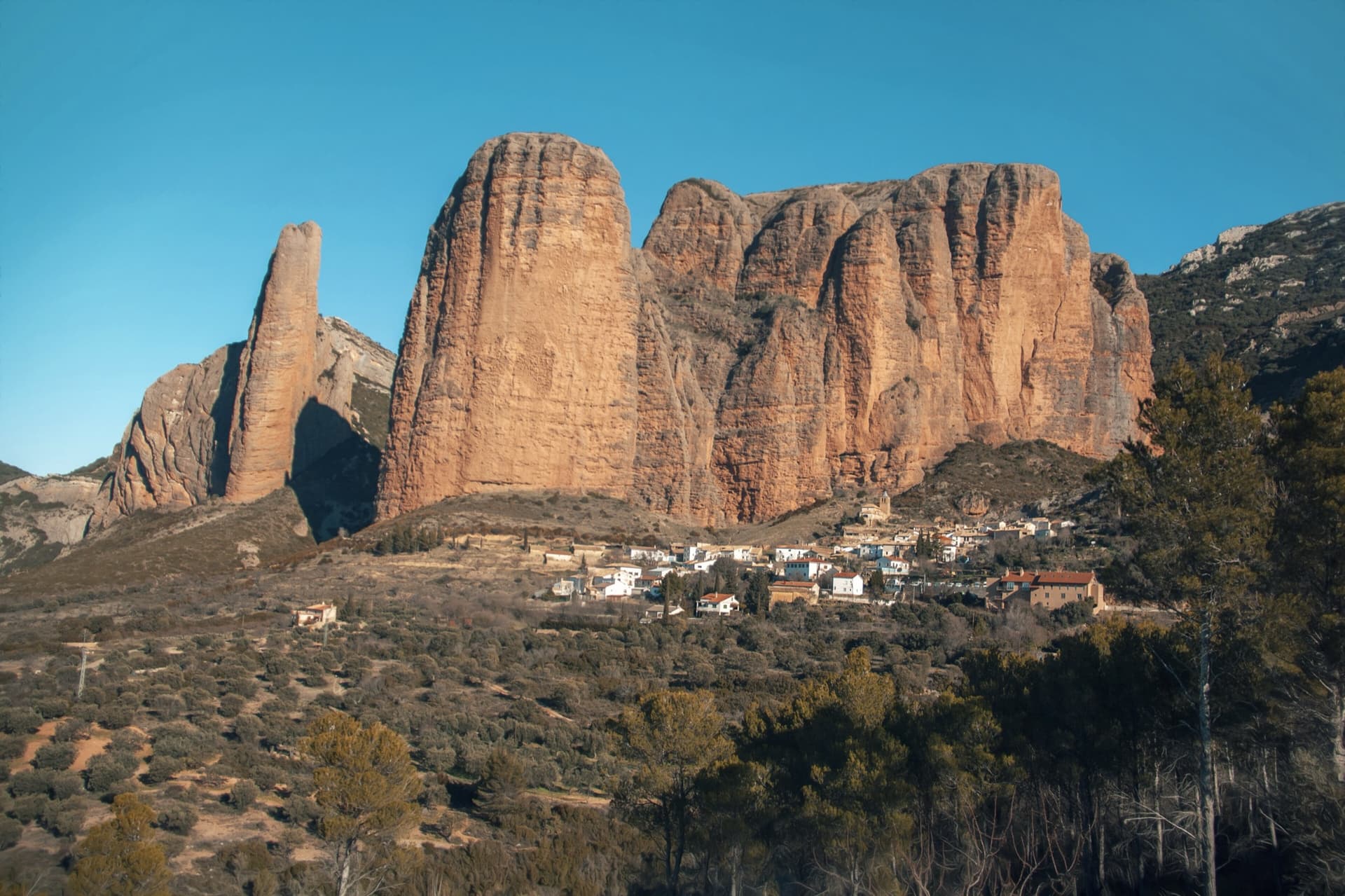
The classic view of Riglos from the south-west: the slender pinnacle of El Puro on the left, the great dome of Mallo Pisón beside it, and the main wall running right to La Visera above the village.

Spain · Riglos & Agüero (Mallos)

Chopper

A fine short route on the right edge of the Pisón, ending on a big terrace at half height. A vertical wall on small holds on pitch 3 and two hard moves on the last pitch.

6b5 pitches150 m

Read the cautions

No photo yet

Greece · Kalymnos & Telendos

Abert Project

A pretty route up the grey and orange walls of Ocean Dream to the summit plateau. The crux is a thin, sustained 6a+ slab on P3 where you must free the moves, and the line finishes on a vertical pillar. It is in the shade in the morning.

6b5 pitches150 m

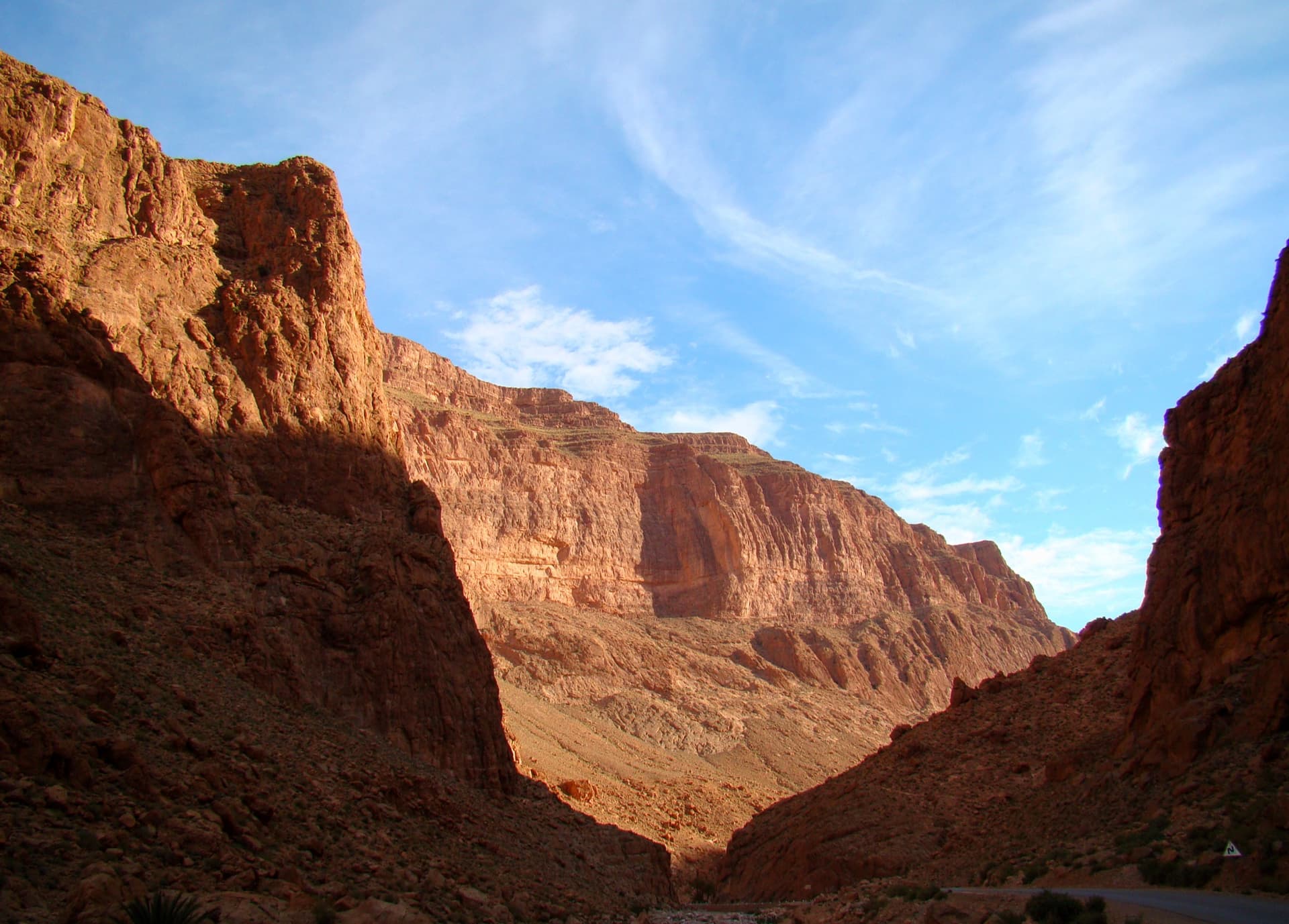
Morning light on the cliffs of the Todra valley upstream of the narrows; a view of the upper valley, not of the Patchwork Family wall.

Morocco · Todra Gorge (Todgha)

Polo del Sol

The only multipitch on a pillar about 800 m up the road from the gorge exit. Sustained at 6a+/6b on new, very abrasive rock, with a walk between pitches 2 and 3.

6b5 pitches210 m

Read the cautions

Compiled from published sources and last verified October 2026. Bolts, anchors and access change. Climbing is dangerous and you are responsible for your own decisions: check a current topo and read the disclaimer.