Multipitch Atlas

Normal al Puro

El Puro (Mallo Pisón), Riglos · Riglos & Agüero (Mallos) · Spain

Read the cautionsEasy to bailBolting confidence: medium

The way up the detached cigar that is the symbol of Riglos, first climbed in 1953. A polished corner, then the chimney between the Puro and the Pisón, then three short pitches on the outside of the needle to a tiny summit. Very polished in the chimney and on the boulder moves. In shade most of the day.

El Puro, the pinnacle beside Mallo Pisón, RiglosPhoto: Paul Lanusse-Cazalé · CC BY-NC-ND 3.0

Photo

El Puro, the pinnacle beside Mallo Pisón, RiglosPhoto: Paul Lanusse-Cazalé · CC BY-NC-ND 3.0
Hardest pitch
6b
Pitches
10
Length
180 m
Approach
–
Aspect
W
West-facing
Rope
2×50 m
Read before you go

Climbed on quickdraws alone, but the fixed gear is a mix of bolts, pitons and threads, is spaced in the chimney and absent on the easy gully, and the rock is very polished.

The route

Overview

The normal route up El Puro, the 180 m needle that stands off the side of the Mallo Pisón and is the emblem of Riglos. It is more of a mountaineering outing than a sport route: polished corners low down, a deep chimney between the Puro and the Pisón, then three short, airy pitches on the outside of the needle to a tiny summit. The three hard moves (6a+/6b, 6a and 6b) are short boulder problems that can all be pulled through on fixed gear, leaving about 5c obligatory. The fixed gear is a mix of bolts, pitons and threads and is sparse on the easier ground, so it feels more serious than the grade suggests.
The climbing

Pitch by pitch

Pitches of Normal al Puro
PitchGradeLengthNotes
P14c–Original start. Less than vertical climbing to a belay on a terrace. Reported very polished, with a distant first bolt.
P25c–Over a bulge, or avoid it by an easier traverse. The direct-start variant (5c, about 35 m, black chimney-corner) replaces pitches 1 and 2 and arrives at this belay on a good terrace.
P35c/6a45 mA crack and corner on good holds, the best pitch of the lower part. Reported extremely polished in April 2026. One party measured it at 30 to 35 m rather than 45 m.
P44c10 mShort pitch trending up and right, protected by a bolt and threads (two in-situ cord loops), to a horizontal cable. A 2025 party found a 5+ move straight off the belay. The climbing belay is at the right end of the cable; the descent abseils leave from the other end. You are now at the foot of the chimney that splits the Puro from the Pisón.
P56a+15 mEnter the chimney by a short overhanging corner: a hard, polished boulder problem on undercuts that goes at A0. Several recent parties rated this move 6b. Belay on the right inside the chimney. Can be linked with pitch 6 (about 50 m in total).
P65+37 mUp the chimney (given 5/5+). Polished, with sparse fixed gear: a few bolts, pitons and threads with cord in place. A 2025 party counted three bolts plus some threads on this pitch. Belay where the difficulties end.
P7315 mEasy gully to the col under the chockstone, where the Puro separates from the Pisón. Reports say there is no fixed protection on this pitch. From here the route moves onto the south side and the rock improves.
P85c15 mAbove the belay then slightly left. A recent party described it as leaving the belay leftwards, then back right to the second bolt, weaving between bulges, and felt it was nearer 5b; the bolts zigzag, so extend them. The Spanish description gives this pitch as about 35 m. Mixed fixed gear (bolts, pitons, threads), and some holds move.
P96a15 mOne physical, polished boulder move, A0 possible. Often linked with pitch 8. The belay is reached by a short traverse right at the top.
P106b15 mOne physical move over the bulge straight above the belay (a dynamic move right, or pull on the in-situ piton with sling and the fixed handles), then easy to the summit. Belay at the top of the summit cable.

Getting there

Approach

To the parking

Riglos village (Las Peñas de Riglos) is about 45 km north-west of Huesca. From Huesca drive to Ayerbe, follow the A-132 towards Jaca and turn right after a few kilometres onto the small road to Riglos; from Pamplona or France (Somport, Jaca, Puente la Reina de Jaca) take the A-132 towards Ayerbe and turn left shortly after Murillo de Gállego. Parking is in the large pay car parks at the village entrance (3 EUR a day for cars, 6 EUR for vans in 2026). The refugio is the modern building on the left as you enter the village; there is a campsite at Murillo de Gállego.

On foot

Walk through the village to the foot of the Mallo Pisón; the needle is obvious. Routes at Riglos are generally only a few minutes from the village. The original start is about 15 m right of the lowest point of the Pisón, roughly below the summit of the Puro, and is hard to pick out among the single-pitch routes at the base. Most parties now use the direct start instead: a big blackish chimney-corner with good holds, well to the left in the single-pitch sector on the left (NW) side of the base, which gives one 5c pitch of about 35 m straight to the second belay. Parties starting this way warn that an anchor belonging to the single-pitch routes is easy to mistake for the belay: the proper, more comfortable belay is above a bulge.

Finding the route · 2 photos

  • OverviewEl Puro (the thin needle on the left) leaning against the Mallo Pisón above Riglos village. The red notes on the photo describe the descent from the Pisón, not this route.Photo: Sype · CC BY-SA 3.0
  • OverviewEl Puro seen from the village: the detached needle stands against the left flank of the Pisón.Photo: janic · CC BY-NC-ND 3.0

Approach photo

Map of the walk-in

  • Crag

Loading map

The point marks the crag, not the exact start of the route.

Coordinates · crag

42.35049, -0.72848

Point from camptocamp waypoint 134565

For your phone or watch

Download GPX

Contains the route point. Opens in most mapping apps and GPS watches.

Points are compiled from published sources, with the precision stated above. They were not surveyed on the ground: check them against a current topo.

Getting down

Descent

By abseil. A cable on the summit leads to the abseil line between the Puro and the Pisón. Camptocamp describes three options: (1) abseil straight down the route from the summit, awkward and only worth it with a single rope; (2) from the lowest point of the cable, abseil 45 m towards the chimney, then 50 m to R5, a short abseil to the lower cable, follow it about 10 m to the next line and make two more abseils to the ground; (3) from the end of the cable, abseil directly down the west face. With 2×60 m the Spanish description gives four abseils: summit to the belay at the end of the 6a+ pitch, then to the foot of the chimney, then two to the ground, and a 2025 party confirmed four abseils on 60 m ropes. With a single 60 m rope a 2025 party needed eight abseils down the route. A 2024 party found a 50 m rope enough for the abseils, provided you use the intermediate anchor below the summit before the abseil that reaches the cable. All belays have welded rings.

Retreat

Bailing off the route

Easy to bail

Yes. Every belay has welded rings and the guide's sources say you can retreat from any point; the normal descent is by abseil in any case. With a single 60 m rope a 2025 party abseiled the whole route in eight abseils. The chimney is the awkward part: ropes jam there if you run abseils together, and it is a stonefall funnel shared with climbers below.

Retreat from
Any belay. Useful landmarks are the lower cable at the foot of the chimney (top of pitch 4), where the standard descent line leaves from the far end of the cable, and the col under the chockstone at the top of pitch 7. With 2×60 m the standard descent is four abseils from the summit.
Carry
2×50 m or 2×60 m is comfortable. A single 60 m works with short abseils belay to belay. No gear needs to be left.
Basis
Stated in the sourcesCamptocamp and its trip reports state that all belays have welded rings, that the route can be abseiled (eight abseils on one 60 m rope in 2025) and that ropes jam and stones fall in the chimney.

Safety

Hazards

  • Fixed gear is mixed (bolts, pitons, in-situ threads) and sometimes far apart, especially in the chimney (about three bolts and a few threads on pitch 6) and on the easy gully to the col, which has no fixed protection.
  • Heavy polish on the first pitches, in the chimney and on the boulder moves of pitches 9 and 10.
  • Stonefall in the lower part and in the chimney, which is also the abseil line. Parties abseiling have knocked stones onto climbers below.
  • Abseil ropes jam easily in the chimney if you try to run abseils together (a 55 m abseil straight to the chimney belay is reported as prone to jamming).
  • Some holds on the upper needle are loose, and strong wind is common from the col upwards.

Sun and weather

Conditions

The lower pitches and the chimney are on the north-west side and stay in shade most of the day, or all day with an early start; the last three pitches are on the south side and are in the sun for a late-morning start, though a party starting at 09:30 climbed them in shade too. Reports describe it as cold and windy in the chimney and at the col in spring and autumn, and still hot in July. The undercuts on the 6a+ crux can be damp after overnight rain. A very popular route: expect other parties above and below at weekends, though several recent reports had it to themselves midweek.

Usual season · Feb to May, Oct to Dec

Sun on the wall · W-facing

Working out the sunlit hours for this month.

  • January: not yet worked out
  • February (usual season): not yet worked out
  • March (usual season): not yet worked out
  • April (usual season): not yet worked out
  • May (usual season): not yet worked out
  • June: not yet worked out
  • July: not yet worked out
  • August: not yet worked out
  • September: not yet worked out
  • October (usual season): not yet worked out
  • November (usual season): not yet worked out
  • December (usual season): not yet worked out

Sun on the wallDaylight, wall in shade● Usual season

Estimated from the wall's aspect only. Ignores surrounding terrain, gullies and the wall's exact shape. Clock times are local to the wall (Central European time), for the 15th of each month.

Climate figures for Riglos & Agüero (Mallos) are not available yet

What to carry

Gear

12 quickdraws (take enough for the first two pitches), several of them long, plus long slings to equalise belays whose bolts are far apart. Helmet essential. A single 60 m rope works with some improvisation on the descent; 2×50 m or 2×60 m is more comfortable.

Checklist

Quickdraws
12
Rope
2×50 m
Helmet
One each
Abseil device and prusik
The descent or the retreat involves abseiling

Derived from the route data; check it against a current topo

From climbers

Reader reports

Reader reports are not being collected yet. Until they are, check a current topo and the local club or guidebook publisher for recent changes to Normal al Puro.

Worth knowing

Tips

  • Take the direct start (black chimney-corner on the left): it is easier to find and most recent parties prefer it.
  • Link pitches 5 and 6 (about 50 m) and pitches 8 and 9; pitches 9 and 10 can also be run together.
  • All belays have rings, so you can retreat from any point.
  • To avoid queues on the normal abseils, one 2024 party abseiled 45 m from the glue-in anchors at the start of the cable to the top anchors of the single-pitch routes below, then to the ground.
  • From the col you can continue to the summit of the Pisón by other, more serious routes.

Open questions

Where sources disagree

  • Pitch count and lengths: the French Camptocamp description gives 10 pitches; the Spanish one gives 9, treating the chimney as a single 50 m pitch and pitch 8 as 35 m. A 2024 party said the printed topo lengths are right and Camptocamp's are not. The 10-pitch breakdown is kept here, with the differences noted.
  • The move into the chimney is 6a+ on Camptocamp and on Vertical Pirate, but several recent reports call it 6b.
  • Rope: Camptocamp's gear note says a single 60 m rope is enough with improvisation; the described abseils of 45 m and 50 m need two ropes. The 2×50 m listed here follows the comfortable option.
  • Bolting: Camptocamp rates the equipment P1, but a 2025 report argues the chimney pitch deserves P1+ and several reports stress distant gear.

Provenance

Sources

Same area

More in Riglos & Agüero (Mallos)

All routes in Riglos & Agüero (Mallos)
The Adamelo spur on Mallo Pisón, Riglos

Spain · Riglos & Agüero (Mallos)

Espolón del Adamelo

This is the gentlest way to sample Riglos. Polished pockets and two bulging 'panzas' lead to a 6a crux that can be pulled through on the bolts (A0). The upper spur is easy, and the Pisón towers loom close by.

6a7 pitches175 m

Read the cautions

Topo of Sendero Límite on the south face of Peña Rueba (Mallo Común)

Spain · Riglos & Agüero (Mallos)

Sendero Límite

A long beginner's big route on good conglomerate at a moderate angle. Pitches can be linked in pairs with a 60 m rope. A four-pitch headwall with a couple of panzas finishes high above the Gállego valley.

5c14 pitches375 m

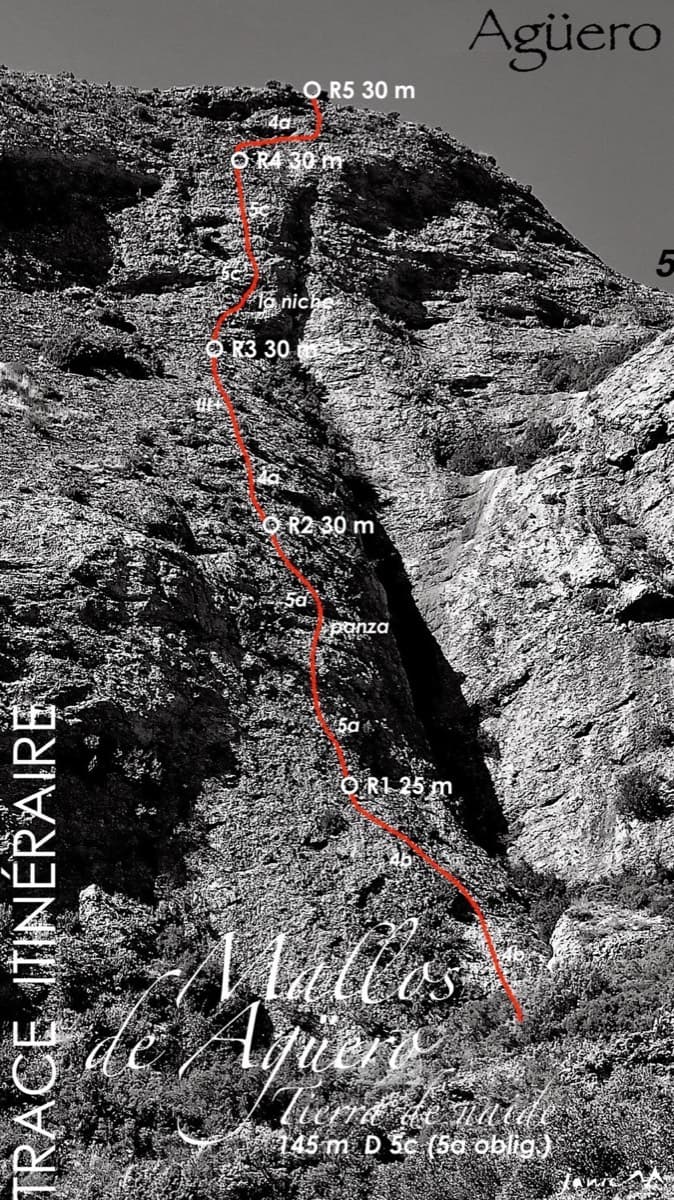
Topo of Tierra de Naide, Mallos de Agüero

Spain · Riglos & Agüero (Mallos)

Tierra de Naide

A morning-sun route at the quieter Agüero mallos. Easy slabs separate two fine steep walls, including a superb vertical 5c plaque on pitch 4. Take care with some loose cobbles on the last traverse.

5c5 pitches145 m

Around 6b · about 10 pitches

Similar elsewhere

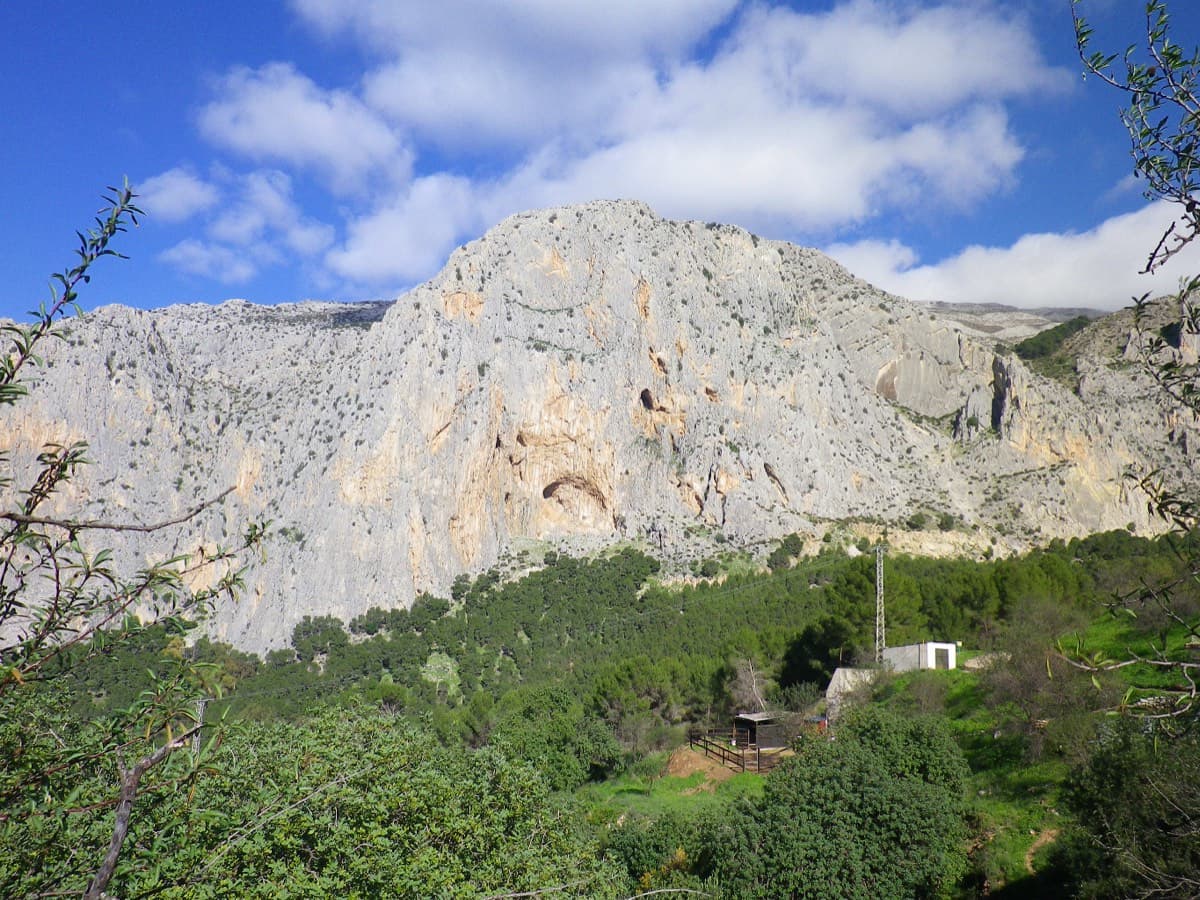
The Frontales cliffs above El Chorro

Spain · El Chorro

Estrella Polar

Ten varied pitches on good rock in a superb position: a roof, slabs, a tenuous traverse by a cave and a steep corner. Several pitches feel stiff for the grade, especially the P2 crux.

6b10 pitches279 m

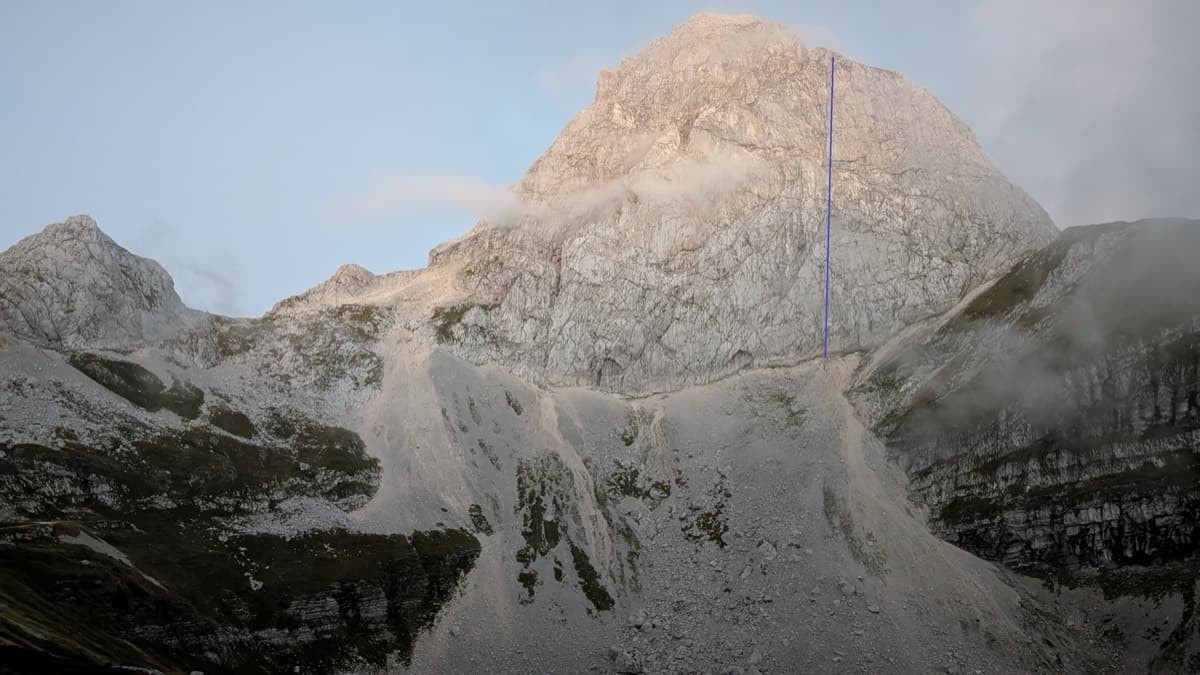
Mangart with the line of Briljantina marked

Slovenia · Mangart (Julian Alps)

Briljantina

A long bolted climb up the west face of Mangart, starting at about 2,180 m and finishing near 2,580 m. Two 60 m pitches of 6a open the route and the first half is the best; a 6b corner that can be aided is the crux. An alpine outing with a tricky approach in cloud and rock that is not always perfect.

6b10 pitches400 m

Read the cautions

The Paroi des Sources (left) and the Taoujdad seen from near Taghia

Morocco · Taghia

Belle et Berbère

Ten pitches of even 6b and 6b+ on compact rock ten minutes from the gîtes, mostly technical slab and wall climbing on your feet, with a 50 m sixth pitch on vertical edges that everyone singles out. It is among the most accessible long routes at Taghia, in the shade for most of the day, and a little polished low down.

6b+10 pitches330 m

Read the cautions

No photo yet

Spain · Vega Baja (Orihuela & Callosa)

Botri

The classic of Redován: ten pitches and 300 m of steady grade 5 with three steeper pitches on red rock. The eighth pitch, a traverse right into an overhanging corner above the orange cliffs, is the one people remember. Closed from January to June for nesting eagles.

6a+10 pitches300 m

Compiled from published sources and last verified October 2026. Bolts, anchors and access change. Climbing is dangerous and you are responsible for your own decisions: check a current topo and read the disclaimer.