Multipitch Atlas

Mandolinca

Nad Šitom glava – SE face · Vršič Pass (Julian Alps) · Slovenia

Easy to bailBolting confidence: high

A compact modern sport multipitch by Tomo and Dragica Česen, front-loaded with its longest and hardest pitch. It is close to the road and good for a half-day.

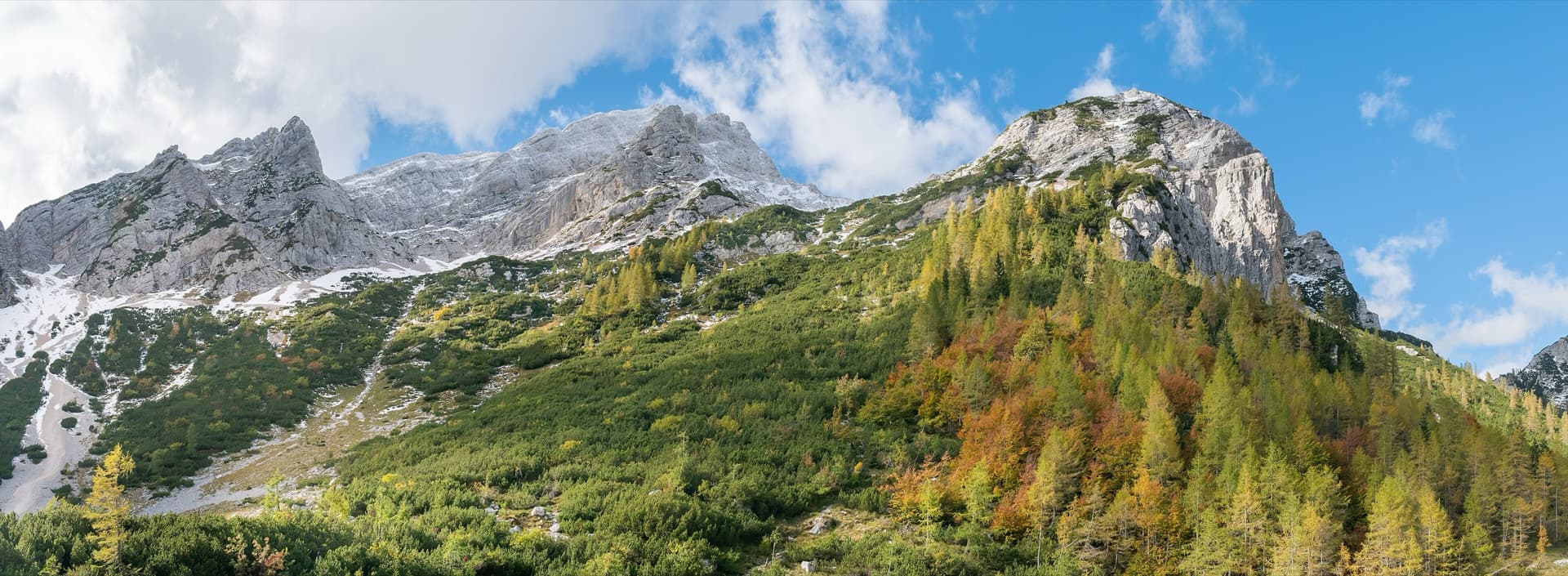
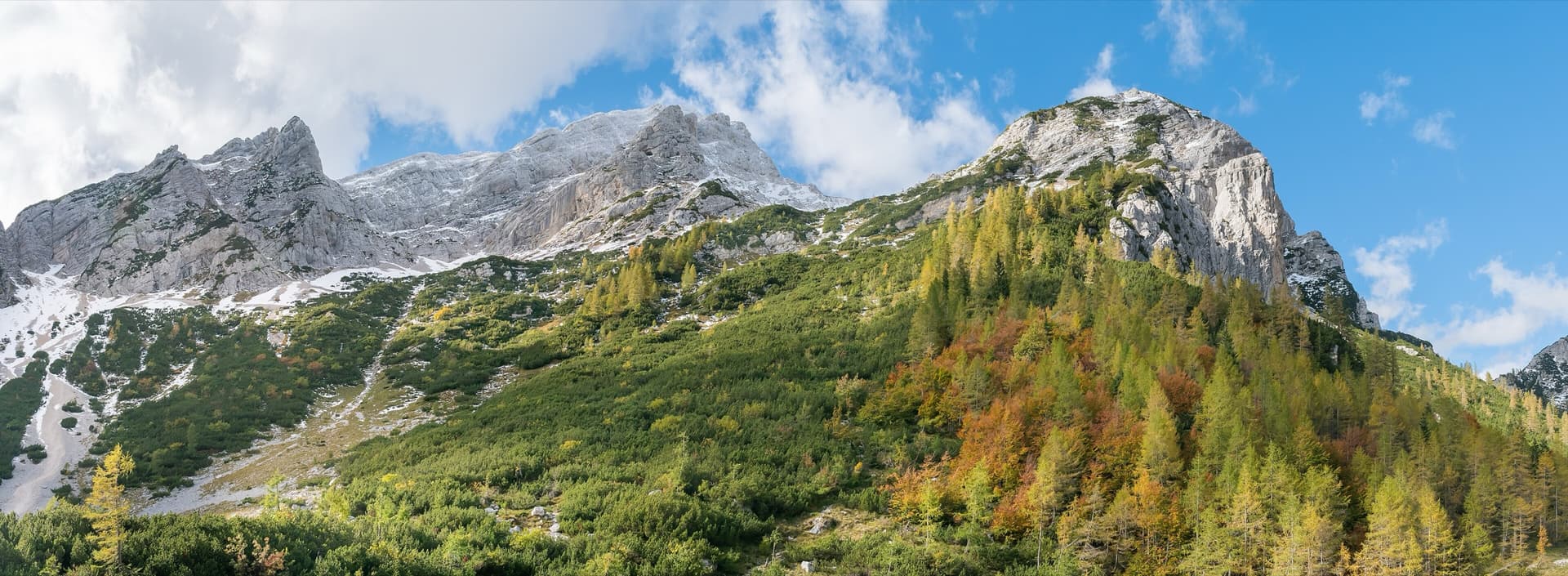
Mala Mojstrovka (left) and Nad Šitom glava (right) from the Vršič Pass in autumn; the routes are on the pale rock wall of Nad Šitom glava above the larches.Photo: Krzysztof Golik · CC BY-SA 4.0

Photo

Mala Mojstrovka (left) and Nad Šitom glava (right) from the Vršič Pass in autumn; the routes are on the pale rock wall of Nad Šitom glava above the larches.Photo: Krzysztof Golik · CC BY-SA 4.0
Hardest pitch
6b
Pitches
4
Length
90 m
Approach
30 min
Aspect
SE
South-east-facing
Rope
1×60 m

The route

Overview

A compact four-pitch bolted route by Tomo and Dragica Česen on the left part of the wall, close to their route Violinca. The first pitch is both the longest and the hardest, so the difficulty is front-loaded and the rest eases to 5c and 6a. It is very close to the road and plezanje.net gives about 1.5 h of climbing, which makes it a half-day outing. The upper pitches carry only three to five bolts each, so it feels more alpine-sport than crag.

The climbing

Pitch by pitch

Pitches of Mandolinca
PitchGradeLengthBoltsNotes
P16a+/6b30 m11 boltsThe longest and hardest pitch. The first ascensionists proposed 6a+/6b; all three plezanje.net votes are 6b. Takes 11 quickdraws.
P25c20 m5 boltsShorter and easier. A slab lies directly below the second belay.
P36a20 m4 bolts–
P46a–3 boltsSlightly shorter than pitches 2 and 3; exact length not published.

Getting there

Approach

To the parking

The face stands directly above the Vršič pass road in the Julian Alps; Kranjska Gora is the nearest town. Park at the pass. Sources describe the scree as running straight from the Vršič car park to the foot of the wall. None of the sources read gives bus or parking-fee details.

On foot · about 30 min

From the Vršič pass car park walk up the easy scree that leads straight to the foot of the wall. The crag record gives 30 min. On the first ascensionists' topo photo the route starts at the same point as Vidova smer, right of Violinca and Steber ob Kamenkovem kaminu, and crosses Vidova low on the first pitch before running parallel to it on its right. No source mentions a painted name.

Finding the route · 2 photos

Approach photo

Map of the walk-in

  • Crag

Loading map

The point marks the crag, not the exact start of the route.

Coordinates · crag

46.43890, 13.73931

Point from plezanje.net crag "Nad Šitom glava, jugovzhodna stena"

For your phone or watch

Download GPX

Contains the route point. Opens in most mapping apps and GPS watches.

Points are compiled from published sources, with the precision stated above. They were not surveyed on the ground: check them against a current topo.

Getting down

Descent

Abseil the route. The first ascensionists specify a single 60 m rope, abseiling from belay to belay. If you use double ropes and go from the fourth belay straight to the second, the plezanje.net note says you have to climb part of the slab below the second belay to reach it.

Retreat

Bailing off the route

Easy to bail

Yes. The first ascensionists describe abseiling the route from belay to belay on a single 60 m rope, so you can turn round at any belay. Do not try to skip stations on double ropes: a long abseil from R4 does not land at R2, and you have to climb part of the slab below it.

Retreat from
Any of the four belays, abseiling belay to belay.
Carry
1×60 m rope. Nothing to leave behind.
Basis
Stated in the sourcesThe first ascensionists (friko.si) and the plezanje.net note state the belay-to-belay abseil on a single 60 m rope and the problem with long double-rope abseils.

Safety

Hazards

  • Bolt spacing opens up after pitch 1: 5 bolts in about 20 m on pitch 2, 4 on pitch 3 and only 3 on the 6a top pitch.
  • With double ropes, a long abseil from belay 4 does not land at belay 2; you must climb part of the slab below it. Abseil belay to belay on a single 60 m rope to avoid this.
  • On the neighbouring Violinca the Česens warn of loose stones on the last ledge below the top, which can be knocked onto parties below and onto Kamenkov kamin. Mandolinca finishes close by on the same part of the wall, so take the same care when pulling ropes; no report confirms loose rock on Mandolinca itself.

Sun and weather

Conditions

South-east facing, with route altitudes on plezanje.net between about 1,850 and 2,000 m. One area guide notes the face goes into shade after about 14:00, so summer afternoons are cool and spring or autumn give more sun. plezanje.net ascent logs for the face cluster in June to September, with a few in May and October. Drying times are not documented.

Usual season · Jun to Oct

Sun on the wall · SE-facing

Working out the sunlit hours for this month.

  • January: not yet worked out
  • February: not yet worked out
  • March: not yet worked out
  • April: not yet worked out
  • May: not yet worked out
  • June (usual season): not yet worked out
  • July (usual season): not yet worked out
  • August (usual season): not yet worked out
  • September (usual season): not yet worked out
  • October (usual season): not yet worked out
  • November: not yet worked out
  • December: not yet worked out

Sun on the wallDaylight, wall in shade● Usual season

Estimated from the wall's aspect only. Ignores surrounding terrain, gullies and the wall's exact shape. Clock times are local to the wall (Central European time), for the 15th of each month.

Monthly climate averages for Vršič Pass (Julian Alps), 1991-2020
MeasureJanFebMarAprMayJun (usual season)Jul (usual season)Aug (usual season)Sep (usual season)Oct (usual season)NovDec
Mean daily high °C−5−4−0491315151161−4
Mean daily low °C−11−11−8−404663−1−5−10
Rain days 1 mm or more891115181818171311129

● marks the usual climbing season. Averages for 1991-2020 at about 2035 m. Area climate from Open-Meteo reanalysis. Temperatures are adjusted to the height of the crag; rain comes from a grid cell of about 10 to 25 km, and summer highs on sea cliffs can read a few degrees low. The wall and valley can differ. Data: Open-Meteo, CC BY 4.0.

What to carry

Gear

Single 60 m rope and 11 quickdraws. The plezanje.net record lists 0 pitons, 0 cams and 0 nuts. Helmet.

Checklist

Quickdraws
11
Rope
1×60 m
Helmet
One each
Abseil device and prusik
The descent or the retreat involves abseiling

Derived from the route data; check it against a current topo

From climbers

Reader reports

Reader reports are not being collected yet. Until they are, check a current topo and the local club or guidebook publisher for recent changes to Mandolinca.

Worth knowing

Tips

  • The first ascensionists asked repeaters to report their opinion of the grades, which were still being aligned across the face.
  • Violinca (6a/6a+, 4 pitches, 8 quickdraws, same abseil descent) starts a short way to the left on the same topo photo and makes a natural second route.
  • plezanje.net gives about 1.5 h climbing time.

Open questions

Where sources disagree

  • Pitch 1 grade: first ascensionists proposed 6a+/6b; the plezanje.net base grade and all three votes are 6b. This entry keeps 6a+/6b and notes the 6b consensus.
  • Face name: the friko.si article calls it the south face; plezanje.net files it under the south-east face. Same wall.

Provenance

Sources

Same area

More in Vršič Pass (Julian Alps)

All routes in Vršič Pass (Julian Alps)
Mala Mojstrovka (left) and Nad Šitom glava (right) from the Vršič Pass in autumn; the routes are on the pale rock wall of Nad Šitom glava above the larches.

Slovenia · Vršič Pass (Julian Alps)

Črni panter

Sustained slab climbing up a striking black streak, clearly visible from the pass, on surprisingly good rock for this face. The crux is a move from slab into a corner on P2.

6b+4 pitches105 m

Read the cautions
Mala Mojstrovka (left) and Nad Šitom glava (right) from the Vršič Pass in autumn; the routes are on the pale rock wall of Nad Šitom glava above the larches.

Slovenia · Vršič Pass (Julian Alps)

Mavrica življenja

A memorial route (to Nejc Sedej) of slabs, a little pillar and a final corner-to-pillar pitch that is the crux. 6a is obligatory.

6b4 pitches115 m

Read the cautions

Mala Mojstrovka (left) and Nad Šitom glava (right) from the Vršič Pass in autumn; the routes are on the pale rock wall of Nad Šitom glava above the larches.

Slovenia · Vršič Pass (Julian Alps)

Rdeča pentlja

Beautiful plates and mini dolomite-style runnels, then a final corner. It makes a neat companion to its neighbours on the same face.

6a+4 pitches110 m

Around 6b · about 4 pitches

Similar elsewhere

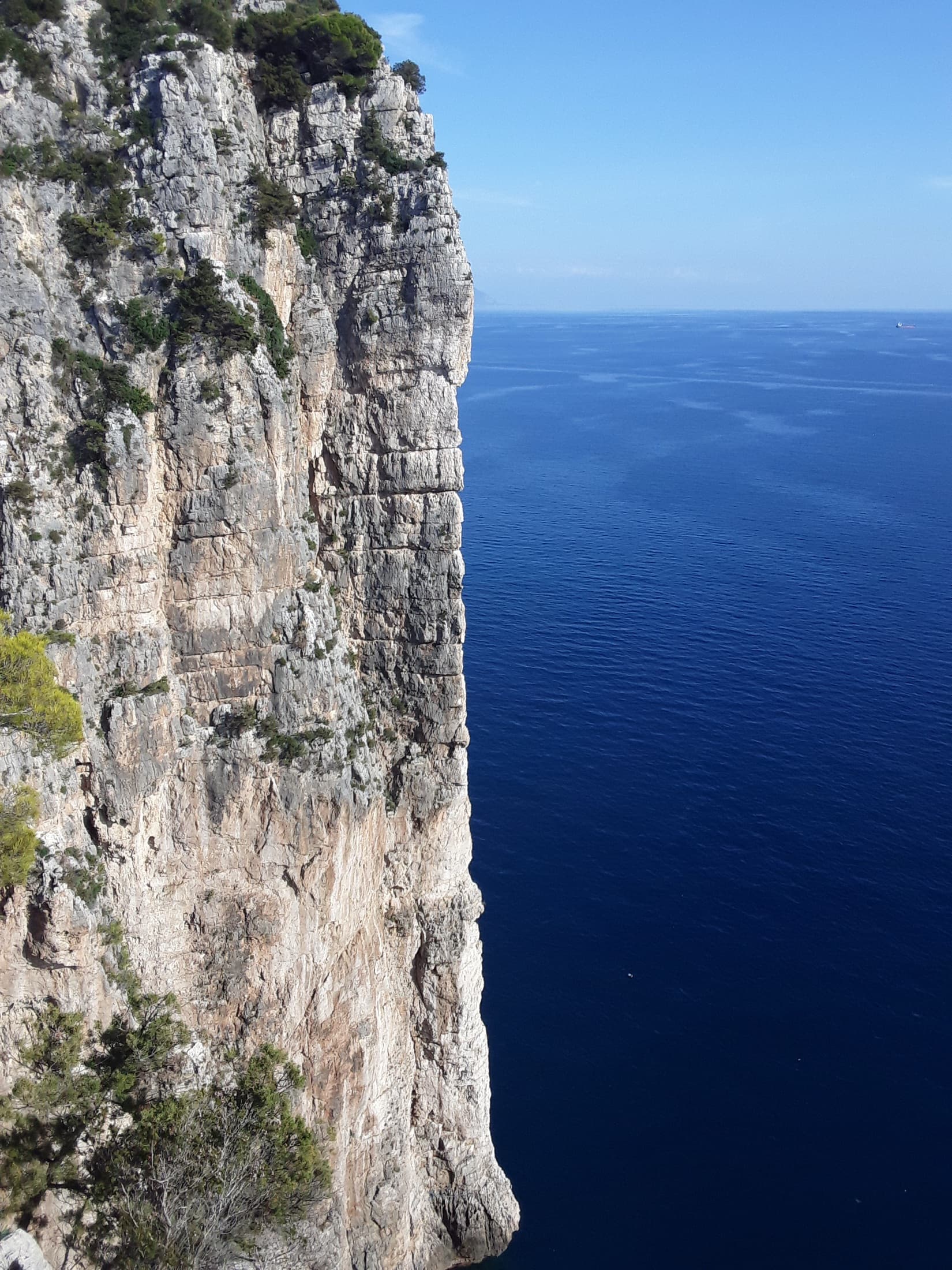
The vertical limestone spur of La Croce del Sud dropping straight into the Tyrrhenian Sea at the Montagna Spaccata, Gaeta.

Italy · Gaeta & Sperlonga

La Croce del Sud

The showpiece of the Montagna Spaccata: four steep, exposed pitches up a knife-edge spur that drops straight into the sea, reached by abseil. Sustained around 6a+ on good holds, with an overhang at 6b to finish.

6b4 pitches120 m

Read the cautionsCommitting

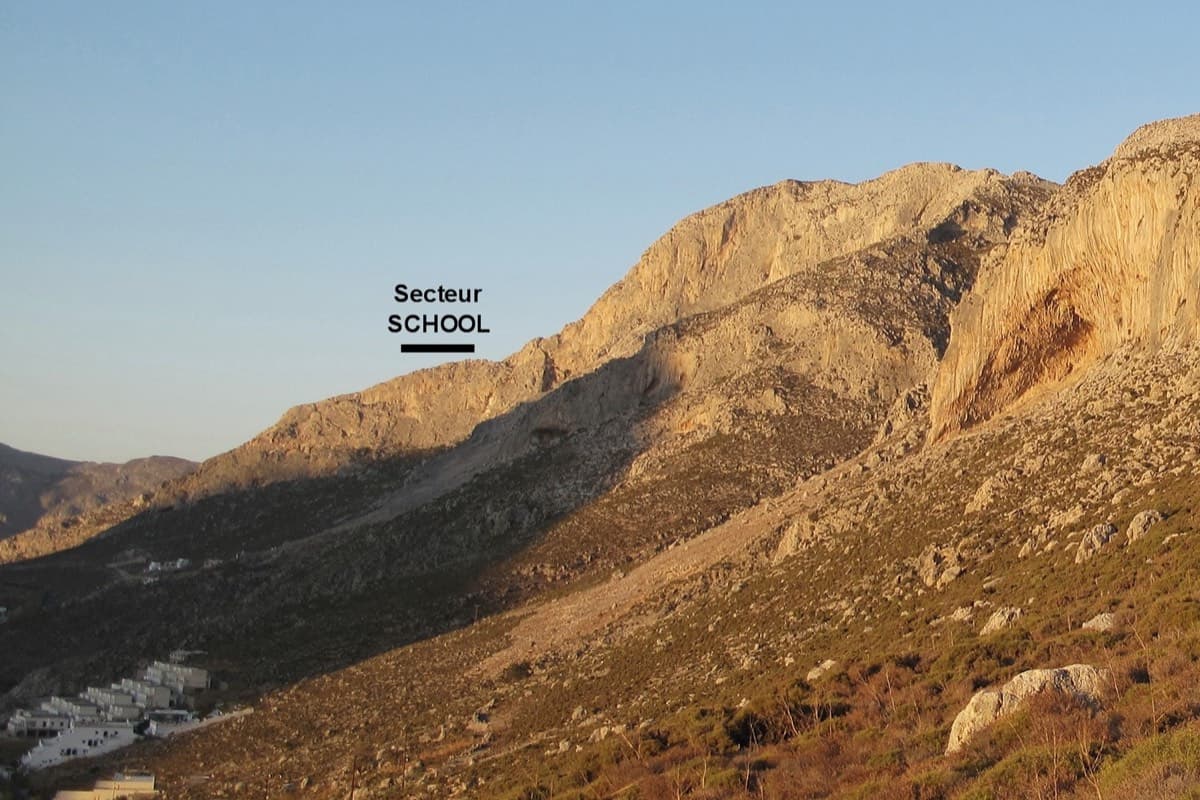
Location of the School sector, Kalymnos (labelled)

Greece · Kalymnos & Telendos

Oraia Stithi

A short gem with slabs, crimps, water-drop pockets, a bulge and a traverse on superb rock, with the usual big Kalymnos view. It is the most popular guided 6a multi-pitch on the island.

6b4 pitches120 m

Read the cautions

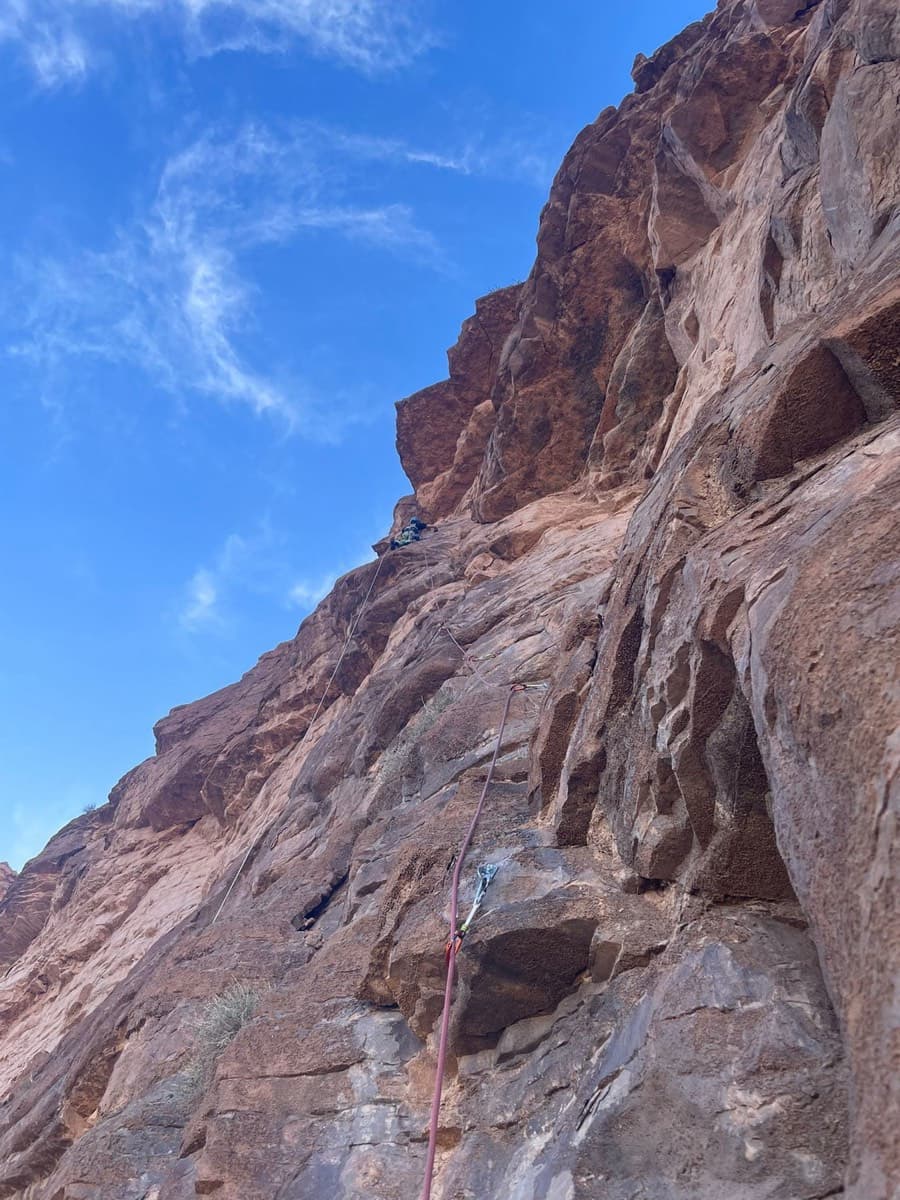
Climber on pitch 3 of Allah bri des toits, Amellago

Morocco · Amellago

Allah bri des toits

The most accessible multipitch at Amellago: four short pitches broken by a walk along a ledge under the roofs, finishing with an exposed traverse on rough brown rock. Some doubtful rock at the start of pitch 3. In shade from mid-afternoon in winter.

6b4 pitches80 m

Read the cautions

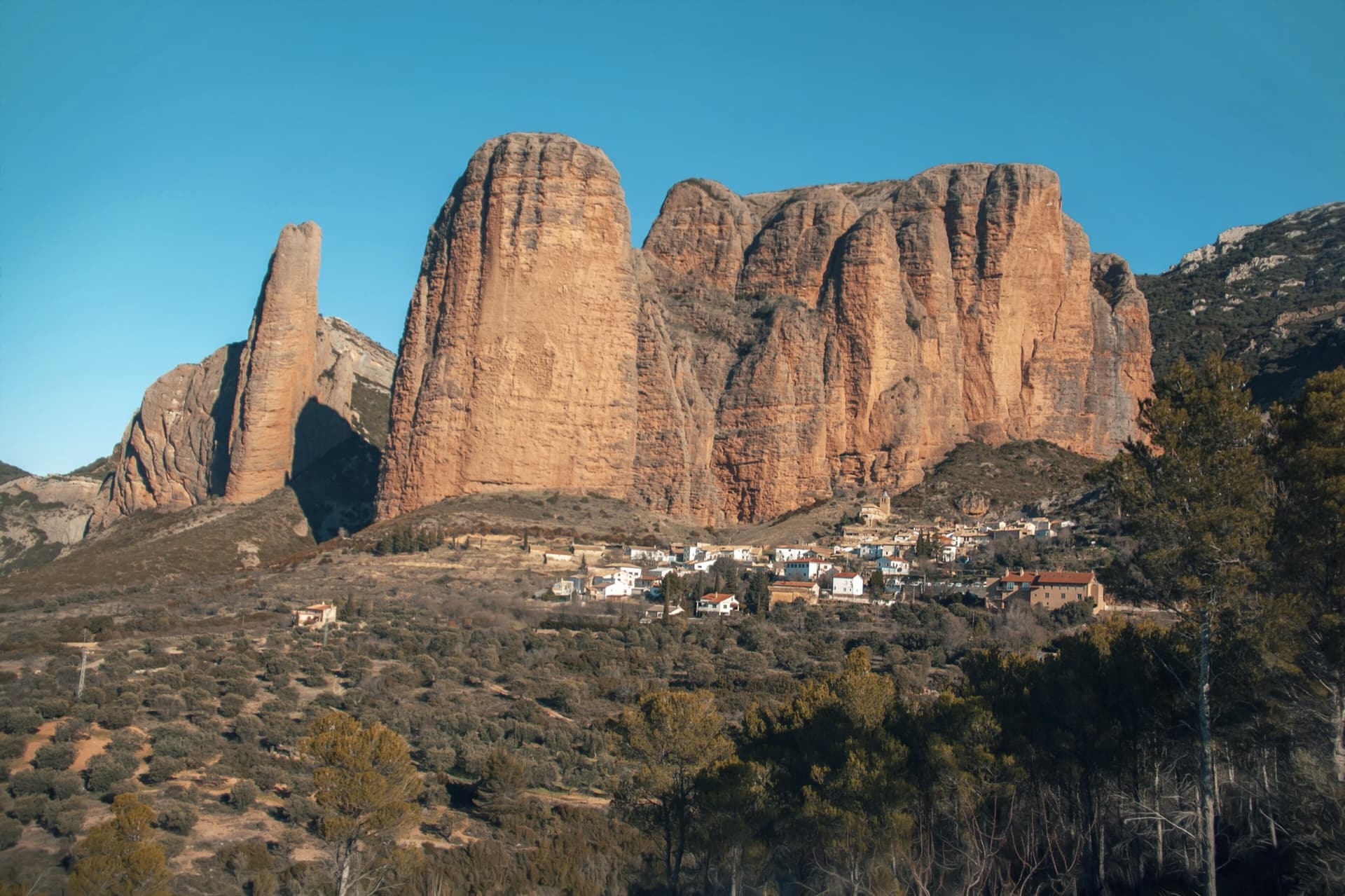
The classic view of Riglos from the south-west: the slender pinnacle of El Puro on the left, the great dome of Mallo Pisón beside it, and the main wall running right to La Visera above the village.

Spain · Riglos & Agüero (Mallos)

La Caída de los Dioses

Four 35 m pitches starting 3 m left of the Espolón del Adamelo and finishing at the same belay. Harder and more sustained than its neighbour.

6b4 pitches140 m

Read the cautions

Compiled from published sources and last verified October 2026. Bolts, anchors and access change. Climbing is dangerous and you are responsible for your own decisions: check a current topo and read the disclaimer.