Multipitch Atlas

Spigolo Verde

Placche di Oriana – Serra di Biel (Courtil, Champorcher valley) · Aosta Valley · Italy

Bail with caveatsBolting confidence: high

A six-pitch arete of well-featured gneiss that is steeper than the grade suggests, with two short bolted traverses. Recent parties recommend it as a first multipitch: good rock, close bolts and a quick path down.

Hardest pitch
4c
Pitches
6
Length
225 m
Approach
30 min
Aspect
SE
South-east-facing
Rope
Single rope
length not stated in the sources

The route

Overview

An easy bolted arete in the right-hand sector of the Placche di Oriana, above the hamlet of Courtil at the entrance to the Champorcher valley. The climbing follows a series of edges on flakes and good jugs, never harder than 4c, and stays interesting from bottom to top. A 2025 party found it fairly vertical for the grade and ideal for introducing someone to multipitch climbing. The access path and the start are clearly marked, and single-pitch sectors on the way down let you add more climbing.

In pictures

Photos

Approach photo

The climbing

Pitch by pitch

Pitches of Spigolo Verde
PitchGradeNotes
P13cUp the arete on flakes and good jugs.
P24aThe slab and corner just beside the arete, sometimes dirty.
P34cSome easy slabs (4a), a short move right along a ledge, then the arete using small edges on its left side (4c) and on along the crest (3c) to the belay.
P44bAn arete on good holds (3c), then across to a second, very airy arete climbed on its crest with a few more delicate, well-protected moves (4b). A horizontal traverse leads to the belay.
P53bRound the arete easily and up its crest on good holds almost to the top, then traverse right to the belay.
P63aThe last arete to the end of the route.

Getting there

Approach

To the parking

From the A5 exit at Pont-Saint-Martin follow the valley road to Hône, near the Fort of Bard, and take the road up to the hamlet of Courtil (1237 m), where you park. The road beyond towards Plan Flo is closed to unauthorised vehicles.

On foot · about 30 min

30 to 35 min. From Courtil walk up the tarmac road towards Plan Flo to the sign pointing right to the single-pitch sector and left to the upper sectors. Continue a few tens of metres and, at a gap in the retaining wall on the right, take the sometimes overgrown path that climbs above the wall into the woods (route name marked on the wall). One minute leads to the start of the route Overfive. To its left a signed path climbs a little higher to Spigolo Verde first and then Spigolo Pendulo. A small metal plate marks the start, at about 1400 m.

Finding the route · 2 photos

Approach photo

Map of the walk-in

  • Crag
  • Parking

Loading map

The point marks the crag, not the exact start of the route.

Coordinates · crag

45.62214, 7.70468

Parking

45.61926, 7.70850

Courtil (camptocamp access point)

Point from camptocamp waypoint 187941

For your phone or watch

Download GPX

Contains the route point and parking. Opens in most mapping apps and GPS watches.

Points are compiled from published sources, with the precision stated above. They were not surveyed on the ground: check them against a current topo.

Getting down

Descent

On foot by the path to the right, marked and about 10 min to the base. It passes the single-pitch sectors Bimbo Climb and Grotte. Abseiling the route is possible but gulliver.it says it is awkward.

Retreat

Bailing off the route

Bail with caveats

Every belay has two bolts with a maillon each, and gulliver.it says you can descend the route by abseil, but with difficulty: the line follows aretes with traverses at the ends of pitches 4 and 5. The walk-off from the top takes about 10 min, so finishing is usually easier.

Retreat from
Any belay; the lower three pitches follow a fairly direct line.
Point of no return
None stated. Above pitch 4 the remaining climbing is grade 3.
Carry
Cord to link the two bolts, and a spare maillon since the fixed ones were rusty in 2022. Pitch lengths are not published, so check your rope reaches.
Basis
Part stated, part inferredBelay hardware and the abseil option are stated by gulliver.it and a 2022 camptocamp report; the rest is inferred.

Partly inferred from the route facts

Safety

Hazards

  • Belay bolts are not linked; build the belay with your own cord.
  • The in-situ maillons were reported as quite rusty in 2022.
  • The two traverses (end of pitches 4 and 5) can unsettle a beginner on second, although they are well bolted.

Sun and weather

Conditions

South-east facing between 1400 and 1600 m. Climbed in good conditions in early and mid April 2022 (dry rock, hot on the second visit) and in late July 2025, when it was fine but breezy and cool. A party took 2 h 30 min in 2022.

Usual season · Apr to Jun, Sep to Oct

Sun on the wall · SE-facing

Working out the sunlit hours for this month.

  • January: not yet worked out
  • February: not yet worked out
  • March: not yet worked out
  • April (usual season): not yet worked out
  • May (usual season): not yet worked out
  • June (usual season): not yet worked out
  • July: not yet worked out
  • August: not yet worked out
  • September (usual season): not yet worked out
  • October (usual season): not yet worked out
  • November: not yet worked out
  • December: not yet worked out

Sun on the wallDaylight, wall in shade● Usual season

Estimated from the wall's aspect only. Ignores surrounding terrain, gullies and the wall's exact shape. Clock times are local to the wall (Central European time), for the 15th of each month.

Monthly climate averages for Aosta Valley, 1991-2020
MeasureJanFebMarApr (usual season)May (usual season)Jun (usual season)JulAugSep (usual season)Oct (usual season)NovDec
Mean daily high °C−20371117202016103−1
Mean daily low °C−8−8−5−148111172−4−8
Rain days 1 mm or more121112131616151312121312

● marks the usual climbing season. Averages for 1991-2020 at about 1489 m. Area climate from Open-Meteo reanalysis. Temperatures are adjusted to the height of the crag; rain comes from a grid cell of about 10 to 25 km, and summer highs on sea cliffs can read a few degrees low. The wall and valley can differ. Data: Open-Meteo, CC BY 4.0.

What to carry

Gear

10 quickdraws and cord or a sling to link the two belay bolts. No trad gear is mentioned by any source. Helmet.

Checklist

Quickdraws
10
Rope
Single rope (length not stated in the sources)
Helmet
One each
Abseil device and prusik
The descent or the retreat involves abseiling
Maillons or spare karabiners
To leave behind if you retreat
Cord
Mentioned for retreat

Derived from the route data; check it against a current topo

From climbers

Reader reports

Reader reports are not being collected yet. Until they are, check a current topo and the local club or guidebook publisher for recent changes to Spigolo Verde.

Worth knowing

Tips

  • A 2025 party felt the grades run from 4a to 4c throughout, a touch stiffer than the published pitch grades on the easy pitches.
  • Combine with the single-pitch sectors beside the descent path for a full day.

Open questions

Where sources disagree

  • Overall grade: gulliver.it summarises the route as grade 4 with 3 obligatory, while its own pitch list and camptocamp both give a 4c pitch.
  • Length: 200 m (camptocamp) against 225 m of climbing (gulliver.it).
  • Aspect: south-east (camptocamp) against south (gulliver.it).
  • Gulliver.it calls the bolting 'fairly good'; the most recent camptocamp report (2025) calls it solid and close.

Provenance

Sources

Same area

More in Aosta Valley

All routes in Aosta Valley
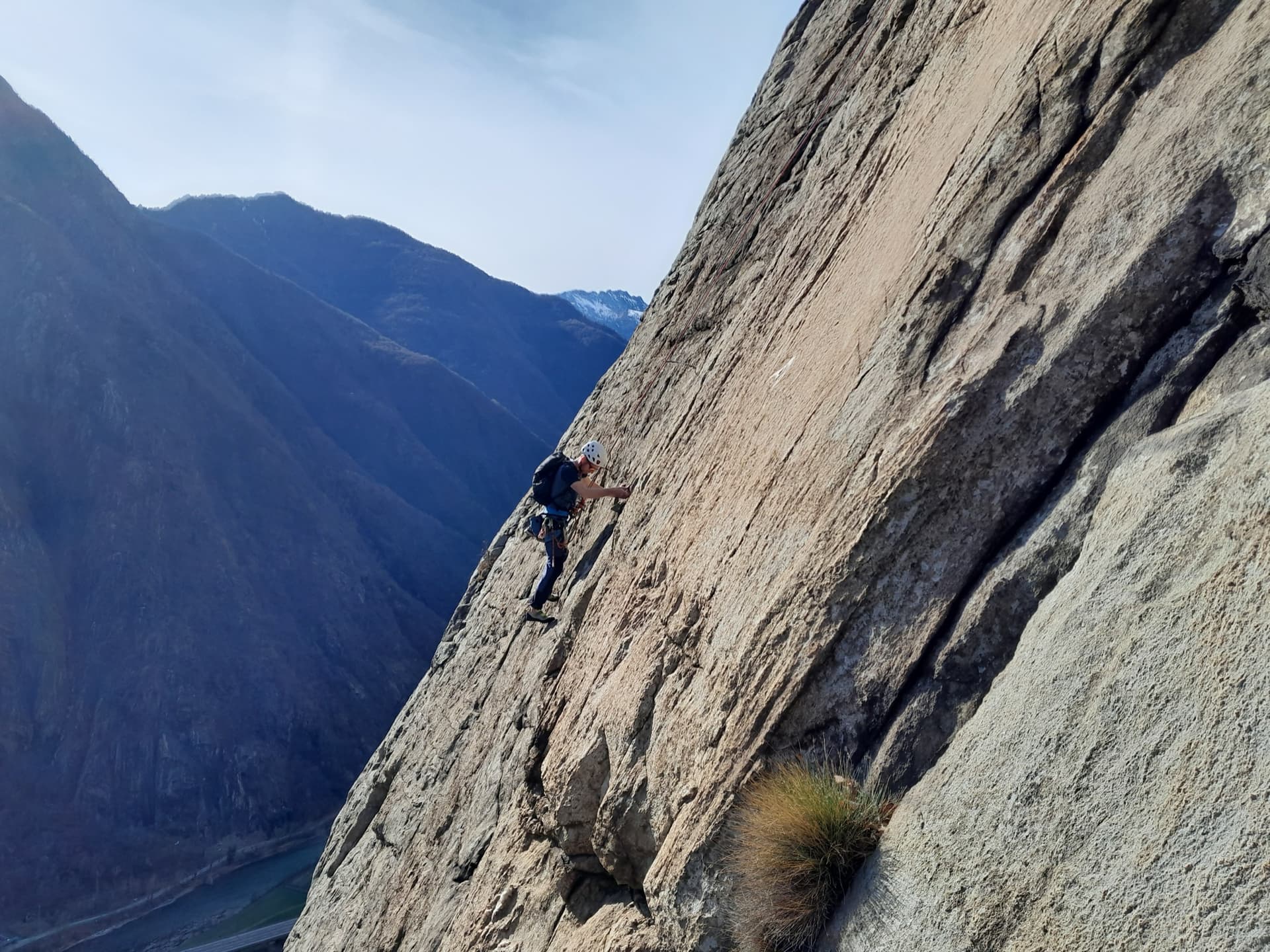
A climber on the sweeping gneiss slab of Bucce d'Arancia on the Paretone di Arnad (Corma di Machaby), with the Dora Baltea valley in shadow far below.

Italy · Aosta Valley

Bucce d'Arancia

This is the most-climbed route on the Paretone. It gives sustained, varied slab and crack climbing on good gneiss, and the hardest moves are a fine crack on P2, a slanting corner and a punchy wall. Queues are common on good days. The Mani Nude guidebook grades it stiffly; camptocamp's Italian page calls it sustained at 5b–5c+ with a single 6a.

6a10 pitches290 m

Read the cautions
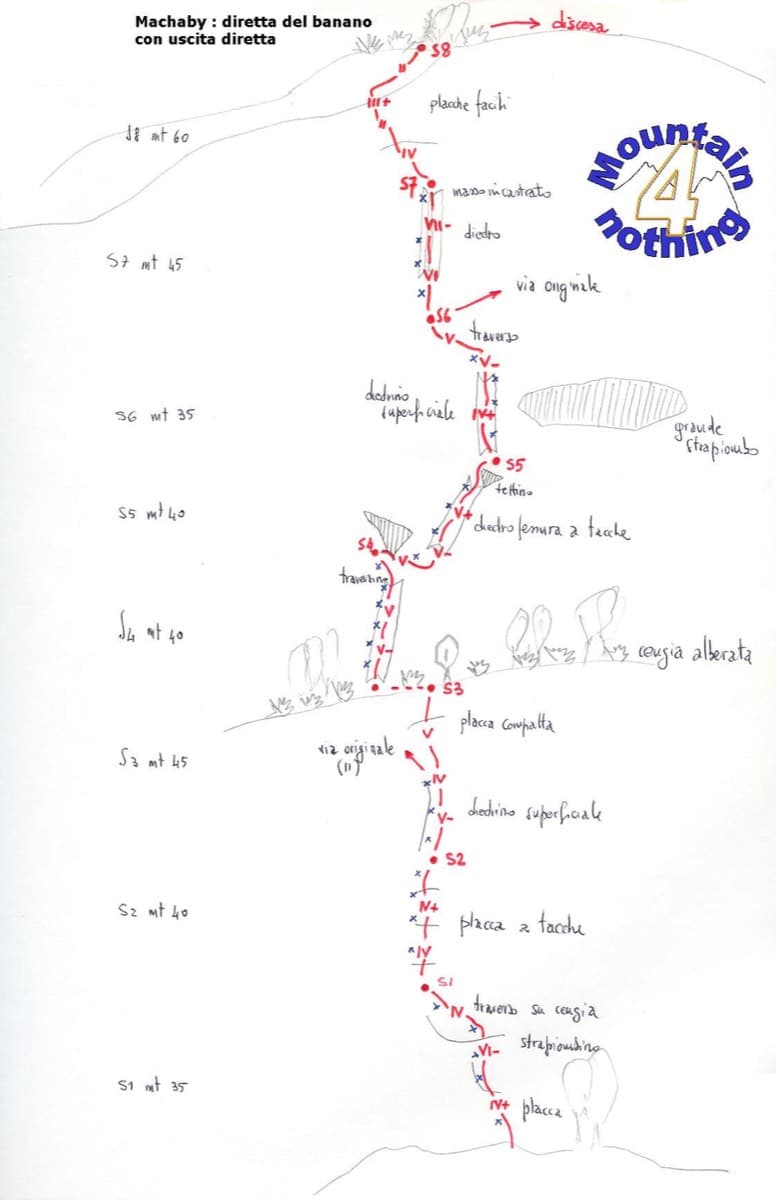
Hand-drawn topo of Diretta al Banano (direct finish), Corma di Machaby

Italy · Aosta Valley

Diretta al Banano

Along with Bucce d'Arancia this is the Paretone's other great classic (first ascent 1977, later retro-bolted). It climbs big, juggy, non-athletic slabs on beautiful rock up the centre of the wall to near the summit. Expect a few metres above the last bolt in places.

5c+9 pitches250 m

Read the cautions

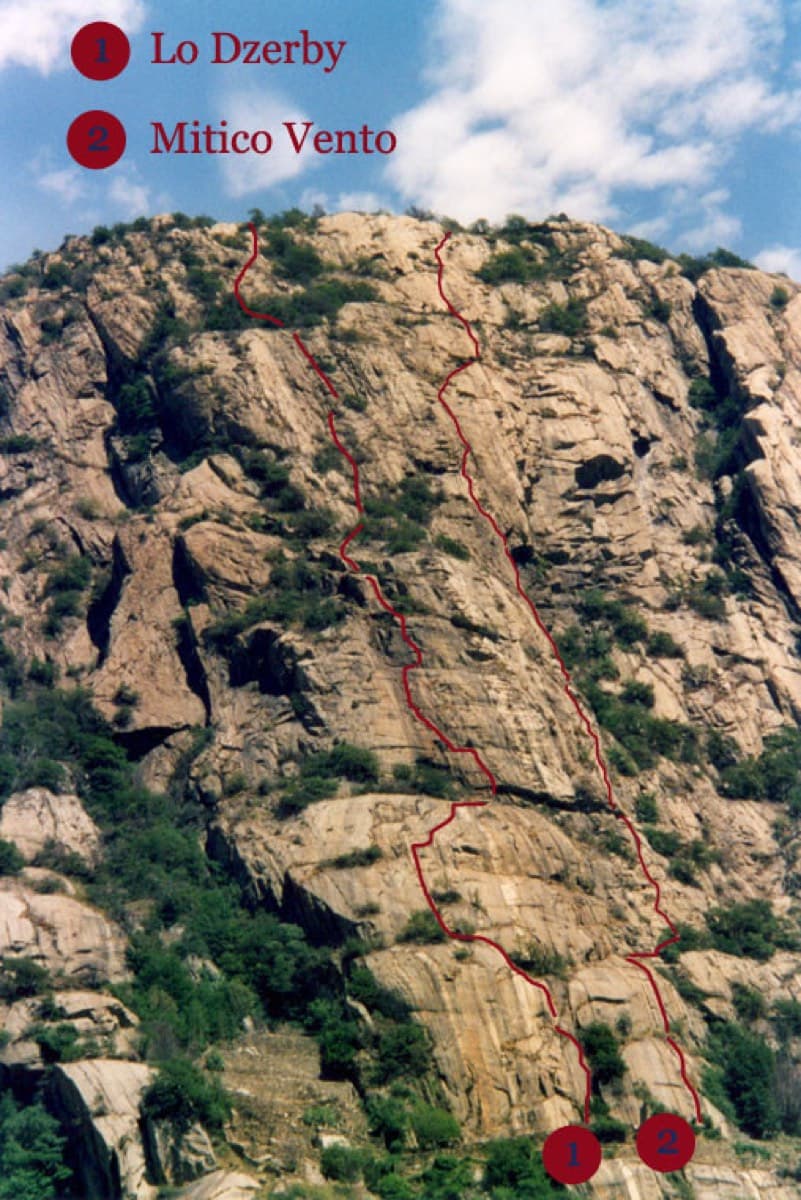
Topo of Lo Dzerby (line 1) and Mitico Vento on the Corma di Machaby, Arnad

Italy · Aosta Valley

Lo Dzerby

A long, easy-angled outing up the full height of the Paretone. A steeper lower half with an exposed pillar on P5 leads to sculpted slabs and broken steps higher up. It's a good first big multipitch.

5c13 pitches400 m

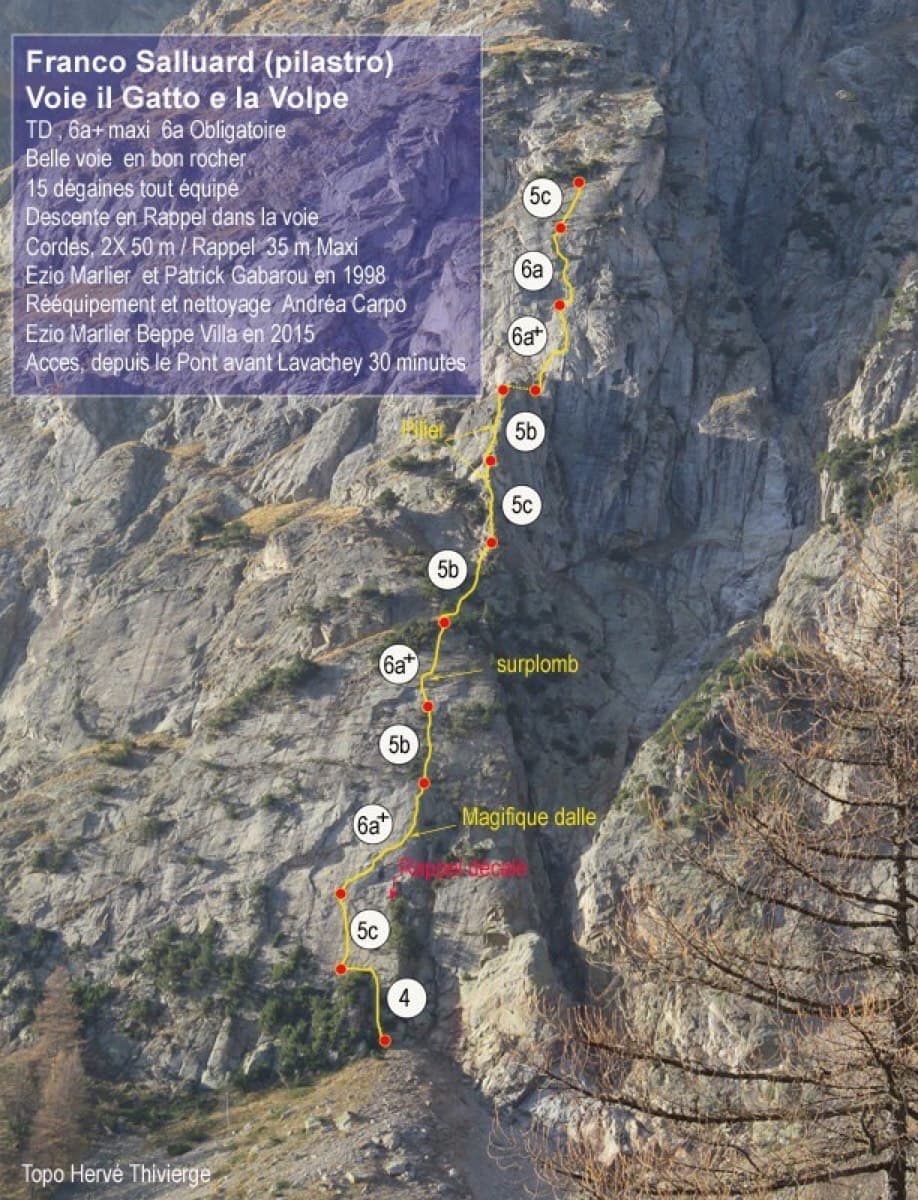
Topo of Il Gatto e la Volpe on the Pilier Franco Salluard, Val Ferret

Italy · Aosta Valley

Il Gatto e la Volpe

Rated 'great' on camptocamp: a wild setting with a short, easy approach from Lavachey. It climbs edgy granite slabs and a pillar crest, with a three-star exposed slab on P9.

6a+11 pitches350 m

Around 4c · about 6 pitches

Similar elsewhere

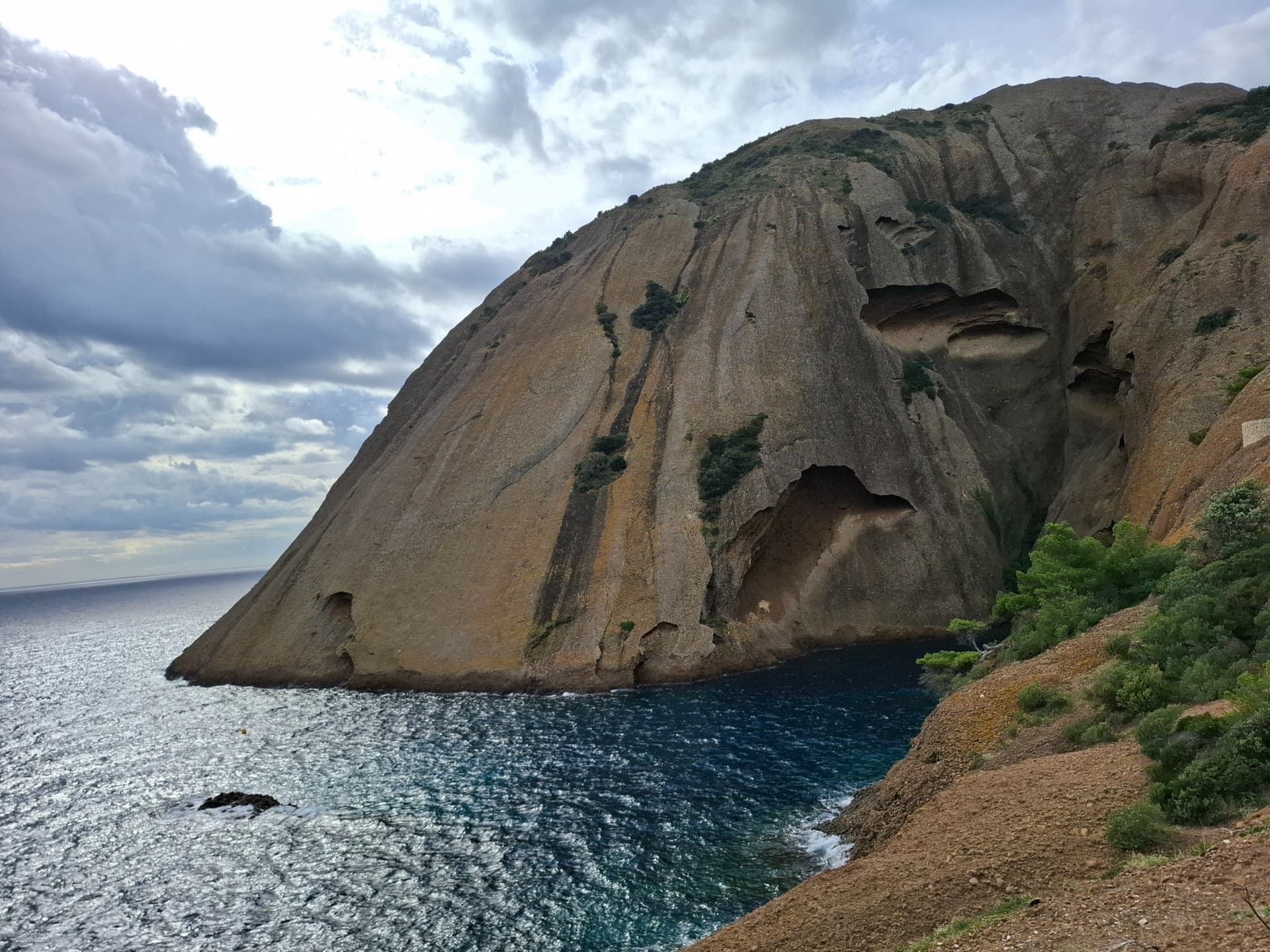
The east face of the Bec de l'Aigle, a single sweep of puddingstone falling into the Anse du Sec at La Ciotat, photographed on the approach to L'Atelier Bleu; the route climbs this face, the line is not marked.

France · Calanques

L'Atelier Bleu

An oddity: easy slabs and a long water-worn runnel up a dome of puddingstone above the sea, reached by abseiling into a cove from the Mugel park. The climbing is grade 3 and 4 on surprisingly solid pebbles. It was fully rebolted in 2024 and is a popular first multipitch.

4c6 pitches220 m

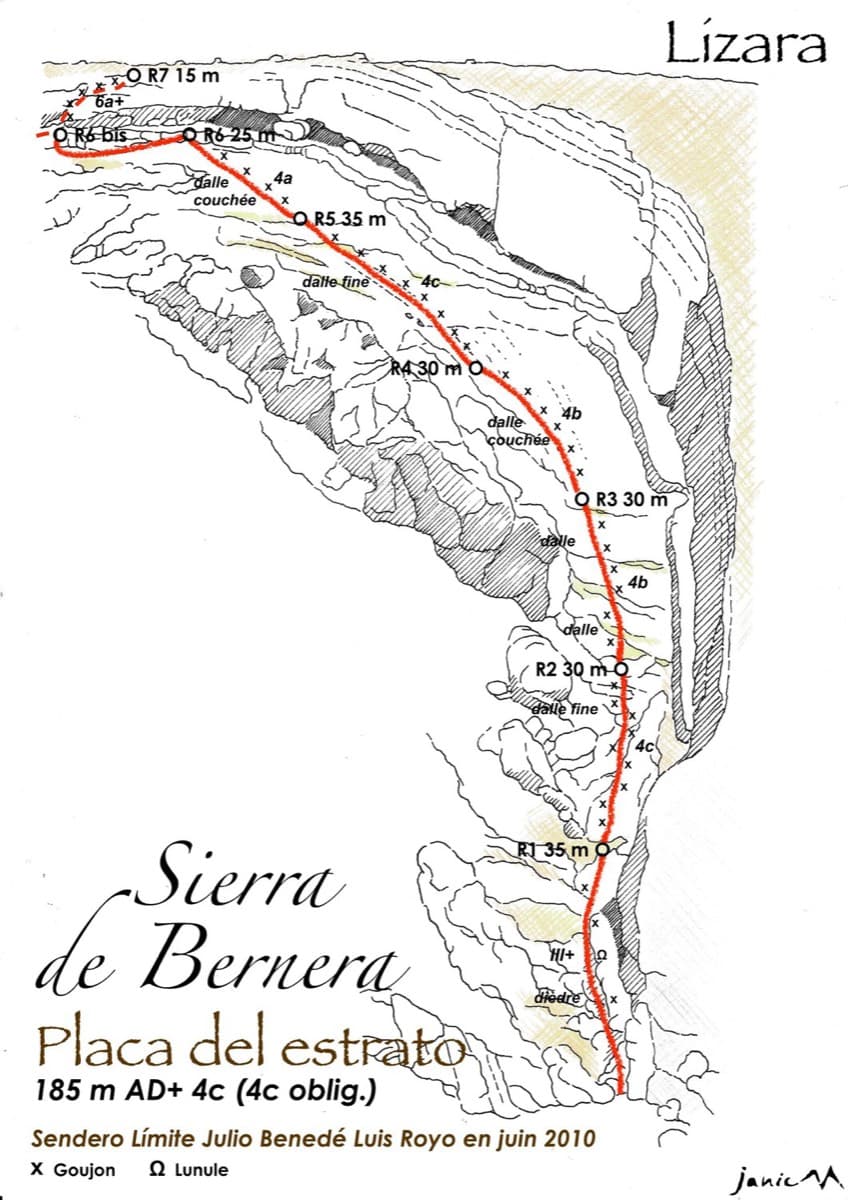
Drawn topo of the Placa del Estrato on the Sierra de Bernera above Lizara, with bolts and belays marked

Spain · Western Aragonese Pyrenees (Lizara)

Placa del Estrato

Six pitches of easy limestone slab up the great folded stratum above the Lizara refuge, parallel to the unbolted Chimenea del Estrato. Friction and small edges at 4b to 4c, with runnels on the upper pitches, in a high pasture setting. A mountain day at a beginner's grade, with an hour's walk in.

4c6 pitches185 m

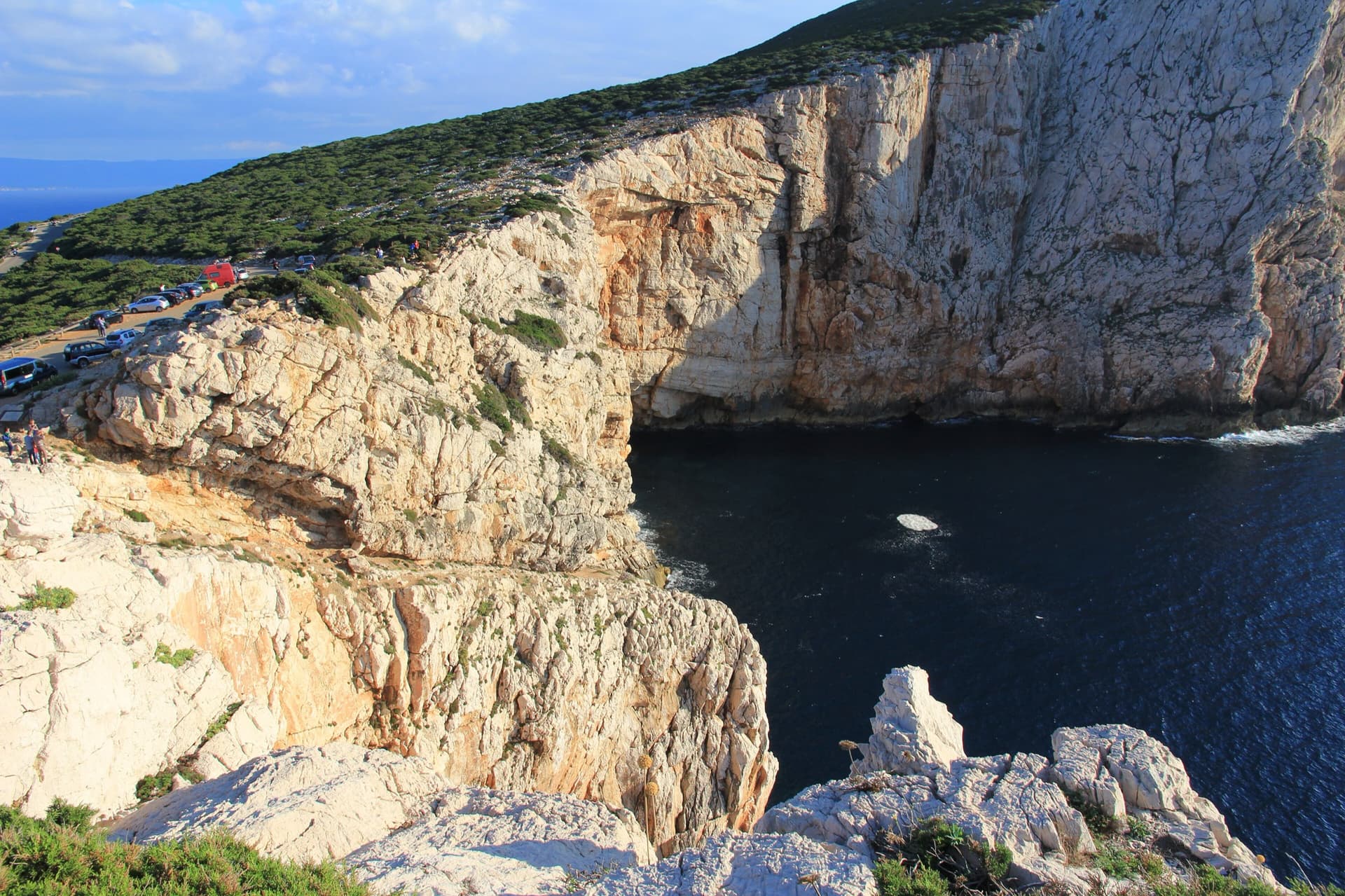
The limestone sea cliffs of Capo Caccia below the Foradada viewpoint car park, dropping straight into the sea.

Italy · Sardinia

Powaqqatsi

The easiest line on the Capo Caccia sea cliff: six pitches of 4b to 4c on pocketed, sharply sculpted limestone above the open sea. You abseil in from the top and climb out. The first two pitches are vegetated; the climbing proper starts on the pitch 3 slab.

4c6 pitches145 m

Read the cautionsCommitting

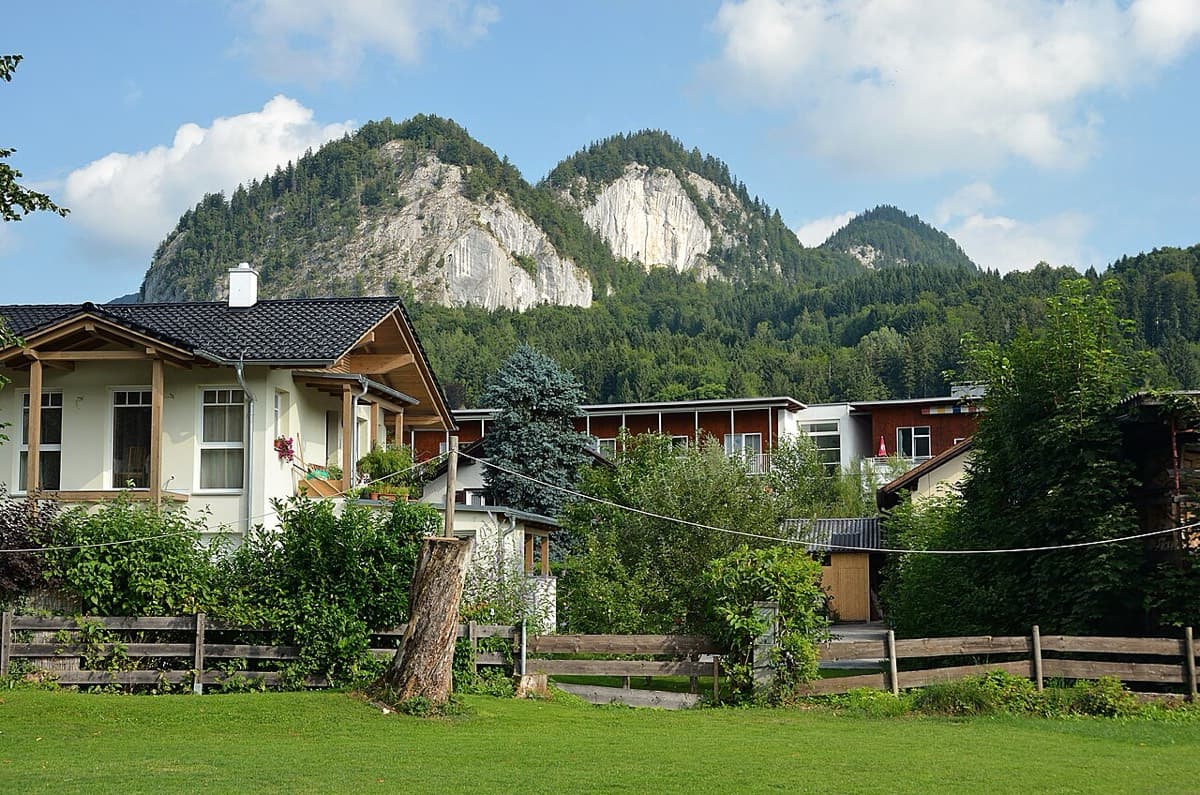
The Plombergstein and Steinklüfte cliffs above St. Gilgen, seen from the village

Austria · Salzkammergut

Juniperus

Five easy pitches up an edge above the Wolfgangsee, mostly UIAA 4 with a few moves of 5-. A slab low down and an exposed step across a cleft on pitch 4 are the memorable bits. A popular first multipitch.

4c5 pitches150 m

Compiled from published sources and last verified October 2026. Bolts, anchors and access change. Climbing is dangerous and you are responsible for your own decisions: check a current topo and read the disclaimer.