Multipitch Atlas

Via Stromberg

Gorra Frígia north face (Gorros) · Montserrat · Spain

Bail with caveatsBolting confidence: high

A shady north-face outing that suits warm days. Steady 5c pebble climbing leads to a short overhang crux (6a, or 5c/A0) and the summit cross.

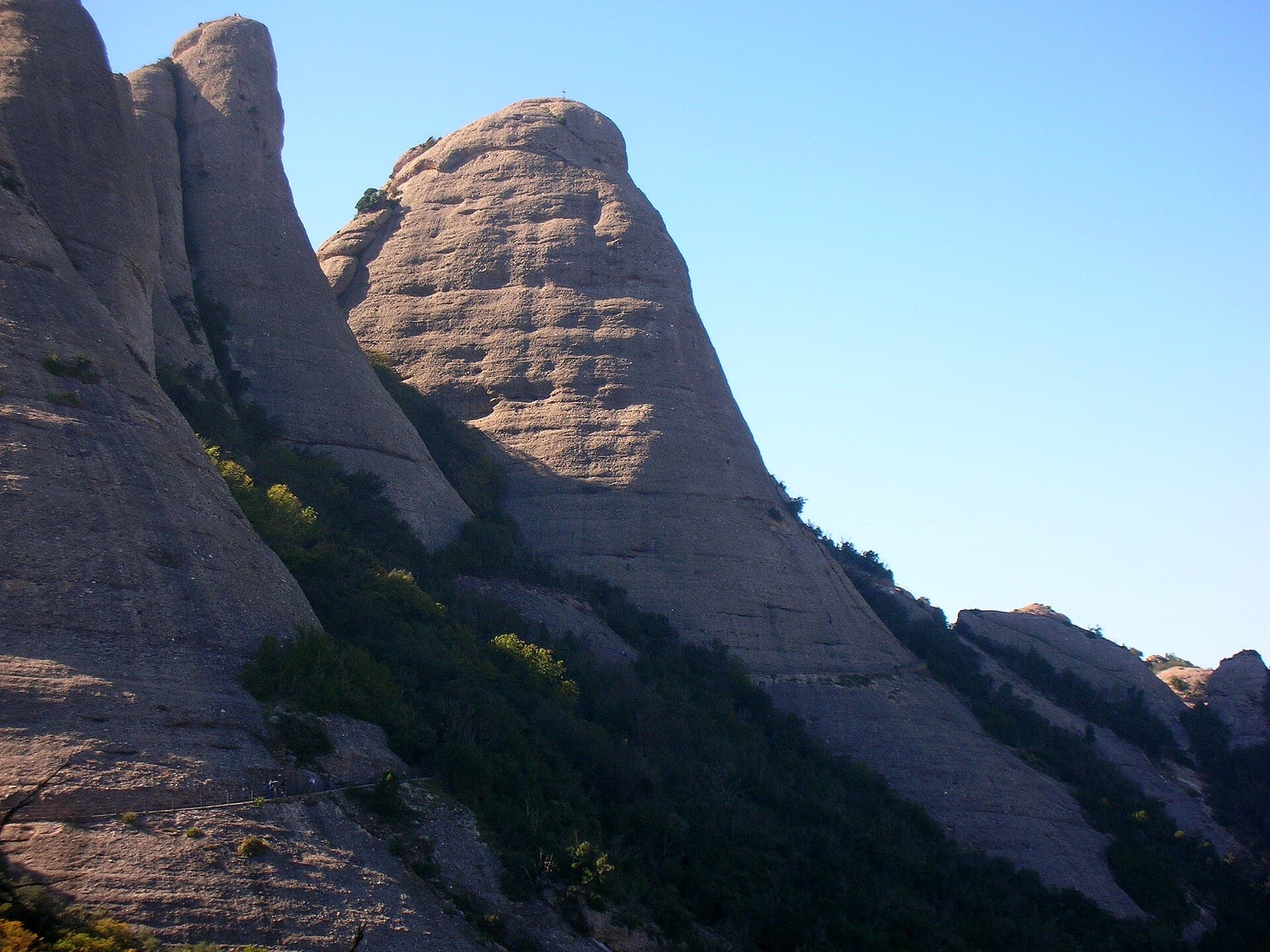
The Gorra Frígia seen from the Camí Nou de Sant Jeroni on the northern side of the Gorros, Montserrat. Via Stromberg climbs the north face; the line is not marked.Photo: Pere Ramon · CC BY-SA 3.0

Photo

The Gorra Frígia seen from the Camí Nou de Sant Jeroni on the northern side of the Gorros, Montserrat. Via Stromberg climbs the north face; the line is not marked.Photo: Pere Ramon · CC BY-SA 3.0
Hardest pitch
6a
Pitches
4
Length
120 m
Approach
45 min
Aspect
N
North-facing
Rope
1×50 m

The route

Overview

A short, popular bolted route up the north-west side of the Gorra Frígia (Gorro Frigi), the biggest of the Gorros towers above Montserrat monastery, finishing at the summit cross. The climbing is mostly steady pebble-pulling at 4c–5c on sound conglomerate, with a well-protected overhang on pitch 3 and a short 6a overhang near the top that can be pulled through on two bolts. Several sources recommend it as a first route for getting used to Montserrat rock. It is closely bolted where it is hard, though the first pitch is polished and has one longer gap between bolts.
In pictures

Photos

Approach photo

The climbing

Pitch by pitch

Pitches of Via Stromberg
PitchGradeLengthBoltsNotes
P15c24 m10 boltsA right-then-left dogleg, then rising rightwards. Sustained and a little polished, with one passage where the bolts are further apart. The first ascensionist notes that people now climb straight to the second bolt because the first is slightly out of sight. Belay on a step: 3 modern bolts (2 with abseil rings) plus the old hand-drilled bolts. Given V on other topos.
P24c23 m6 boltsStraight up on big, friendly pebbles (IV on other topos). Belay on a step with 2 ringed bolts plus old bolts. Pitches 1 and 2 can be linked with a 50 m rope.
P35c31 m12 boltsMostly 5a/5b, with one 5c move (V+ on other topos) through a vertical to slightly overhanging step on good holds, closely bolted and passable in A0. Belay on a step: 3 bolts, 2 with rings.
P46a45 m9 boltsAbout 20 m of 4c to an optional intermediate belay (1 modern bolt and 2 old ones) below the summit cap. Then a short overhang protected by 2 bolts: 6a free, or 5c with a pull on the bolts. Above, 4c easing to 3b; trend left onto the spur and follow it to the summit cross, which is the belay. Most Catalan topos split this into two pitches (IV 20 m, then 6a 25 m), giving 5 pitches in all.

Getting there

Approach

To the parking

Base is Montserrat monastery, reached by road (BP-1121 from Monistrol), by the rack railway from Monistrol or by the Aeri cable car; both lower stations are on the FGC Barcelona–Manresa line. The monastery car park fills quickly at weekends and in high season. By car from Barcelona, one source takes the A-2 to the El Bruc exit and the road past Can Maçana and Santa Cecília, parking just before the monastery car-park entrance.

On foot · about 45 min

Quickest: take the Sant Joan funicular from the monastery (runs every half hour) and follow the Camí Nou towards Sant Jeroni; the Catalan Camptocamp page puts the base about 10 min from the top station. On foot from the monastery, go up the Escales dels Pobres to Plaça de Santa Anna, take the PR C-19, then join the Camí Nou de Sant Jeroni and follow it round the Gorra Marinera to the Gorra Frígia (about 45 min to this area; a 2011 report took 1 h from the road via the Canal del Pou del Gat). Stay on the path that skirts the base of the Gorra Frígia and, just after it, go up the first small gully on the left for about 15 m through the trees. The start is under the trees and is marked by yellow-painted bolts; if you find nothing, you have gone too high.

Finding the route · 2 photos

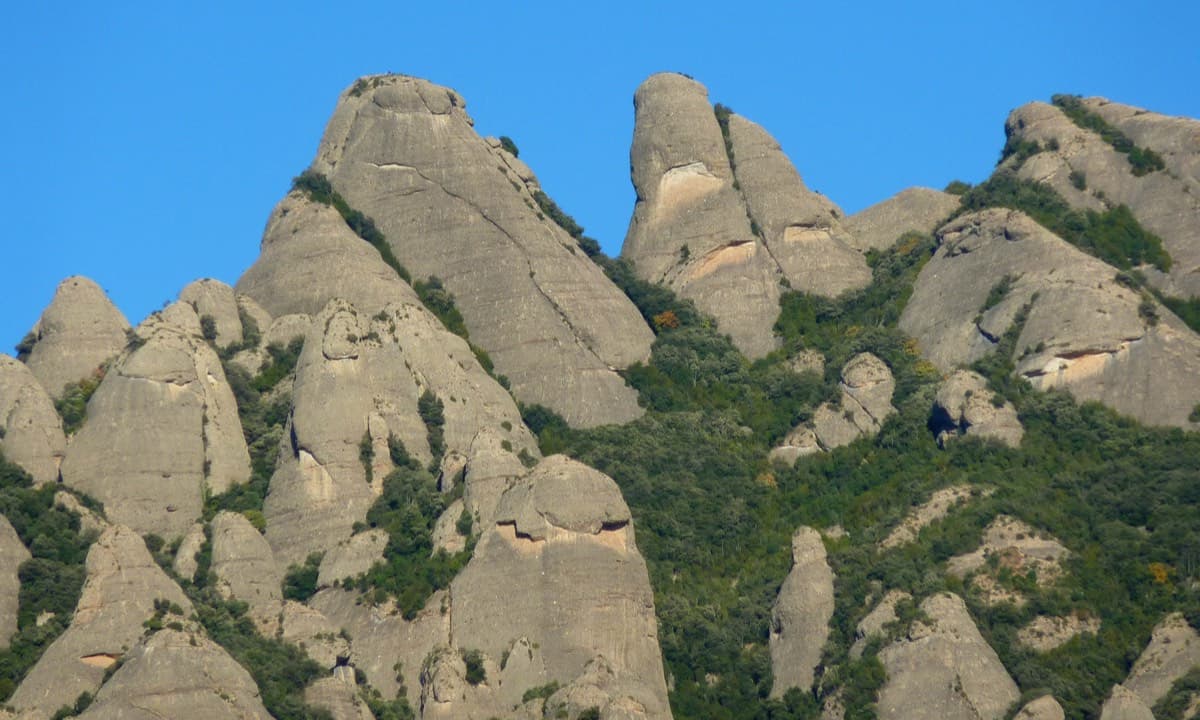
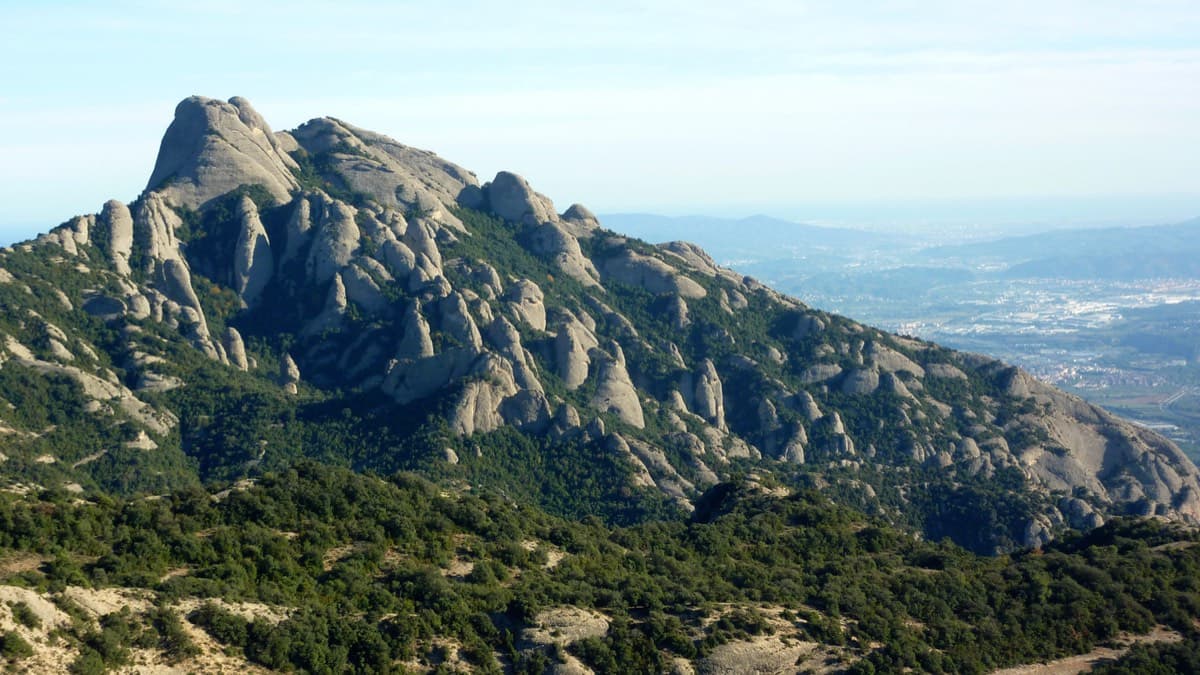
  • OverviewThe Gorros group, titled by the photographer from left to right: Gorra Marinera (the big dome on the left), the slender Magdalenes towers, the Gorra Frígia (the big cone on the right) and Trencabarrals. Via Stromberg is on the north side of the Gorra Frígia, hidden from this viewpoint.Photo: Michmuch06 · CC BY-SA 3.0
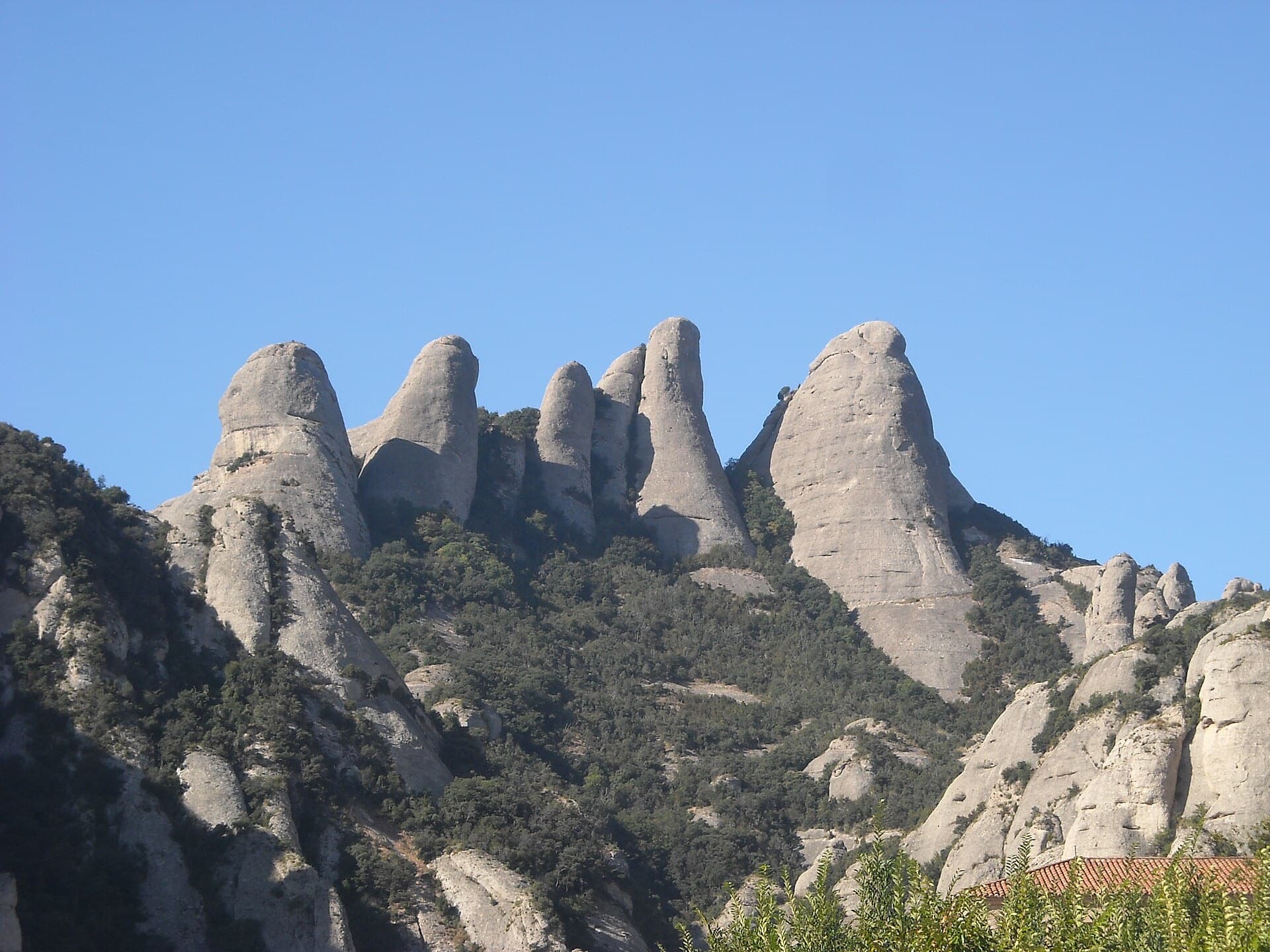
  • Walk-inThe railed Sant Jeroni path (Camí Nou) where it runs along the flank of the Gorra Frígia. Stay on it round the base of the tower; the gully leading to the start is on the left just after it.Photo: Mikenorton · CC BY-SA 3.0

Approach photo

Map of the walk-in

  • Crag
  • Parking

Loading map

The point marks the crag, not the exact start of the route.

Coordinates · crag

41.59033, 1.82625

Parking

41.58849, 1.83337

Funicular de Sant Joan (camptocamp access point)

Point from camptocamp route 439316

For your phone or watch

Download GPX

Contains the route point and parking. Opens in most mapping apps and GPS watches.

Points are compiled from published sources, with the precision stated above. They were not surveyed on the ground: check them against a current topo.

Getting down

Descent

Two descents are described. (1) Abseil the east face, as in the more detailed French Camptocamp page: from the big summit cairn the first chained anchor is 3 m to the north. Abseil 17 m straight down over an overhang, then 25 m straight down, then 25 m (trending left with 2×25 m of rope, or straight down with 2×30 m). You land in the gully between the Gorra Frígia and the Magdalena Superior; go down it, using a fixed rope over a slab, to the approach path. (2) The equipped line (cables and chains, a short via ferrata) that drops south-east from the big cairn, down a corner to a holm-oak wood, along another cable and left to the col between the Frígia and the Magdalena Superior, then down the wooded gully (one chain) to the Camí de Sant Jeroni. One 2010 topo of this ferrata carries a note that it appeared to be closed in 2018, so do not rely on it without checking locally.

Retreat

Bailing off the route

Bail with caveats

Yes. The first three belays each have two bolts with abseil rings, so the route is set up for retreat. From R1 and R2 a single 50 m rope reaches (pitches of 24 and 23 m). Pitch 3 is 31 m, so from R3 you need a longer rope or two ropes. Above R3 it is quicker to finish, pulling on the two bolts at the 6a overhang if needed.

Retreat from
R1, R2 and R3 (ringed). The optional belay 20 m up the last pitch is one modern bolt and two old ones with no rings mentioned.
Point of no return
The short overhang below the summit cap on the last pitch. Past it the summit and the normal abseil descent are the way off. This is inferred.
Carry
1×50 m is enough from R1 or R2. From R3 take two ropes or a 70 m, since the pitch is 31 m (35 m on Catalan topos). Knot the ends.
Basis
Part stated, part inferredCamptocamp's French text states the abseil rings and pitch lengths at each belay; that a 50 m rope reaches from R1 and R2 but not from R3 is inferred from those lengths.

Partly inferred from the route facts

Safety

Hazards

  • The equipped south-east descent (via ferrata) was reported as apparently closed in 2018 by one source; the abseil descent is the safer plan, so carry enough rope for three abseils of up to 25 m.
  • Pitch 1 is polished and has one passage with a longer run-out between bolts.
  • The original 1986 hand-drilled bolts are still in place beside the newer ones; use the modern stainless bolts and ringed belay anchors.
  • Yellow paint on the hangers makes them hard to see against the pale rock, and other lines run close by; route-finding on this face is noted as tricky.
  • The third abseil is 25 m and trends left with a 50 m rope; knot the rope ends.

Sun and weather

Conditions

Faces north-west to north at over 1,000 m, so it is largely in shade and suits warm weather; sources recommend the warm season rather than the cold one. In midsummer the sun does come onto the face later in the day. It can be cool, windy or in fog even in June. Rock is clean from heavy traffic. It is a very popular classic, so expect other parties.

Usual season · Apr to Jul, Sep to Oct

Sun on the wall · N-facing

Working out the sunlit hours for this month.

  • January: not yet worked out
  • February: not yet worked out
  • March: not yet worked out
  • April (usual season): not yet worked out
  • May (usual season): not yet worked out
  • June (usual season): not yet worked out
  • July (usual season): not yet worked out
  • August: not yet worked out
  • September (usual season): not yet worked out
  • October (usual season): not yet worked out
  • November: not yet worked out
  • December: not yet worked out

Sun on the wallDaylight, wall in shade● Usual season

Estimated from the wall's aspect only. Ignores surrounding terrain, gullies and the wall's exact shape. Clock times are local to the wall (Central European time), for the 15th of each month.

Monthly climate averages for Montserrat, 1991-2020
MeasureJanFebMarApr (usual season)May (usual season)Jun (usual season)Jul (usual season)AugSep (usual season)Oct (usual season)NovDec
Mean daily high °C681113172124231915107
Mean daily low °C−3−30361013141071−2
Rain days 1 mm or more667109779121076

● marks the usual climbing season. Averages for 1991-2020 at about 1072 m. Area climate from Open-Meteo reanalysis. Temperatures are adjusted to the height of the crag; rain comes from a grid cell of about 10 to 25 km, and summer highs on sea cliffs can read a few degrees low. The wall and valley can differ. Data: Open-Meteo, CC BY 4.0.

What to carry

Gear

Single 50 m rope (or 2×45 m) according to Camptocamp; a 60 m rope gives margin on the 25 m abseils. 12 quickdraws plus belay gear on the French page; three other sources say 14. Helmet.

Checklist

Quickdraws
12
Rope
1×50 m
Helmet
One each
Abseil device and prusik
The descent or the retreat involves abseiling

Derived from the route data; check it against a current topo

From climbers

Reader reports

Reader reports are not being collected yet. Until they are, check a current topo and the local club or guidebook publisher for recent changes to Via Stromberg.

Worth knowing

Tips

  • Link pitches 1 and 2 with a 50 m rope, as many parties do.
  • The 6a overhang is two moves and is not obligatory: it goes at 5c/A0.
  • The first ascensionist reckons the route now feels about half a grade harder than originally graded, a full grade in places, because of polish.
  • Combine it with 98 Octanos on the neighbouring Magdalena Superior for a full shady day; one party did both on the same day.
  • The gorrofrigi.blogspot.com site keeps a near-complete list of the tower's routes with links to topos.

Open questions

Where sources disagree

  • Pitch count: the French Camptocamp page gives 4 pitches (24, 23, 31, 45 m) with an optional belay midway up the last; the Catalan Camptocamp page, Climbing7 and Joan Asín give 5 pitches (30, 25, 35, 20, 25 m; V, IV, V+, IV, 6a). Same climbing; this entry follows the French page because it gives bolt counts and belay details.
  • Length: about 120–125 m from the French pitch lengths (100 m of height on Camptocamp) against 150 m on Climbing7.
  • Descent: French Camptocamp describes three abseils down the east face; the Catalan page and Climbing7 (2011) describe the south-east via ferrata, which Climbing7 later flagged as apparently closed (2018). Mountain Project still describes the ferrata as the descent.
  • Quickdraws: 12 (French Camptocamp) against 14 (Catalan Camptocamp, Climbing7, Joan Asín).
  • Aspect: north-west according to the Catalan page and blogs, north to north-west on Camptocamp's data.

Provenance

Sources

Same area

More in Montserrat

All routes in Montserrat
West side of the Gorros sector, Montserrat

Spain · Montserrat

Integral d'en Pitu i la Nuri

A modern linkup over two pinnacles on excellent conglomerate. Overhanging 6a and 6a+ walls alternate with easy 'potato-field' slabs. The new bolting makes it one of the most reassuring long lines in the massif.

6a+5 pitches185 m

The Gorros of Montserrat from the monastery side: left to right the Gorra Marinera, the Magdalenes and the Gorra Frígia. Via Sargantanes climbs the Gorra Marinera, the left-hand tower.

Spain · Montserrat

Via Sargantanes

A popular first Montserrat multipitch close to the monastery. Steep pebble walls at 5b are split by easy slabs, finishing on an airy summit cap.

5b6 pitches145 m

Read the cautions

The Gorra Frígia, the Phrygian-cap tower of the Gorros, seen from the Camí Nou de Sant Jeroni, which passes the foot of its north-east side where Via del Carles starts. The line itself is not marked.

Spain · Montserrat

Via del Carles

A straightforward line up the 'Phrygian cap' visible from the monastery. Only the short vertical step on pitch 3 is sustained. It is a good route for learning Montserrat pebble technique and has a summit cross with a big view. The approach takes about 10 min from the Sant Joan funicular top.

5c5 pitches140 m

Gorra Frígia and Magdalena Superior seen from the south-west, Montserrat

Spain · Montserrat

98 Octanos

An exposed, airy line with unusually good holes and jugs for Montserrat, shaded in the afternoon. The 6a pitch is a sustained vertical 20 m. Going straight up instead of following the line is closer to 6b+.

6a4 pitches140 m

Around 6a · about 4 pitches

Similar elsewhere

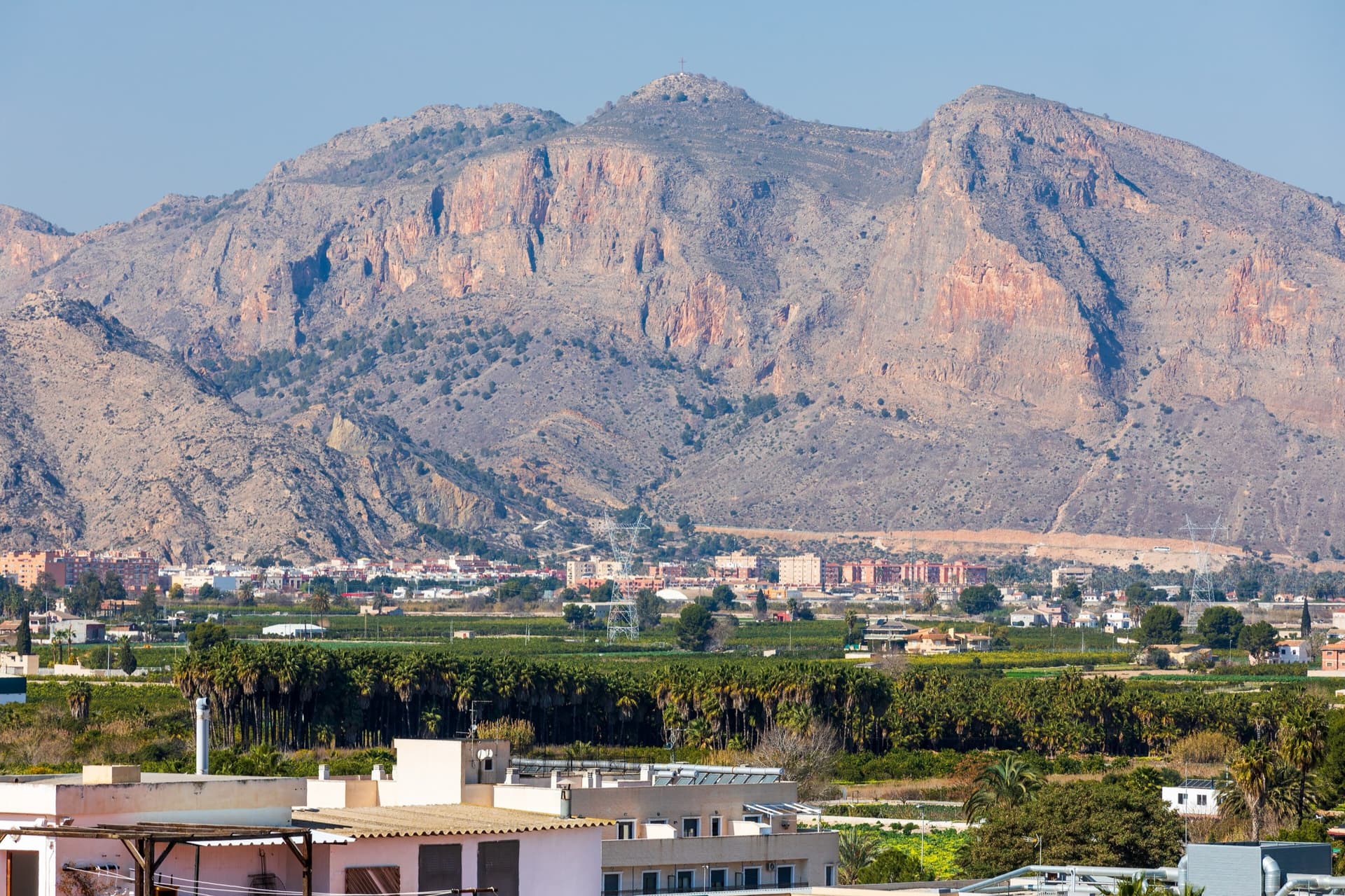
The south-east flank of the Sierra de Orihuela below the Cruz de la Muela, seen across the Vega Baja from Bigastro; Pared Negra is one of the walls on this flank (the exact wall is not marked).

Spain · Vega Baja (Orihuela & Callosa)

Código Vertical

A popular modern four-pitch classic on Pared Negra's compact grey limestone, around UIAA 6/6+ (about French 6a). Best on cool, sunny winter days.

6a4 pitches150 m

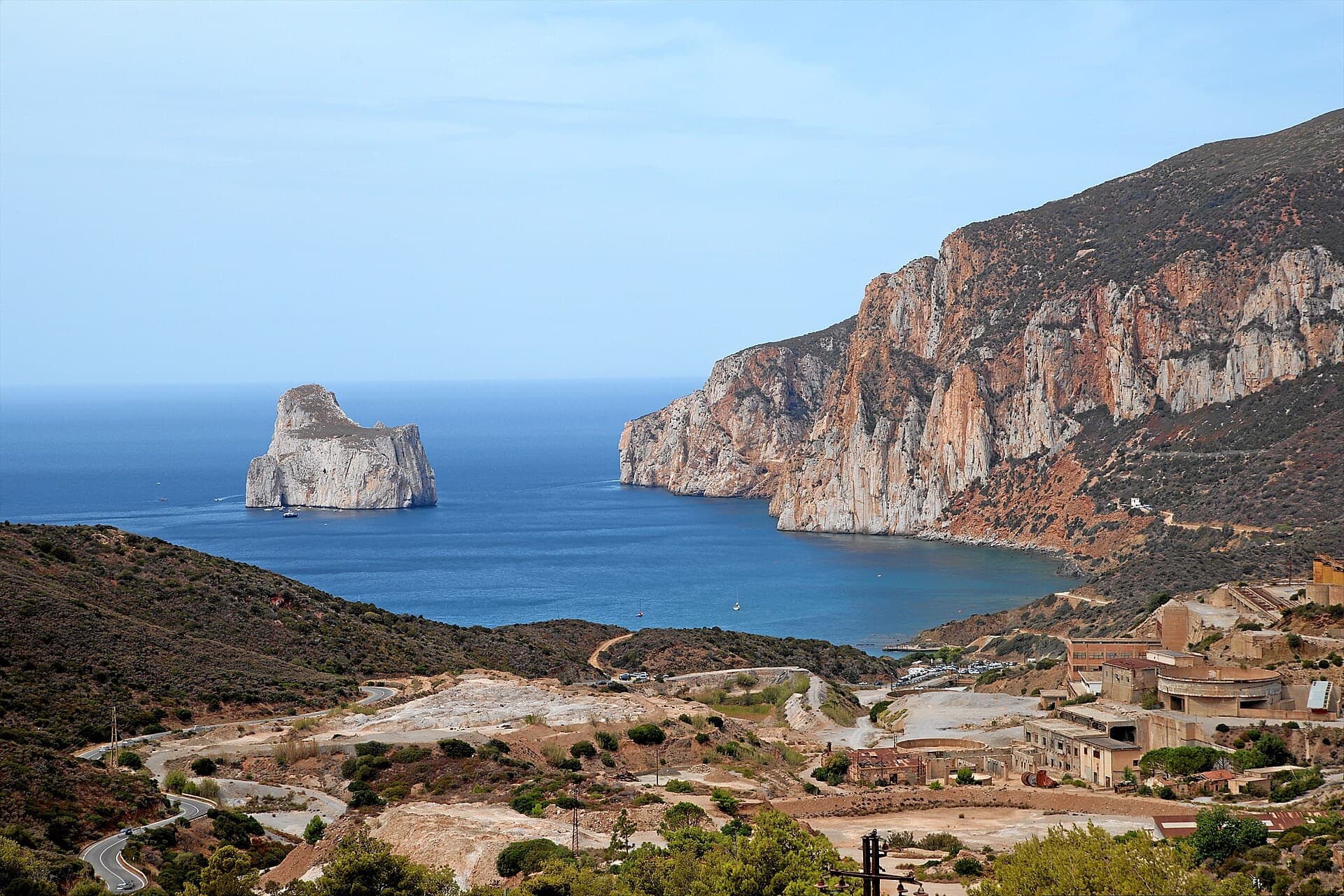
The orange limestone cliffs of Masua (right) above the old mine workings, with the Pan di Zucchero sea stack offshore.

Italy · Sardinia

L'Italia Liberata

A short but superb sea-cliff route on beautifully sculpted limestone in an incredible setting near Pan di Zucchero. Corners and an airy pillar lead to a steep, rounded 6a wall. Camptocamp rates it 'great'.

6a4 pitches120 m

The Frontales cliffs above El Chorro seen across the Tajo de la Encantada reservoir, with the big Poema de Roca cave at the foot of the central dome. The Austria sector lies on the right-hand part of the cliff; the line is not marked.

Spain · El Chorro

Valentine's Day

A popular, sunny short multipitch in one of the easier Frontales sectors. Mostly 5/5+, with a brief 6a crux.

6a4 pitches130 m

Looking down the lichen-covered granite slab of Bügeleisen towards the forest at Handegg

Switzerland · Grimsel

Bügeleisen

A short, varied granite route up a pale, smooth pillar across the valley from the Handegg slabs: a corner crack, then friction and edge slabs that get harder pitch by pitch. Grades are stiff, and the last pitch is sustained and tricky. A good half day or uncertain-weather route with a 15-minute approach.

6a5 pitches200 m

Compiled from published sources and last verified October 2026. Bolts, anchors and access change. Climbing is dangerous and you are responsible for your own decisions: check a current topo and read the disclaimer.