Multipitch Atlas

The first of Ela

Paroi du Levant · Todra Gorge (Todgha) · Morocco

Read the cautionsEasy to bailBolting confidence: medium

Five long pitches of 5c in the centre of the Levant wall, sharing its first pitch with Tromba Bitonale.

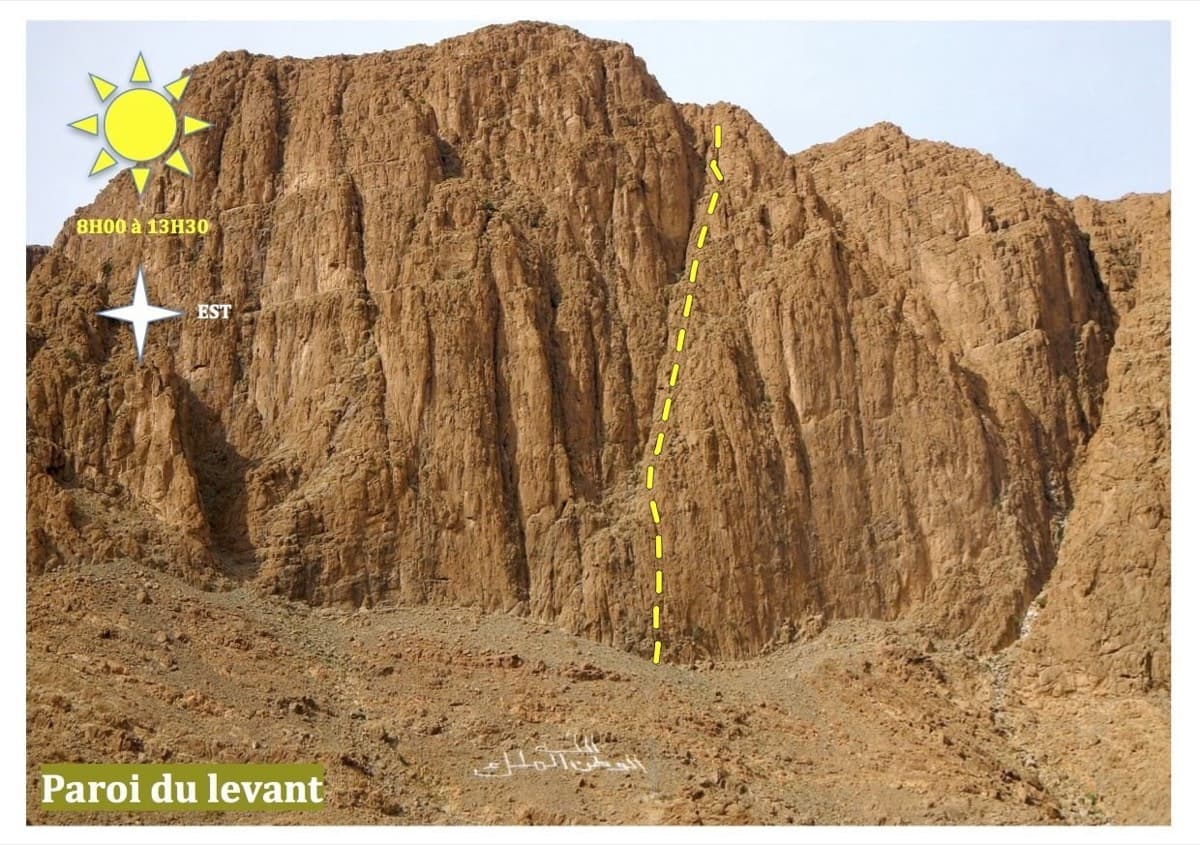
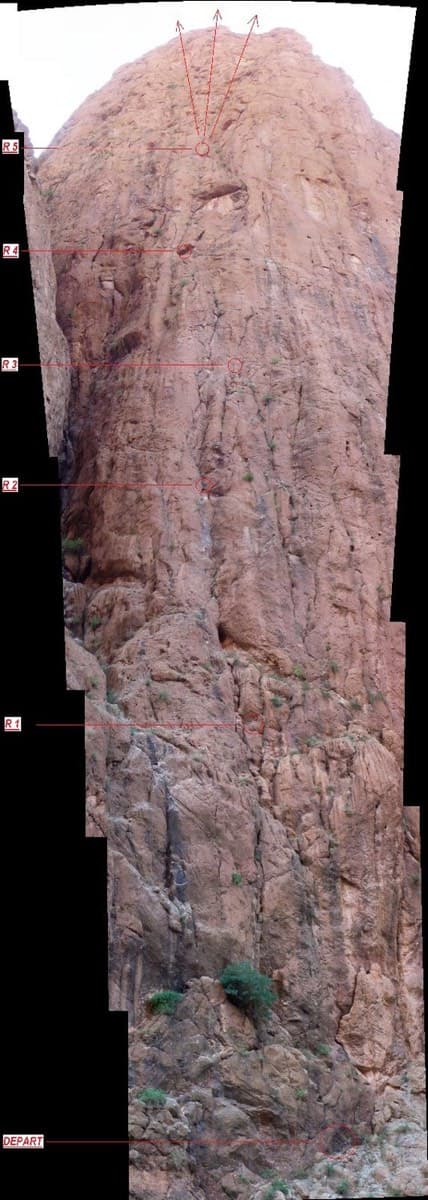
Line of The first of Ela on the Paroi du Levant, Todra GorgePhoto: Aventures verticales Maroc · CC BY-SA 3.0

Topo

Line of The first of Ela on the Paroi du Levant, Todra GorgePhoto: Aventures verticales Maroc · CC BY-SA 3.0
Hardest pitch
5c
Pitches
5
Length
195 m
Approach
30 min
Aspect
E
East-facing
Rope
2×50 m
Read before you go

Fully bolted only to the fifth belay, with spaced bolts in places (camptocamp E3) and abseils that need two 50 m ropes.

The route

Overview

Five bolted pitches up the centre of the Paroi du Levant, the big wall above Tizgui village just outside the gorge. The line follows a prominent corner system behind a pinnacle, with sustained 5c crack, corner and wall climbing in a mountain style. The bolts stop at the fifth belay. From there you either abseil, or scramble two unbolted pitches of about grade II/III to the plateau and walk down. It is the easiest long route on this wall, but the bolts are spaced in places and camptocamp rates the fall consequences as serious (E3).

The climbing

Pitch by pitch

Pitches of The first of Ela
PitchGradeLengthNotes
P15c40 mShared with Tromba bitonale. A long, even pitch through the single-pitch routes at the base. The belay is to the left of where the pitch exits.
P25a35 mA linking pitch into the characteristic corner behind the pinnacle. Sources disagree about how you leave the first belay (see discrepancies), so follow the bolts. Mountain Project grades it 5.9-.
P35c40 mLong corner and wall climbing. A 2024 party found pitches 3 and 4 more involved than the topo suggests.
P45c50 mThe longest pitch, 50 m of corner and wall. Mountain Project gives 5.9+.
P55c30 mA short red wall on very rough rock, described as the best pitch. Mountain Project gives 5.10a (about 6a). The bolts end at this belay.

Getting there

Approach

To the parking

Base yourself in Tizgui, the last village about 400 m before the gorge entrance, or in Tinghir about 15 km down the valley. Marrakech is the usual airport; allow about seven hours by road. Buses run to Tinghir from Marrakech, Casablanca and Ouarzazate, and shared taxis or a private taxi cover the last stretch to the gorge. You do not need a car once you are staying near the gorge. The wall is directly above Tizgui, so you can walk from accommodation in the village.

On foot · about 30 min

About 20 to 30 minutes. From the old village of Tizgui take the path that starts above the Berber museum and passes under the red and white pylon for 10 to 15 minutes, then follow the best of the small paths up to the wall for a similar time. Alternatively follow the foot of the cliff from the Plage Mansour sector at the gorge entrance, 20 to 30 minutes. The wall is unmistakable: there is a large Arabic inscription in white-painted stones at its base. The route is in the centre of the wall, the ninth route from the left according to Mountain Project, and starts among the single-pitch routes. The first pitch is shared with Tromba bitonale.

Map of the walk-in

  • Crag

Loading map

The point marks the crag, not the exact start of the route.

Coordinates · crag

31.57987, -5.59387

Point from Mountain Project area 111993178 (Paroi du Levant)

For your phone or watch

Download GPX

Contains the route point. Opens in most mapping apps and GPS watches.

Points are compiled from published sources, with the precision stated above. They were not surveyed on the ground: check them against a current topo.

Getting down

Descent

Option 1, abseil: from the fifth belay abseil the route. Belays are linked and have quick-links. A 2023 party abseiled along the bolts of the last pitch and then straight down, making the last abseil off one of the single-pitch routes at the base. A 2021 party says two 50 m ropes are the minimum and that they needed more abseils than planned. Option 2, on foot: climb two more unbolted pitches of about II/III (the Spanish camptocamp text grades them 4c; 30 m and 35 m), an easy gully with one tree for a runner, to the plateau. From the top of the plateau either head north-west to the highest point, cross several steep gullies to the col with a track west of the summit and follow the path down towards the red and white pylon (about 1 h 30); or from the high point bear north-east, pass two gullies and take the third after a short descent (a few cairns). This gully faces south and has large whitened boulders in its bed. About halfway down it drops into steep slabs: do not follow the glue-in bolts there, but climb slightly to a small cairned notch and pick up an easy path down to the Mansour sector (45 minutes to 1 hour).

Retreat

Bailing off the route

Easy to bail

Yes. Abseiling the route from the fifth belay is one of the two normal descents, and the belays are linked and fitted with quick-links, so you can turn back from any of them. Two 50 m ropes are the stated minimum, and one party needed more abseils than planned.

Retreat from
Any belay from R1 to R5, down the route. A 2023 party made the last abseil off one of the single-pitch routes at the base. Mountain Project instead says to abseil the line of Tromba bitonale, which shares P1.
Point of no return
The fifth belay. Above it the two exit pitches (about II/III) have no bolts or belays, so once you leave R5 you are committed to topping out and finding the walk-off.
Carry
2×50 m ropes as a minimum; a 70 m single is doubted by a 2021 party. P4 is 50 m, so knot the ends. A spare maillon is sensible. There is no mountain rescue service in Morocco.
Basis
Stated in the sourcesCamptocamp's route page and trip reports state the abseil descent from R5, the linked belays with quick-links and the 2×50 m minimum; only the remark that this applies equally from lower belays is inferred.

Safety

Hazards

  • Bolting is spaced in places: a 2019 report says 'equipped a bit far at times' and a 2024 report 'a little committing in places'. Camptocamp rates exposure E3, meaning a fall could have serious consequences in places.
  • Not bolted to the top. The last two pitches to the plateau (about II/III) have no bolts or belays.
  • Abseils: two 50 m ropes minimum. The Soares topo is reported to say a 70 m rope, but a 2021 party doubted that would reach.
  • The walk-off is hard to find the first time. One regular needed three attempts to find the descent gully. In the gully, do not follow the glue-in bolts into the steep slabs.
  • Pitch 4 is 50 m long, so watch your rope length and drag.
  • There is no mountain rescue service in Morocco. Plan for self-rescue and keep a margin.

Sun and weather

Conditions

The wall faces east to south-east and gets morning sun until about 2 pm, but the route sits in a corner and parties in October and March found useful shade (one reports shade from 1 pm). Camptocamp lists February to June as the best period for the wall. Climbing time is about 1 h 40 to 2 hours for a quick pair. The rock is very abrasive.

Usual season · Mar to May, Oct to Nov

Sun on the wall · E-facing

Working out the sunlit hours for this month.

  • January: not yet worked out
  • February: not yet worked out
  • March (usual season): not yet worked out
  • April (usual season): not yet worked out
  • May (usual season): not yet worked out
  • June: not yet worked out
  • July: not yet worked out
  • August: not yet worked out
  • September: not yet worked out
  • October (usual season): not yet worked out
  • November (usual season): not yet worked out
  • December: not yet worked out

Sun on the wallDaylight, wall in shade● Usual season

Estimated from the wall's aspect only. Ignores surrounding terrain, gullies and the wall's exact shape. Clock times are local to the wall (Moroccan time), for the 15th of each month.

Climate figures for Todra Gorge (Todgha) are not available yet

What to carry

Gear

12 quickdraws (Mountain Project). Two 50 m ropes for the abseils. Helmet. One 2024 party carried a few cams for reassurance but placed almost none.

Checklist

Quickdraws
12
Rope
2×50 m
Helmet
One each
Abseil device and prusik
The descent or the retreat involves abseiling
Maillons or spare karabiners
To leave behind if you retreat

Derived from the route data; check it against a current topo

From climbers

Reader reports

Reader reports are not being collected yet. Until they are, check a current topo and the local club or guidebook publisher for recent changes to The first of Ela.

Worth knowing

Tips

  • If you want bolts only, stop at the fifth belay and abseil.
  • Do Berbertraum first: its walk-off uses the same descent gully, so you will know the way down from the plateau.
  • Strong parties combine it with Tifegha on the same wall, or with a late-afternoon route at Jardin d'été.
  • It is described as a quieter, slightly easier alternative to Hannah chez les grands on the same wall.

Open questions

Where sources disagree

  • Pitch grades: camptocamp 5c, 5a, 5c, 5c, 5c; Mountain Project 5.9, 5.9-, 5.9, 5.9+, 5.10a (roughly 5c, 5b+, 5c, 5c, 6a), so pitch 5 may feel 6a. This entry keeps camptocamp's grades.
  • Length: camptocamp gives 240 m of difficulties, but its own pitch lengths to the fifth belay add up to 195 m, and Mountain Project gives 197 m. The 240 m figure appears to include the unbolted exit pitches.
  • Pitch 2 start: Mountain Project says go right and then up the corner behind the pinnacle; the Spanish camptocamp text says not to go right from the first belay; a 2018 party describes an ascending traverse left to reach the corner.
  • Abseil line: Mountain Project says to abseil down Tromba bitonale; camptocamp says abseil the route to the fifth belay.
  • Exit pitches: II/III in the French text and trip reports, 4c in the Spanish text.
  • Approach time: camptocamp 30 minutes, Mountain Project about 20.
  • Bolting: one 2023 report says 'very well equipped'; 2019 and 2024 reports call it spaced or committing in places.

Provenance

Sources

Same area

More in Todra Gorge (Todgha)

All routes in Todra Gorge (Todgha)
Photo-topo of La Classique on the Pilier du Couchant, Todra Gorge, with belays marked

Morocco · Todra Gorge (Todgha)

La Classique

The classic of the gorge, first climbed in 1977. Sustained and physical 6a climbing up cracks, corners and short bulges on the big pillar at the gorge entrance. The first pitch is the 6a+ crux, straight off the ground. Watch for loose blocks on the last pitch, shared with Chibania.

6a+9 pitches300 m

Read the cautions
The Mansour Gauche sector, Todra Gorge

Morocco · Todra Gorge (Todgha)

Tiwira

A long, moderate line above the Mansour palm grove at the upstream end of the gorge. Mostly steady 5c with a 6a crack to start and a harder, very abrasive finish. Big views up the valley.

6b7 pitches300 m

Line of Hannah chez les grands drawn on the Paroi du Levant, Todra Gorge

Morocco · Todra Gorge (Todgha)

Hannah chez les grands

Eight pitches up the middle of the Levant wall, with the 6a on the first pitch and steady 5a–5c above. Morning sun. Camptocamp rates the commitment a little higher than the gorge-floor routes because of the length.

6a8 pitches320 m

The Arête Nord, Todra Gorge

Morocco · Todra Gorge (Todgha)

Une arête dans la gorge

The longest route in the gorge: 550 m of easy ridge climbing on the left as you leave the narrows. Sold locally as the beginner's first big bolted route. The first three or four pitches are in shade with a 7 am start; after that you are in the sun.

5c13 pitches550 m

Read the cautions

Around 5c · about 5 pitches

Similar elsewhere

The sea cliff of Montagna Spaccata seen from the beach at Gaeta

Italy · Gaeta & Sperlonga

Via dello Spigolo

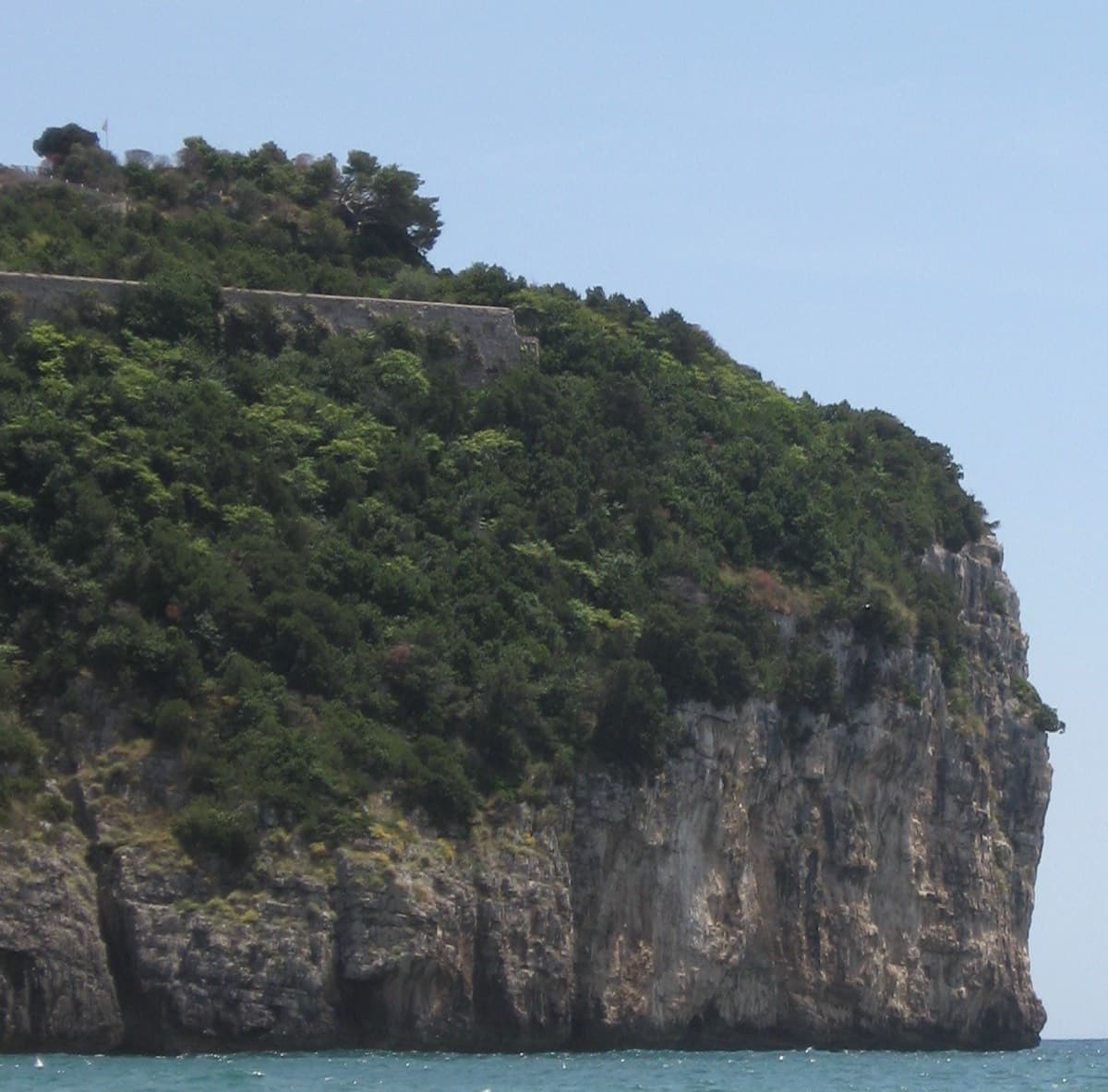
This was the second route on Montagna Spaccata and is the cliff's classic moderate. It's never hard but never trivial, with continuous exposure above the sea: a horizontal crack traverse, an athletic juggy chimney and corners. Gulliver gives UIAA grades V–V+ / IV+–V / V+ / V / V–IV+ (5c max), converted here.

5c5 pitches125 m

Read the cautionsCommitting

Topo of Tierra de Naide, Mallos de Agüero

Spain · Riglos & Agüero (Mallos)

Tierra de Naide

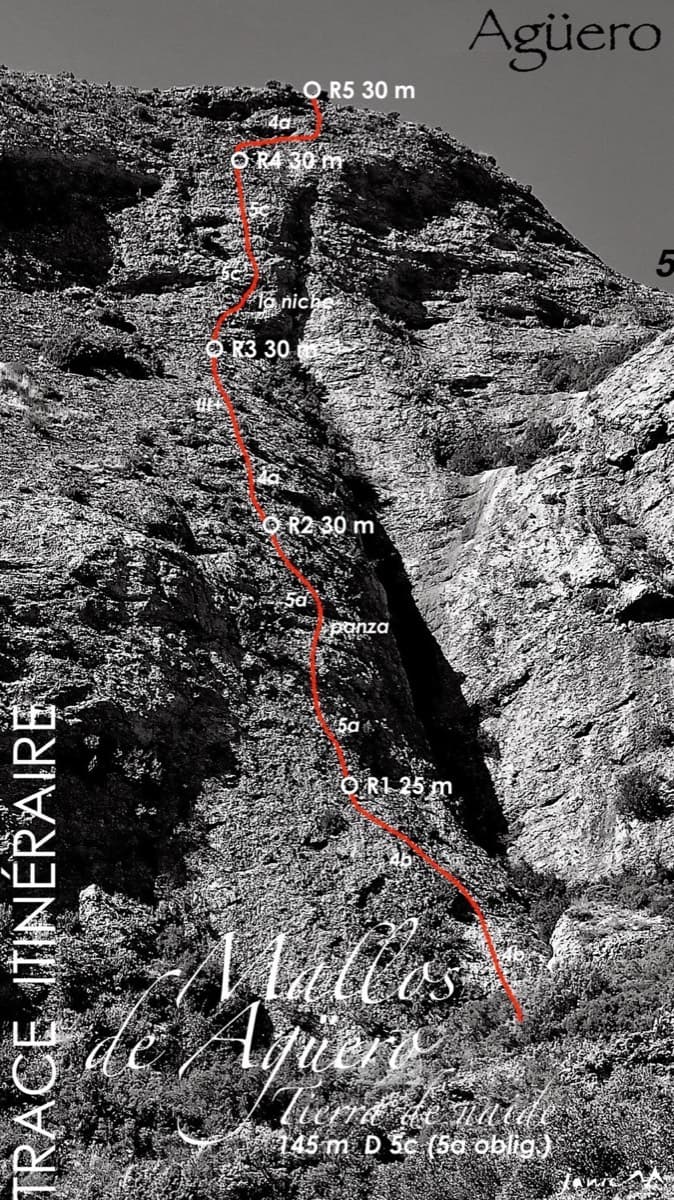
A morning-sun route at the quieter Agüero mallos. Easy slabs separate two fine steep walls, including a superb vertical 5c plaque on pitch 4. Take care with some loose cobbles on the last traverse.

5c5 pitches145 m

Gorra Frígia and Magdalena Superior, south-west faces, Montserrat

Spain · Montserrat

Via del Carles

A straightforward line up the 'Phrygian cap' visible from the monastery. Only the short vertical step on pitch 3 is sustained. It is a good route for learning Montserrat pebble technique and has a summit cross with a big view. The approach takes about 10 min from the Sant Joan funicular top.

5c5 pitches140 m

The Oujdad above Taghia

Morocco · Taghia

Ibtisane

The easiest bolted line at Taghia: three steep 5c walls linked by two long, easy garden pitches. Goes into shade around midday in April.

5c5 pitches235 m

Read the cautions

Compiled from published sources and last verified October 2026. Bolts, anchors and access change. Climbing is dangerous and you are responsible for your own decisions: check a current topo and read the disclaimer.