Multipitch Atlas

Sputnik

Paretone di Arnad / Corma di Machaby (Arnad) · Aosta Valley · Italy

Bail not documentedBolting confidence: medium

The hard route at the far left of the Paretone: two ordinary pitches, then steep walls on pitches 4 and 5 that are less slabby than the neighbours. Pitch 6 follows the arete at 7a, or 6a+ with a strenuous few metres of aid. Harder than the board at the car park suggests.

The Paretone di Arnad (Corma di Machaby) above the Dora Baltea valley, seen from the path to the Pilastro LomastiPhoto: alexduchablais · CC BY-SA 3.0

Photo

The Paretone di Arnad (Corma di Machaby) above the Dora Baltea valley, seen from the path to the Pilastro LomastiPhoto: alexduchablais · CC BY-SA 3.0
Hardest pitch
7a
Pitches
10
Length
250 m
Approach
35 min
Aspect
SW
South-west-facing
Rope
1×50 m
walk-off

The route

Overview

Sputnik climbs the left edge of the great gneiss slab of the Corma di Machaby above Arnad, where the wall is steeper than on Bucce d'Arancia and its neighbours. The first three pitches are a warm-up on less attractive rock. Pitches 4 and 5 are the heart of the route: obligatory hard moves over a short wall, then a long sustained vertical wall that one party called magnificent. Pitch 6 takes the arete and is aided by most parties. The upper pitches ease to 6a and 6a+ with terraces between them.

The climbing

Pitch by pitch

Pitches of Sputnik
PitchGradeNotes
P16a+Four or five easy metres, then a slab that steepens and is climbed on small pockets. The crux is at about the sixth metre. The pockets hold water after rain.
P25+Diagonally left into a well-bolted corner and up all of it to a chain at the edge of a copse. You can continue through the trees without stopping.
P34A link of no more than 15 m: from the top of the copse reach a step with a bolt, then traverse right on easy flakes to the belay. Going straight up is hard and unprotected.
P46b+Left up a smooth slab with a few steps, then the wall rears up: very hard obligatory moves over a short wall, well protected, then easier to a belay near a birch.
P56bA short slab, then a long continuous vertical wall that eases slightly, an arc to the left and another vertical wall almost to the belay, well left of a birch. Sustained and the best pitch.
P67aTraverse left and climb more or less on the arete. Free up to a bolt, then a strenuous section that nearly everyone aids: 6a+ and A0. Free it is 6c+/7a according to camptocamp and 7b according to gulliver.it.
P76aTwo low-angled sections near the arete separated by a smooth short wall, which can be avoided by moving right.
P84Over or round the right of the spike above the belay, down to a notch with an old chain, then a short wall and easy slabs.
P96a+Move left to the edge of the slab (one bolt on the traverse). A hard start using a deep crack left of the bolt and a difficult mantel onto a ledge, then easier.
P106aThree short walls separated by easy-angled ground. The second and third are hard; the third can be partly avoided by a dirty gully on the right.

Getting there

Approach

To the parking

Leave the A5 Torino to Aosta motorway at Pont-Saint-Martin and follow the valley road past Donnas and the Fort of Bard, beyond the turning for the Champorcher valley. With the wall in view, take the first right signed 'Machaby' and drive a few kilometres up the wooded side of the hill to the car park.

On foot · about 35 min

30 to 40 min. From the car park cross the bridge and walk up the cobbled track to a church and then an agriturismo. Follow signs for the base of the wall: a gravel track at first, then, where it turns left just after a ruined building, a path straight on that begins to descend. Keep right at junctions, towards the rock. The path drops very steeply with a few scrambling steps (not recommended after rain) to the lowest point of the wall at the start of Bucce d'Arancia. Climb a few metres left (facing in) and follow the path along the base, in and out of the woods, to the far left end. The name is painted at the start.

Finding the route · 2 photos

Approach photo

Map of the walk-in

  • Crag
  • Parking

Loading map

The point marks the crag, not the exact start of the route.

Coordinates · crag

45.63498, 7.73580

Parking

45.63457, 7.72929

Arnad (camptocamp access point)

Point from camptocamp waypoint 39748

For your phone or watch

Download GPX

Contains the route point and parking. Opens in most mapping apps and GPS watches.

Points are compiled from published sources, with the precision stated above. They were not surveyed on the ground: check them against a current topo.

Getting down

Descent

On foot. A path leads over the top of the Corma and back to the agriturismo in a few minutes, and from there to the car park.

Retreat

Bailing off the route

Bail not documented

Retreat is not documented for this route. The normal descent is a short walk from the top. Gulliver.it mentions that the wall can be descended by abseil but calls it inconvenient, without giving details for Sputnik.

Retreat from
Not known. Several belays are on terraces, and a copse separates pitches 2 and 3.
Point of no return
Not documented. From the top of pitch 6 the climbing is 6a+ at most and the summit path is close.
Carry
A single 50 m rope allows only 25 m abseils; take a second rope, maillons and cord if you want the option.
Basis
Inferred from the route factsNo source describes abseiling Sputnik; gulliver.it only notes in general terms that abseiling the wall is awkward.

Partly inferred from the route facts

Safety

Hazards

  • The direct version of pitch 3 is unprotected; take the easy flakes to the right.
  • Pitch 4 has very hard obligatory moves (about 6a to 6b obligatory overall).
  • The pitch 6 aid section is strenuous and the bolts are spaced for aiding; a short leader may struggle to reach.
  • The approach path is steep with scrambling steps and is slippery after rain.

Sun and weather

Conditions

South-west facing at about 500 to 750 m; a spring and autumn wall that is also climbed on fine winter days. On 30 November the first pitch came into the sun at about 09:45. Pitch 1 was soaked for its first 10 m after rain in 2019 while the rest was dry. Reports from 2017 give about 4 h for the route.

Usual season · Mar to May, Sep to Nov

Sun on the wall · SW-facing

Working out the sunlit hours for this month.

  • January: not yet worked out
  • February: not yet worked out
  • March (usual season): not yet worked out
  • April (usual season): not yet worked out
  • May (usual season): not yet worked out
  • June: not yet worked out
  • July: not yet worked out
  • August: not yet worked out
  • September (usual season): not yet worked out
  • October (usual season): not yet worked out
  • November (usual season): not yet worked out
  • December: not yet worked out

Sun on the wallDaylight, wall in shade● Usual season

Estimated from the wall's aspect only. Ignores surrounding terrain, gullies and the wall's exact shape. Clock times are local to the wall (Central European time), for the 15th of each month.

Climate figures for Aosta Valley are not available yet

What to carry

Gear

13 quickdraws and a single 50 m rope (camptocamp). A sling to stand in or a clip-stick helps on the aid section of pitch 6. Helmet.

Checklist

Quickdraws
13
Rope
1×50 m (walk-off)
Helmet
One each
Maillons or spare karabiners
To leave behind if you retreat
Cord
Mentioned for retreat

Derived from the route data; check it against a current topo

From climbers

Reader reports

Reader reports are not being collected yet. Until they are, check a current topo and the local club or guidebook publisher for recent changes to Sputnik.

Worth knowing

Tips

  • The grades on the information board at the car park are lower than reality according to a 2017 party; trust the camptocamp grades.
  • The first two or three pitches are not the best; the quality arrives from pitch 4.
  • The agriturismo on the approach is open at weekends.

Open questions

Where sources disagree

  • Free grade of pitch 6: 6c+/7a (camptocamp, which heads the route 7a with 6b obligatory) against 7b (gulliver.it, which heads it 6b+ with 6a obligatory and A0). Both agree it is normally climbed at 6a+ A0. 7a is used for the card.
  • A 2017 camptocamp party thought that without a clip-stick the aid section needs 'a good 6b'.
  • Aspect: south-west (camptocamp) against south (gulliver.it).

Provenance

Sources

Same area

More in Aosta Valley

All routes in Aosta Valley
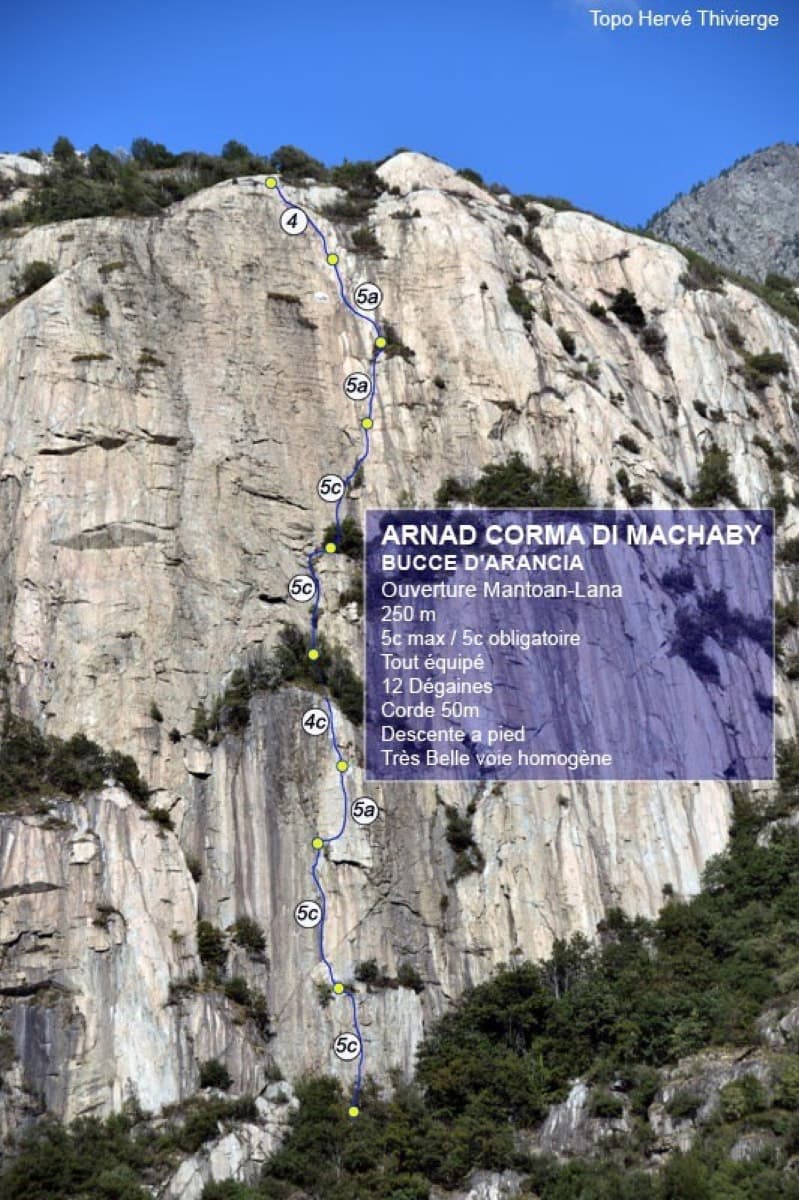
Topo of Bucce d'Arancia on the Corma di Machaby, Arnad

Italy · Aosta Valley

Bucce d'Arancia

This is the most-climbed route on the Paretone. It gives sustained, varied slab and crack climbing on good gneiss, and the hardest moves are a fine crack on P2, a slanting corner and a punchy wall. Queues are common on good days. The Mani Nude guidebook grades it stiffly; camptocamp's Italian page calls it sustained at 5b–5c+ with a single 6a.

6a10 pitches290 m

Read the cautions
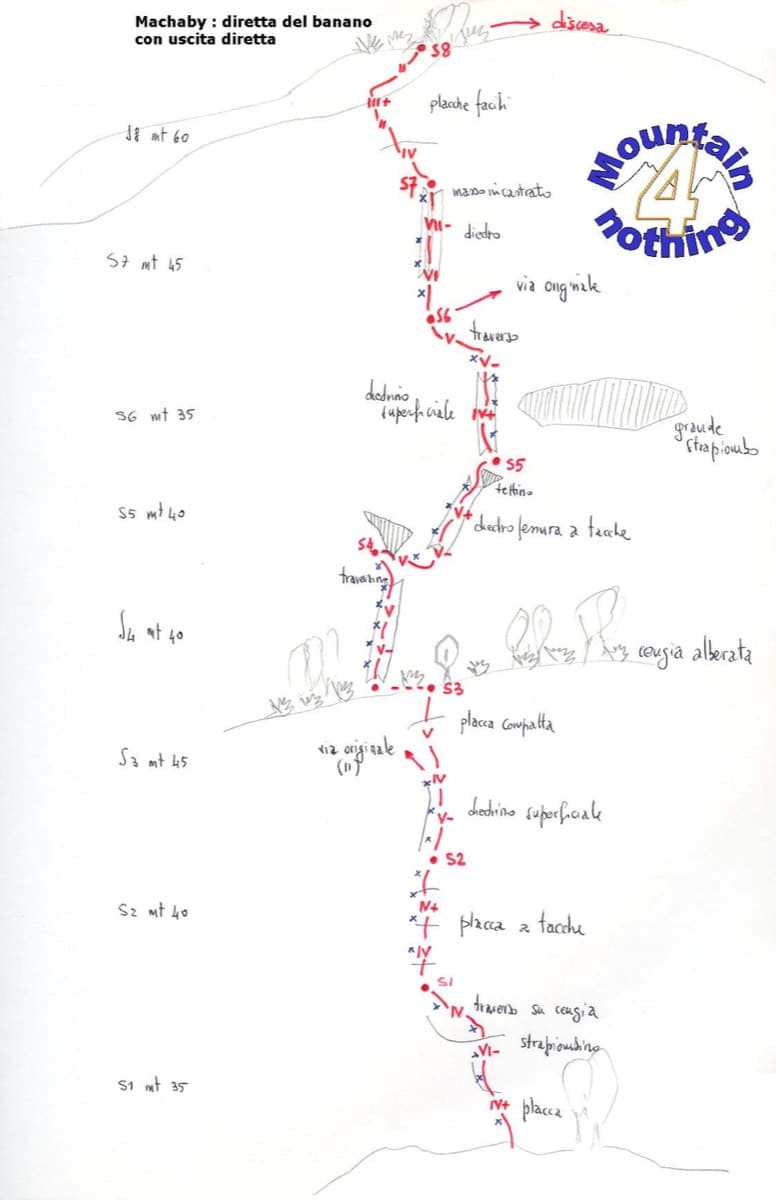
Hand-drawn topo of Diretta al Banano (direct finish), Corma di Machaby

Italy · Aosta Valley

Diretta al Banano

Along with Bucce d'Arancia this is the Paretone's other great classic (first ascent 1977, later retro-bolted). It climbs big, juggy, non-athletic slabs on beautiful rock up the centre of the wall to near the summit. Expect a few metres above the last bolt in places.

5c+9 pitches250 m

Read the cautions

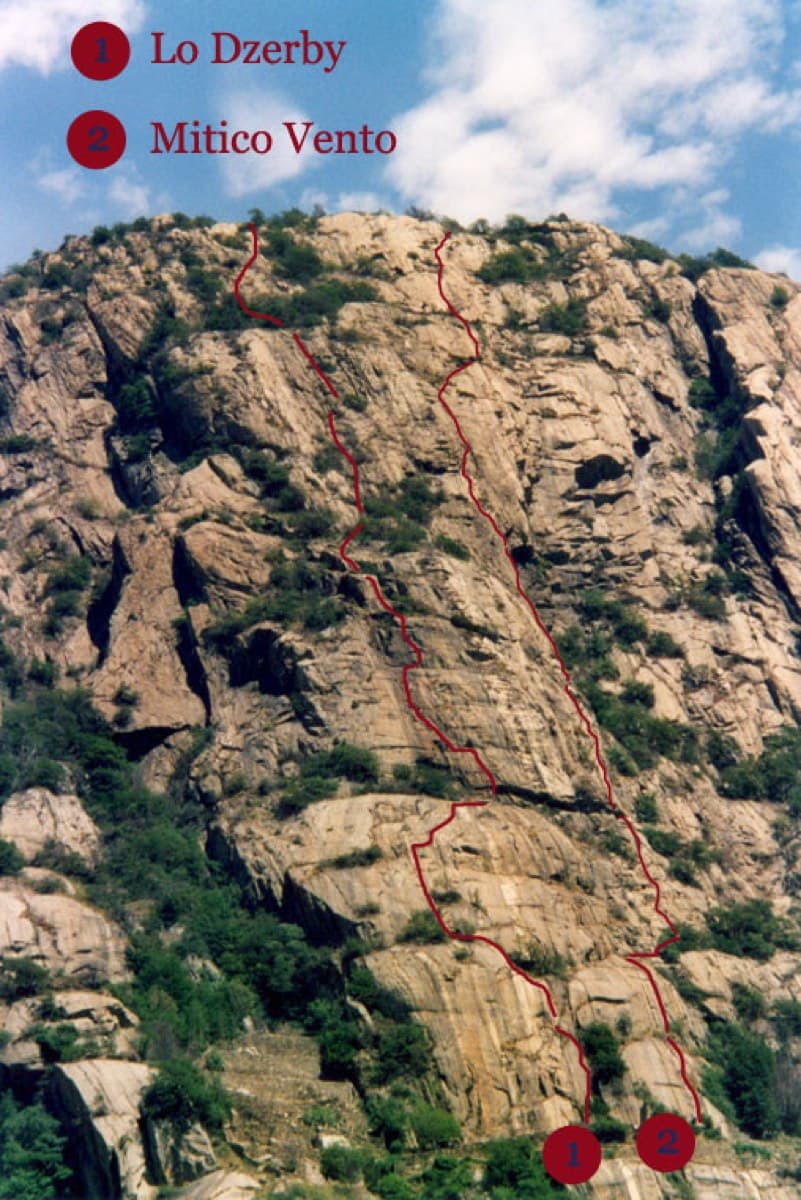
Topo of Lo Dzerby (line 1) and Mitico Vento on the Corma di Machaby, Arnad

Italy · Aosta Valley

Lo Dzerby

A long, easy-angled outing up the full height of the Paretone. A steeper lower half with an exposed pillar on P5 leads to sculpted slabs and broken steps higher up. It's a good first big multipitch.

5c13 pitches400 m

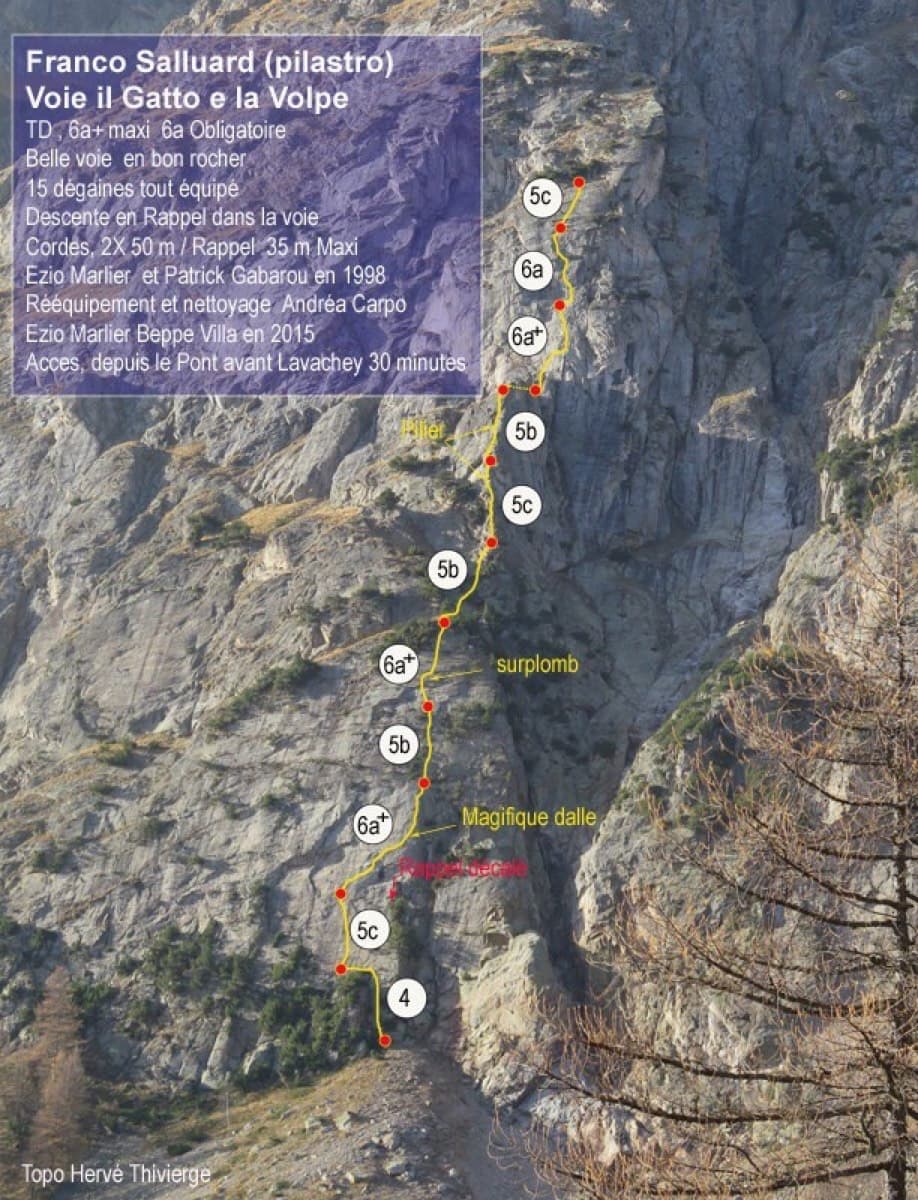
Topo of Il Gatto e la Volpe on the Pilier Franco Salluard, Val Ferret

Italy · Aosta Valley

Il Gatto e la Volpe

Rated 'great' on camptocamp: a wild setting with a short, easy approach from Lavachey. It climbs edgy granite slabs and a pillar crest, with a three-star exposed slab on P9.

6a+11 pitches350 m

Around 7a · about 10 pitches

Similar elsewhere

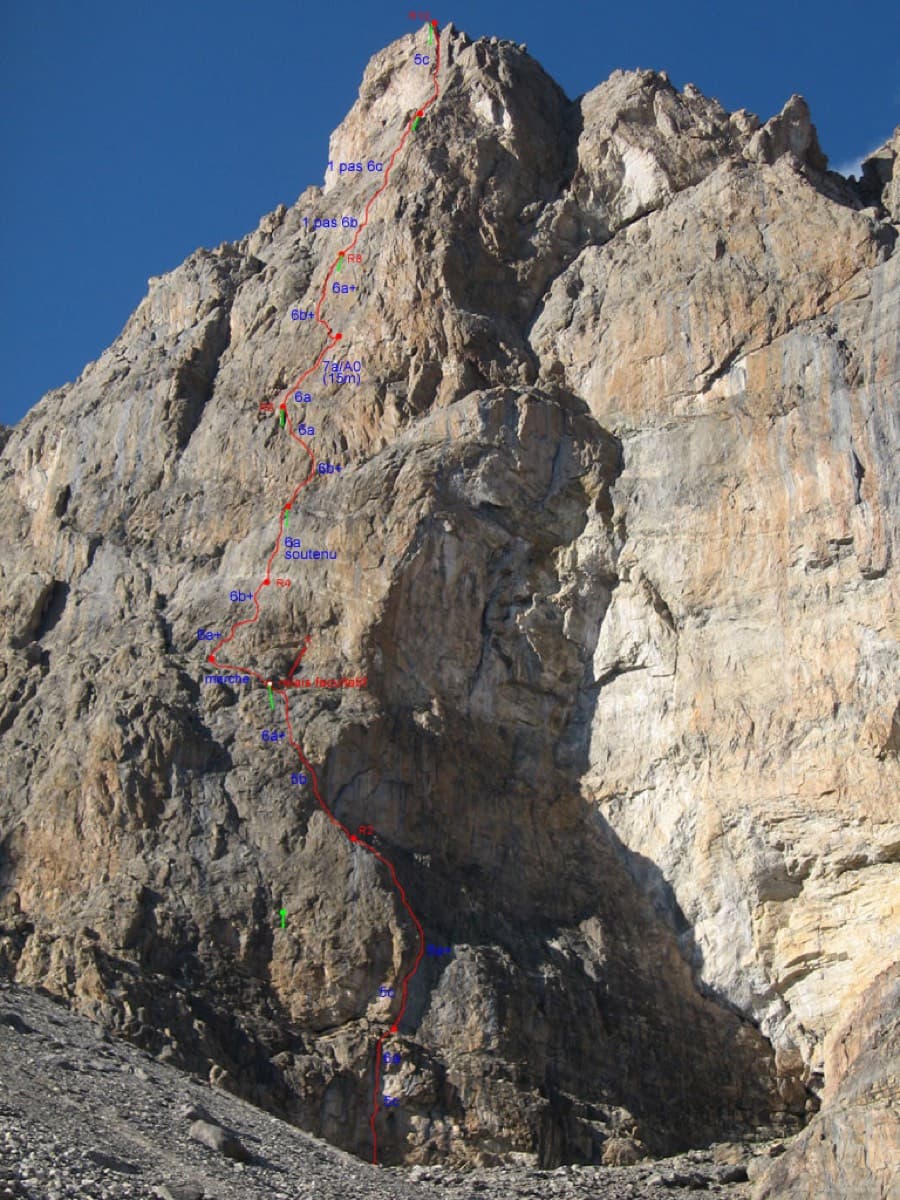
Photo-topo of Feu Sacré on the south-west face of the Tour Termier

France · Cerces

Feu Sacré

The classic hard route of the Tour Termier: ten steep, technical pitches on superb compact limestone at 3000 m, a short walk from the Col du Galibier road. It is never athletic but sustained at 6a+ to 6b, with a 7a pitch and a 6c move that both go at 6a A0. Cold, wind and thin footwork make it feel bigger than the numbers.

7a10 pitches320 m

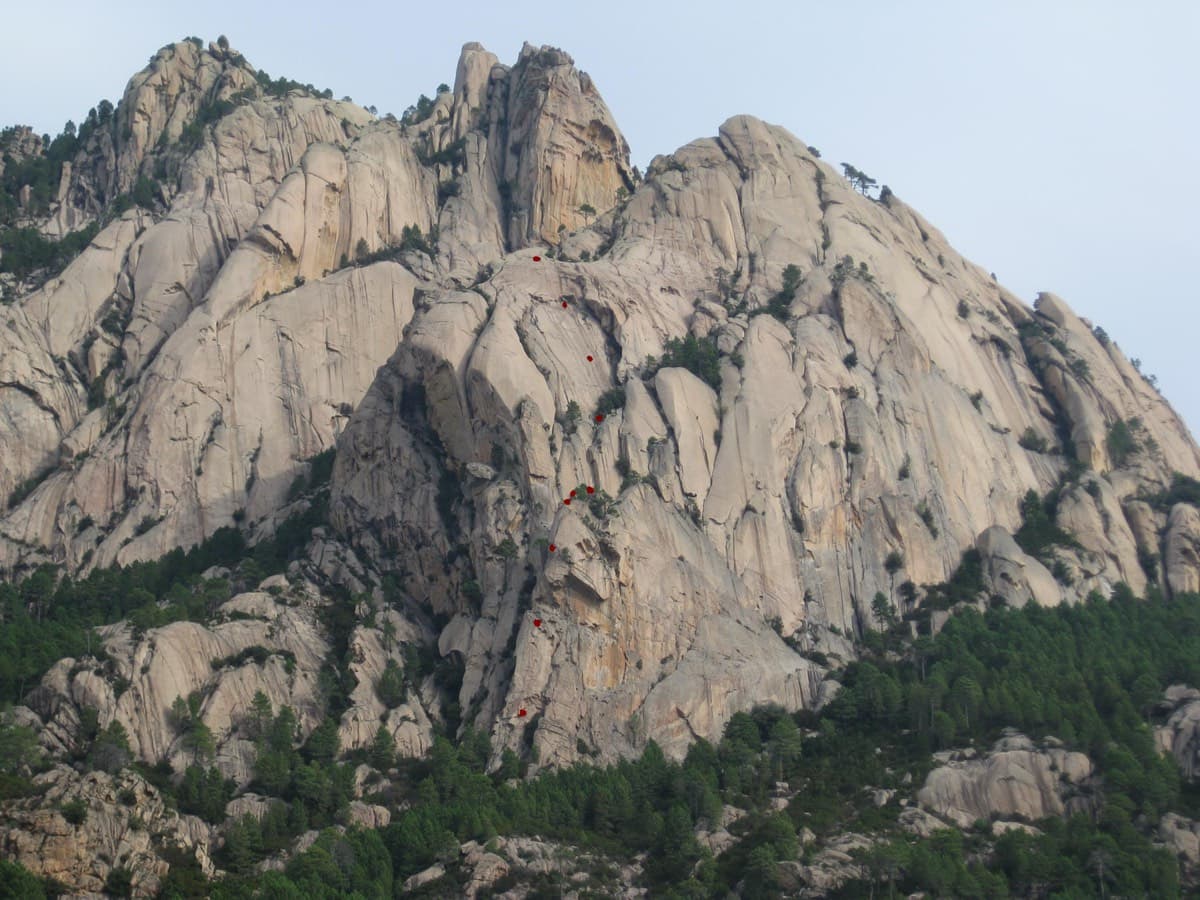
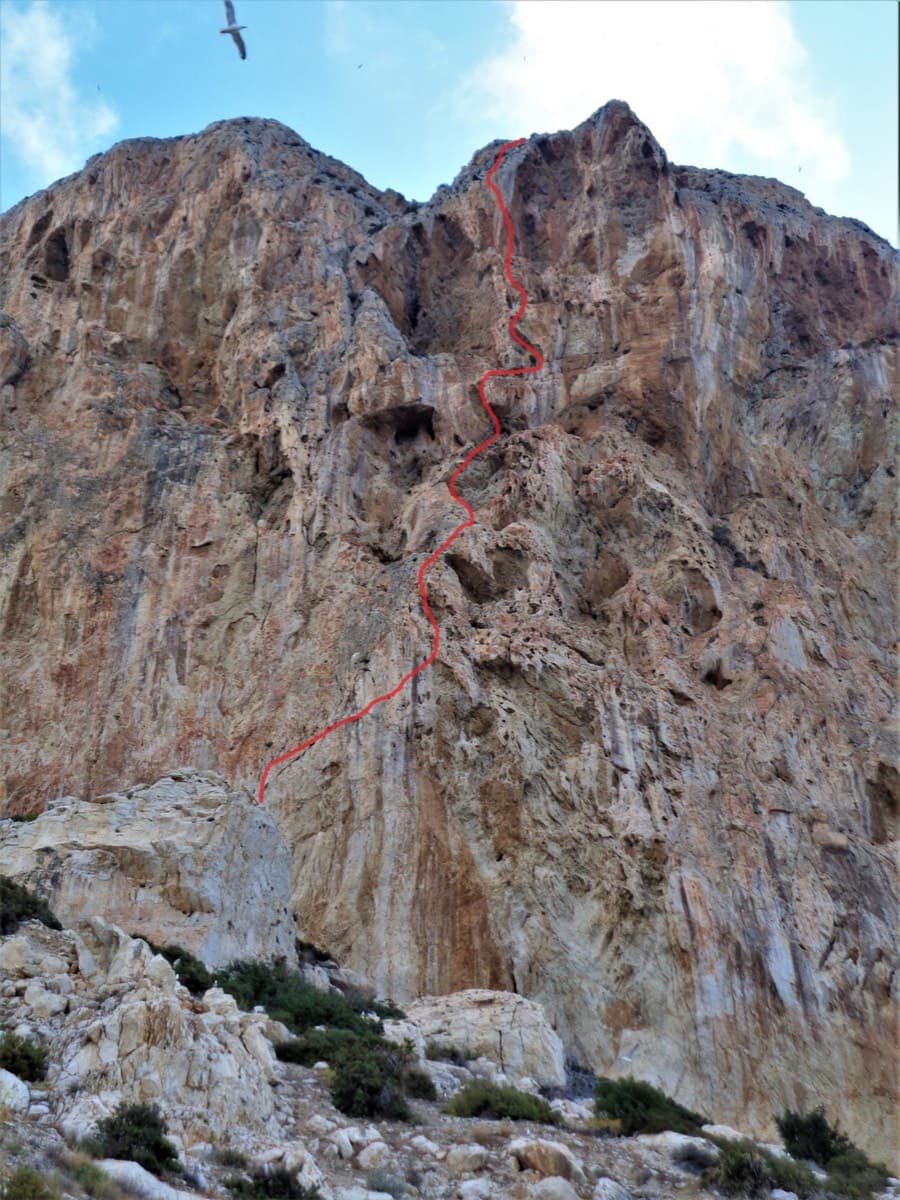
Teghie Lisce, Bavella, with the belays of Acqua in bocca marked in red

France · Bavella

Acqua in bocca

A sampler of everything Bavella granite does: a technical 7a wall, layback and jamming cracks, an off-width, a squeeze slot behind a tree, and three pitches of pure friction slab to finish. Bolted well enough to climb on quickdraws, which is rare here. The wide pitches are awkward and bruising if you are not used to the style.

7a10 pitches300 m

Read the cautions

The line of Mare Nostrum on the south face of the Peñón de Ifach.

Spain · Costa Blanca (Peñón de Ifach)

Mare Nostrum

Nine steep pitches up the wildly sculpted right side of the south face, overhanging almost throughout. Two long 7a pitches open the route and a third comes near the top, and even the 6a+ pitches are athletic. The rock is covered in holds and much less polished than the classics to the left.

7a9 pitches310 m

Read the cautions

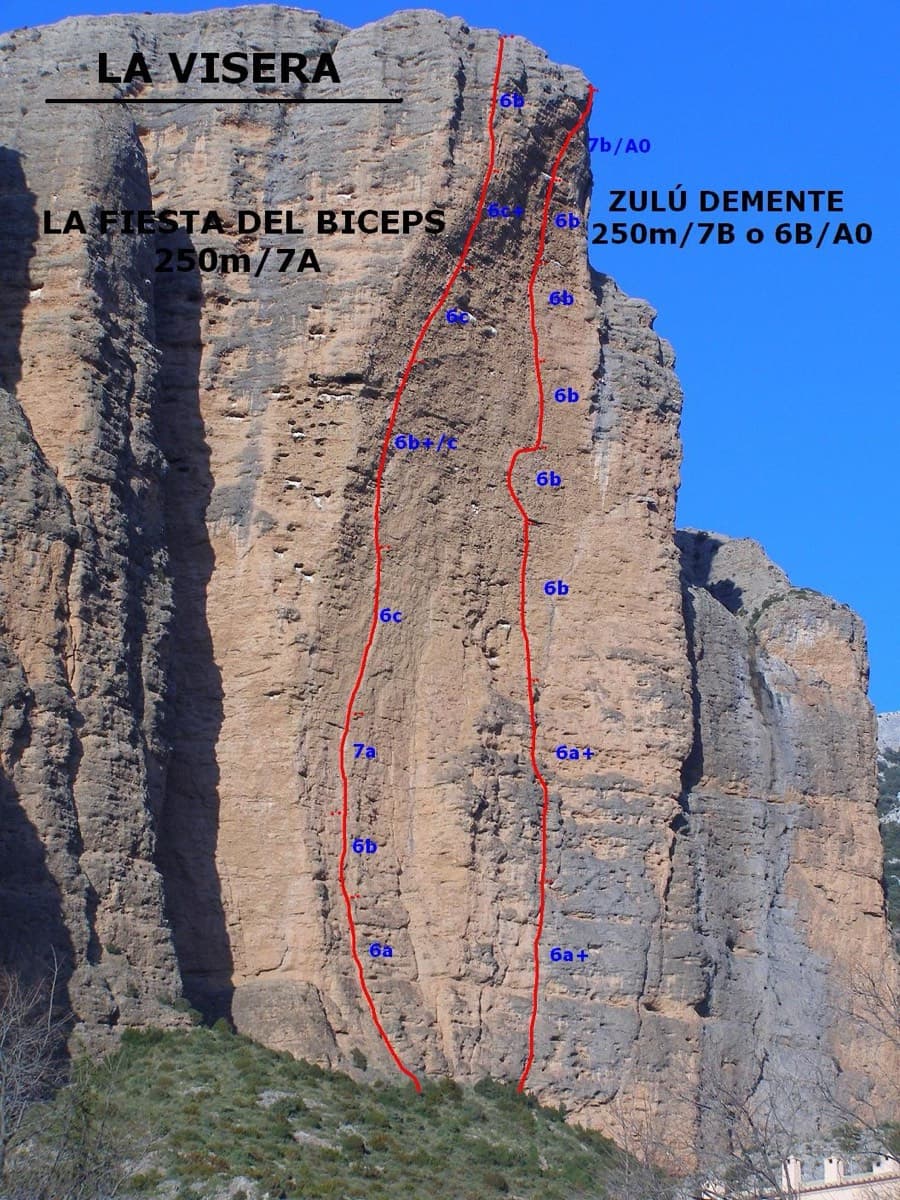
Photo-topo of La Visera at Riglos with La Fiesta de los Bíceps (left line) and Zulú Demente (right line)

Spain · Riglos & Agüero (Mallos)

La Fiesta de los Bíceps

The famous overhanging line up the left side of the Visera, following the white chalk stripe you can see from the village. A polished, technical 7a pitch low down, then five pitches of ever steeper climbing on huge cobbles where the difficulty is staying un-pumped. Bolts are sound but spaced, and above the third belay the only practical way off is the top.

7a8 pitches250 m

Read the cautionsCommitting

Compiled from published sources and last verified October 2026. Bolts, anchors and access change. Climbing is dangerous and you are responsible for your own decisions: check a current topo and read the disclaimer.