Multipitch Atlas

Follomi

Les Montons · Sanetsch · Switzerland

Bail with caveatsBolting confidence: high

The classic introduction to the Sanetsch at 6c: eight varied pitches up a pillar of superb rough limestone, with the hard climbing packed into a few well-bolted metres on each pitch. A steep corner mantel, a balancy wall, a fine slab and an airy exit from a niche. Tops out on grassy slopes with a walk-off.

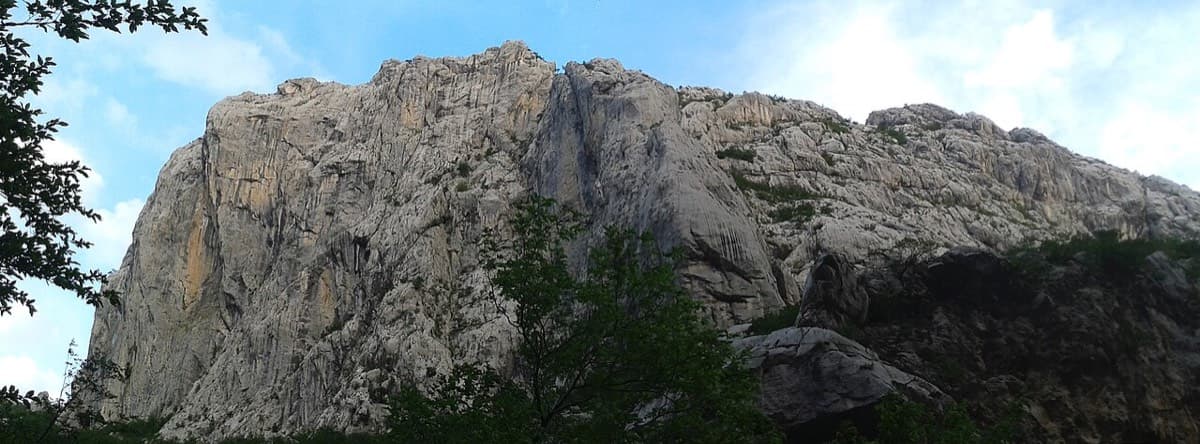
The wall of Les Montons taken by Follomi, seen from the approachPhoto: austris · CC BY-NC-ND 3.0

Photo

The wall of Les Montons taken by Follomi, seen from the approachPhoto: austris · CC BY-NC-ND 3.0
Hardest pitch
6c
Pitches
8
Length
250 m
Approach
20 min
Aspect
SE
South-east-facing
Rope
2×50 m recommended to manage rope drag
walk-off

The route

Overview

Follomi starts at the lowest point of the Montons wall above the Lac de Sénin and follows a cunning line of corners, slabs and a pillar to the top of the cliff. Two approach pitches of 5c lead to a ledge and a short walk; then come two pitches of 6c, two of 6b and a finish up a corner and chimney. The hard moves are short and well protected, with easier climbing between, so the route feels less sustained than the grade suggests. It once had a reputation for boldness, but bolts were added in 2016 and again in 2023, and it is now one of the most travelled lines at the Sanetsch, with some polish to show for it. The descent is on foot.
The climbing

Pitch by pitch

Pitches of Follomi
PitchGradeLengthNotes
P15c30 mStart up an open corner, hook left with a steep mantel on good holds, then easy steps rightwards to a belay on a ledge.
P25c+35 mStart right of the belay, then straight up an open corner followed by a move that is thin for the grade (6a according to some). Reach a grassy ledge and follow it up and left to the belay. Then walk about 20 m up and right (two bolts) to the belay at the start of pitch 3.
P36c38 mStart left of the belay. A strenuous, well-protected mantel out of an overhanging corner, then a big loop up and left and back right to an obvious corner. Climb it and leave it rightwards at a small terrace, where the belay is. A long pitch: manage rope drag. Some polish.
P46c35 mTraverse horizontally right to the corner. Climb the slab right of the corner and mantel above it: balancy moves on a vertical wall with almost no holds. Continue slightly right, close to La vita è bella, then trend left to the crest of the pillar and a small, exposed, partly hanging belay.
P56b32 mSteep on big holds just left of the belay, then about ten metres of thin slab. Finish up easy steps.
P65c30 mClip the first bolt on the left, then go right and climb the wide crack leftwards for 5 m. Mantel onto the pillar and follow it to the belay. A 2022 party found the crack unbolted with a ledge below; a 2024 party found the bolting adequate.
P76b30 mA sustained technical slab to a big niche. Leave the niche by a very steep, airy traverse left, then a corner for a few metres. Belay on the right on the crest of the pillar. Manage rope drag. Often named as the best pitch.
P86b40 mStraight above the belay up an open corner, with the crux between the second and third bolts, which becomes an easy chimney where the bolts are spaced. A short level section rightwards, then a last easy wall on slightly fractured rock. Belay on the left at the top.

Getting there

Approach

To the parking

From Sion drive up through Savièse to the Col du Sanetsch (2252 m) and on down towards the Lac de Sénin; the road is long and narrow and opens in June. A bus runs from Sion in season. From the Bernese side a cable car climbs from Gsteig to the lake. Wild camping near the lake is common.

On foot · about 20 min

From the parking follow the path that winds up through the boulder field; take the one that starts at the small hut, not the detour left of the big gully. At the largest boulder head right to join the path along the base of the Montons. Follomi is the first route you come to: the name is painted in red, left of a niche, at the lowest point of the wall. 20 minutes.

Finding the route · 2 photos

Approach photo

Map of the walk-in

  • Crag
  • Parking

Loading map

The point marks the crag, not the exact start of the route.

Coordinates · crag

46.35343, 7.27946

Parking

46.33161, 7.28623

Col du Sanetsch (camptocamp access point)

Point from camptocamp waypoint 43146

For your phone or watch

Download GPX

Contains the route point and parking. Opens in most mapping apps and GPS watches.

Points are compiled from published sources, with the precision stated above. They were not surveyed on the ground: check them against a current topo.

Getting down

Descent

Walk off. Take the path that descends north-east, then follow the red dots down a series of ledges and rock steps to the top of the scree. The path then runs along the foot of the wall back to the start. It is exposed in places and potentially dangerous when wet.

Retreat

Bailing off the route

Bail with caveats

Retreat is possible but not convenient. Camptocamp states that the belays are not equipped for abseiling, so you would abseil from bolted belays on your own maillons. From the ledge above pitch 2 you are only two short pitches up. Higher, the line traverses on pitches 3, 4 and 7, which makes abseiling awkward, and topping out is usually the better option.

Retreat from
The first two belays and the ledge above pitch 2 are the easy places to turn round.
Point of no return
Roughly the top of pitch 4, on the crest of the pillar: above it, four pitches of up to 6b remain and the hard moves can be aided.
Carry
Two 50 m ropes and several maillons or karabiners to leave.
Basis
Part stated, part inferredCamptocamp states only that the belays are not equipped for abseiling and that the descent is on foot; the retreat advice is inferred from the pitch descriptions.

Partly inferred from the route facts

Safety

Hazards

  • The belays are not equipped for abseiling. Plan to top out.
  • The descent path is steep, exposed and slippery when wet; grass on the ledges stays damp after storms.
  • Pitches 1 and 2 cannot be linked with 50 m ropes, whatever older descriptions say: a 2022 party ran out of rope.
  • A fall from the mantel on pitch 3 can end in a pendulum if you move far right.
  • Bolts are spaced on the easier crack of pitch 6 and the chimney of pitch 8.

Sun and weather

Conditions

South-east facing between about 2100 and 2500 m and in the sun from 08:00. In early June 2026, just after the pass opened, there was still snow in the boulder field but the wall was dry; the right-hand part of the cliff stays wet longer. A party climbed it in warm sun on 10 November with the air at 0 °C. A cold up-draught can chill the exposed belay at the top of pitch 4.

Usual season · Jun to Oct

Sun on the wall · SE-facing

Working out the sunlit hours for this month.

  • January: not yet worked out
  • February: not yet worked out
  • March: not yet worked out
  • April: not yet worked out
  • May: not yet worked out
  • June (usual season): not yet worked out
  • July (usual season): not yet worked out
  • August (usual season): not yet worked out
  • September (usual season): not yet worked out
  • October (usual season): not yet worked out
  • November: not yet worked out
  • December: not yet worked out

Sun on the wallDaylight, wall in shade● Usual season

Estimated from the wall's aspect only. Ignores surrounding terrain, gullies and the wall's exact shape. Clock times are local to the wall (Central European time), for the 15th of each month.

Climate figures for Sanetsch are not available yet

What to carry

Gear

10 to 12 quickdraws, some extendable, and ideally two 50 m ropes to control drag on pitches 3 and 7. Helmet. No trad gear is required; a 2024 party placed one small cam on pitch 4 and would have liked a medium cam (about size 2) for the chimney on pitch 8.

Checklist

Quickdraws
12
Rope
2×50 m recommended to manage rope drag (walk-off)
Helmet
One each
Maillons or spare karabiners
To leave behind if you retreat

Derived from the route data; check it against a current topo

From climbers

Reader reports

Reader reports are not being collected yet. Until they are, check a current topo and the local club or guidebook publisher for recent changes to Follomi.

Worth knowing

Tips

  • Allow about 4 hours for the climb; car to car in 5.5 hours is typical.
  • Bring long slings for pitches 3 and 7.
  • The hard moves can be pulled through on the bolts, which brings the obligatory grade to about 6a+.
  • There are single-pitch routes at the base and shorter multipitches nearby if you have energy left.

Open questions

Where sources disagree

  • Grade: 6c (6a+ obligatory) on camptocamp; PeakVisor lists 6b+ (6b obligatory), and a detailed 2024 report grades the pitches 5c, 6a, 6b+, 6b, 6b+/6c, 5c, 6b+/6c, 6b+.
  • Length: 250 m of climbing on camptocamp; PeakVisor says 300 m, and gulliver.it listings give 150 to 200 m. The 2024 party's pitch lengths, used here, add up to 270 m.
  • Pitch 6 protection: 'no bolts in the crack, a fall would land on the ledge' (August 2022) against 'the bolting is good, no trad needed' (November 2024). The 2023 refresh may explain the difference.
  • Aspect: SE on camptocamp; the 2024 party describes the wall as in the sun all day.

Provenance

Sources

Around 6c · about 8 pitches

Similar elsewhere

The north face of Anića kuk, Paklenica, where Alive climbs

Croatia · Paklenica

Alive

Seven sustained pitches of 6a to 6c on the shady north face of Anića kuk, then an easy scramble out. A poor first pitch gives way to a steep ramp, a slightly overhanging 6c wall, an off-width and a fine finishing slab. The rock improves with every pitch.

6c8 pitches220 m

No photo yet

Austria · Ötztal

Linas Traumreise

Steep, exposed gneiss left of the Reinhard Schiestl via ferrata, finding a way between huge roofs. The cruxes are the steep slabs of pitches 5 and 6 (6c). Stiffly graded, and the abseil descent is not for everyone.

6c8 pitches195 m

Looking up the red limestone of Kokkinovrachos during a May 2025 ascent of Mazi

Greece · Leonidio & Kyparissi

Mazi

Eight pitches to the top of Kokkinovrachos, seven of climbing and one of scrambling through vegetation. A crack in a corner, slabs of coral-like rock and two short roofs give varied climbing, with three isolated 6c moves. It stays in the shade through the morning, unlike most of the wall.

6c8 pitches200 m

The west face of the Taoujdad from the approach, with the access ramps at its foot

Morocco · Taghia

Au nom de la Réforme

The classic first route at Taghia: steep, water-sculpted red limestone on the west face of the Taoujdad, with a 6c third pitch that is 6b until a short crux below the belay. It is better bolted than most Taghia routes and correspondingly popular, so some pitches are polished.

6c7 pitches300 m

Compiled from published sources and last verified October 2026. Bolts, anchors and access change. Climbing is dangerous and you are responsible for your own decisions: check a current topo and read the disclaimer.