Multipitch Atlas

Sonjannika

Morro Falquí (Benitatxell / Moraira) · Costa Blanca (Morro Falquí) · Spain

Read the cautionsBail not documentedBolting confidence: high

A superb sea-cliff multipitch. P4 makes an impressive exposed exit from a cave with 100 m of air below, and the 6a+ P5 has a chimney and fingery slab. Balancy, airy and great for introducing someone to multipitch.

The flat-topped sea cliff of Morro Falquí closing the south end of Cala del Moraig, Benitatxell. Sonjannika climbs on this headland; the line cannot be pointed to from here.Photo: Jesús Alenda · CC BY 2.0

Photo

The flat-topped sea cliff of Morro Falquí closing the south end of Cala del Moraig, Benitatxell. Sonjannika climbs on this headland; the line cannot be pointed to from here.Photo: Jesús Alenda · CC BY 2.0
Hardest pitch
6a+
Pitches
6
Length
170 m
Approach
25 min
Aspect
–
Not recorded
Rope
2×50 m
Read before you go

Bolted, but the bolts are reported as sparse, the 6a+ pitch has unstable sections, and the low-level approach and current access are not documented in any source read in full.

The route

Overview

Sonjannika is a six-pitch, roughly 170 m sea-cliff route on Morro Falquí, between Benitatxell and Moraira. Unlike the single-pitch sectors on top of the crag it starts near sea level, so you descend to the shore first and climb back out. The climbing is balancy and footwork-based on sharp limestone, mostly around 5 to 5+, with one 6a+ pitch that can be avoided. The highlight is the fourth pitch, which steps out of a cave belay with about 100 m of air below. It is described as fully equipped, but a guide who knows it well says the bolts are fairly sparingly placed, so treat it as a proper multipitch rather than a clip-up.
In pictures

Photos

Approach photo

The climbing

Pitch by pitch

Pitches of Sonjannika
PitchGradeLengthNotes
P14+40 mEasy opening pitch. Rockfax as quoted on UKC gives 4c, 40 m.
P2515 mA steep corner to a hanging belay. Quoted as 5a, 15 m.
P35+30 mWeaves up to a belay in a small cave on an exposed pillar. Quoted as 5c, 30 m. The cave gives shade.
P4525 mClimb out of the cave with about 100 m of air below, then up a pillar to a big ledge. More impressive than hard. Quoted as 5a, 25 m.
P56a+25 mA short chimney, then move right onto a slab to reach the top of a big flake; steep and fingery. Quoted as 6a+, 25 m. It can be avoided by scrambling round to the left past a short fixed rope; a local guide often does this because parts of the regular line feel unstable.
P65+–Final pitch to the top, quoted as about 35 to 40 m. A common alternative finish is the neighbouring Moorhuhn Winter Edition at 6a, which one writer found the hardest and most sustained part of the day.

Getting there

Approach

To the parking

Morro Falquí is on the Cumbre del Sol coast at El Poble Nou de Benitatxell, next to Cala del Moraig, a short drive from Calpe. One 2024 climber recommends the big public car park, from where the approach takes about 25 minutes. The local tourism page says that for the sport sectors you park at the top of the wall and walk to the end of the street. Park so residents are not obstructed.

On foot · about 25 min

About 25 minutes from the big public car park (2024 logbook comment). The route starts low on the cliff: descend a canyon to a small hidden beach, then scramble on to the base of the route. No source read in full gives a step-by-step line or says whether any fixed rope or abseil is involved, so get the current approach from the guidebook before going.

Map of the walk-in

  • Crag

Loading map

The point marks the crag, not the exact start of the route.

Coordinates · crag

38.71267, 0.17222

Point from thetopo.com / 27crags crag 5127 (Morro Falqui)

For your phone or watch

Download GPX

Contains the route point. Opens in most mapping apps and GPS watches.

Points are compiled from published sources, with the precision stated above. They were not surveyed on the ground: check them against a current topo.

Getting down

Descent

Walk off. From the top follow the green and white waymarks back to the car in 20 to 25 minutes, with no abseils (2024 logbook comment).

Retreat

Bailing off the route

Bail not documented

Retreat from part-way is not documented. The normal way off is to top out and walk, and no source describes abseiling the route or the belay hardware. A local overview of these sea-cliff routes advises carrying gear for a possible retreat, which suggests you should not count on rigged abseil stations.

Retreat from
Not known for a retreat downwards. The start is near sea level and was reached on foot by a canyon descent and scramble, so an abseil to the base would leave you needing to reverse that approach (inferred). If the problem is only the 6a+ fifth pitch, you can avoid it from the big ledge above P4 by scrambling round to the left past a short fixed rope.
Point of no return
None is documented. From the big ledge at the top of P4 the easiest way off is probably up, using the scramble that avoids P5 and then the last 5+ pitch (inferred).
Carry
Two ropes (one party used doubles and P1 is quoted as 40 m), plus maillons, old karabiners and cord, as the local advice is to carry retreat material.
Basis
Inferred from the route factsLink Alicante states only the general advice to carry retreat gear and Mountain Journeys states the P5 bypass; no source says whether the route can be abseiled, and the rest is inferred.

Partly inferred from the route facts

Safety

Hazards

  • Bolts are relatively sparingly placed according to a guide's 2015 write-up, even though other sources call the route fully equipped.
  • Parts of the standard 6a+ fifth pitch are reported to feel unstable (guide, November 2018).
  • The start is near sea level and reached by a canyon descent and scramble; no source describes the sea conditions needed, so check before committing.
  • The rock is very sharp.
  • theTopo flags the crag as missing access information, and a UKC forum thread asks about access issues at Morro Falquí; the thread could not be read. Check the current situation locally.
  • Full sun and little shade; heat is a real factor outside winter.

Sun and weather

Conditions

A coastal cliff in full sun; a guide described being badly sunburnt on a November ascent, with strong wind at the top. No source read gives the compass aspect. The cave belay on P3 is the only shade mentioned. It takes roughly a morning at a relaxed pace. You can swim at the shore before starting.

Usual season · Jan to May, Oct to Dec

Sun on the wall

No estimate: the wall's aspect is not recorded for this route.

Monthly climate averages for Costa Blanca (Morro Falquí), 1991-2020
MeasureJan (usual season)Feb (usual season)Mar (usual season)Apr (usual season)May (usual season)JunJulAugSepOct (usual season)Nov (usual season)Dec (usual season)
Mean daily high °C141517192226292926221815
Mean daily low °C8810121519222220171210
Rain days 1 mm or more666652137876

● marks the usual climbing season. Averages for 1991-2020 at about 87 m. Area climate from Open-Meteo reanalysis. Temperatures are adjusted to the height of the crag; rain comes from a grid cell of about 10 to 25 km, and summer highs on sea cliffs can read a few degrees low. The wall and valley can differ. Data: Open-Meteo, CC BY 4.0.

What to carry

Gear

No source gives a quickdraw count. One party climbed on double ropes and found them very helpful. A helmet and gear to retreat are sensible; the Spanish write-up advises carrying retreat material on these routes.

Checklist

Quickdraws
Number not given in the sources
Rope
2×50 m
Helmet
One each
Abseil device and prusik
The descent or the retreat involves abseiling
Maillons or spare karabiners
To leave behind if you retreat
Cord
Mentioned for retreat

Derived from the route data; check it against a current topo

From climbers

Reader reports

Reader reports are not being collected yet. Until they are, check a current topo and the local club or guidebook publisher for recent changes to Sonjannika.

Worth knowing

Tips

  • If the 6a+ pitch is too much, scramble round to the left via the short fixed rope and rejoin for the last pitch.
  • Finish up Moorhuhn Winter Edition (6a) for a harder last pitch.
  • All belays are on big ledges, one in a cave, so it suits a first sea-cliff multipitch with a competent leader.
  • Parties of three need more thought about ropework at the hanging belay on P2.
  • Neighbouring routes of the same character but harder: Silberrücken (6b+) and 95 Olé (6b+).

Open questions

Where sources disagree

  • Per-pitch grades and lengths come from Rockfax text quoted on the UKC logbook, which was seen only in a search summary because the page could not be read in full; the summary notes its pitch numbering is inconsistent. Treat the lengths as approximate.
  • A theCrag page seen only in a search summary lists a different breakdown, including a 15 m 5b+ cave chimney first pitch and pitches of 6b and 6b+. That does not match any other source and may describe a different line; this entry follows the Rockfax-based grades.
  • Bolting: 'completely equipped' (linkalicante) against 'relatively sparingly placed' bolts (Mountain Journeys). Both are reported.
  • Parking: big public car park with a 25 minute approach (theTopo comment) against parking at the top of the wall (macma, written for the sport sectors).
  • The source list includes a UKC URL (c.php?i=553535) that search results title 'Ole 95 Original'; the Sonjannika logbook page appears to be id 118301.

Provenance

Sources

Around 6a+ · about 6 pitches

Similar elsewhere

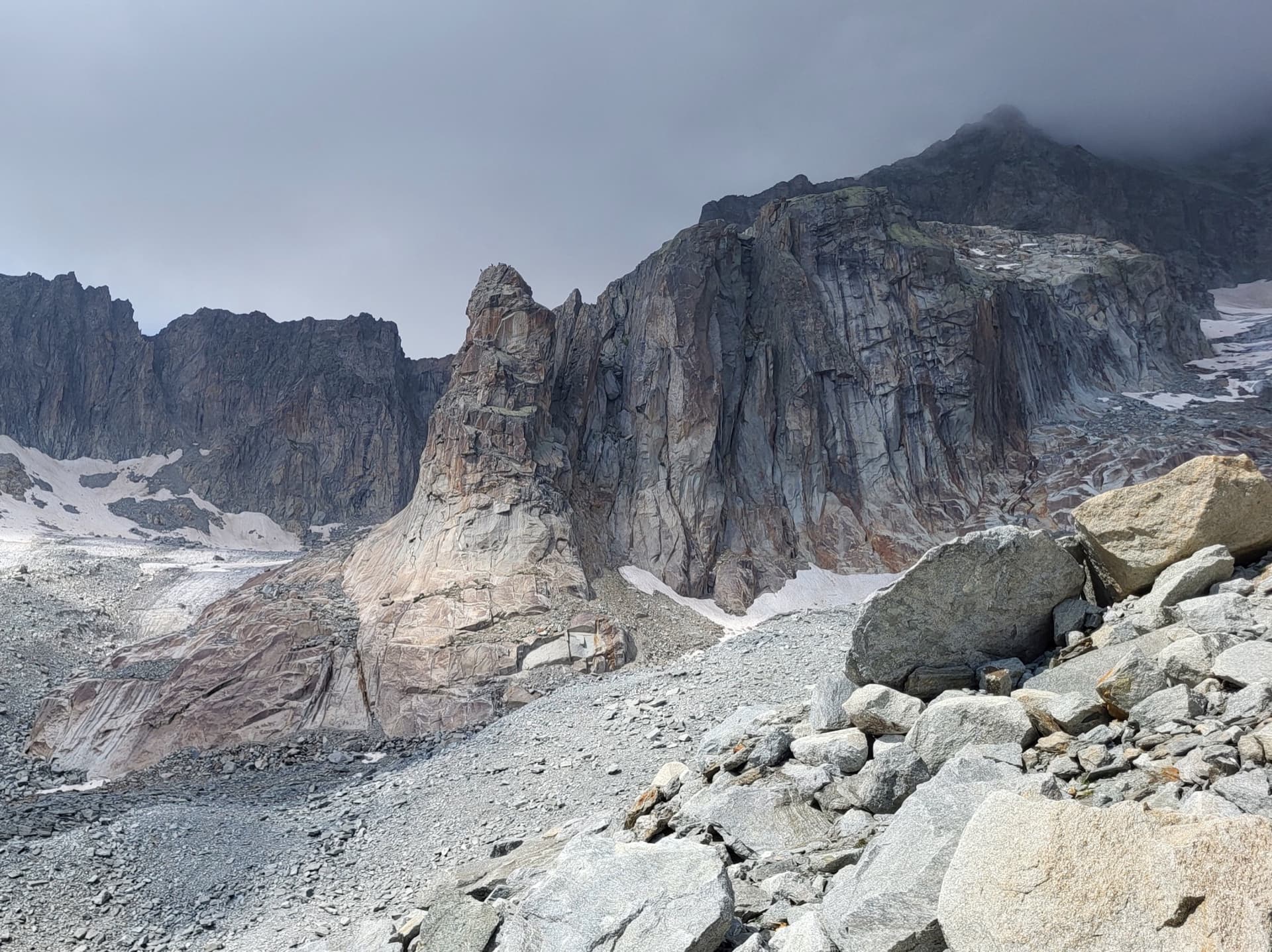
The Hannibalturm, a granite tower standing in front of the walls of the Gross Bielenhorn above the Sidelen glacier.

Switzerland · Furka

Conquest of Paradise

The classic of the Hannibalturm: six short, wandering pitches of slab, quartz veins, cracks and a 6a+ slab crux on perfect high-mountain granite at 2800 m. A bench and a bus-stop sign wait on the summit. Very popular, so expect company.

6a+6 pitches180 m

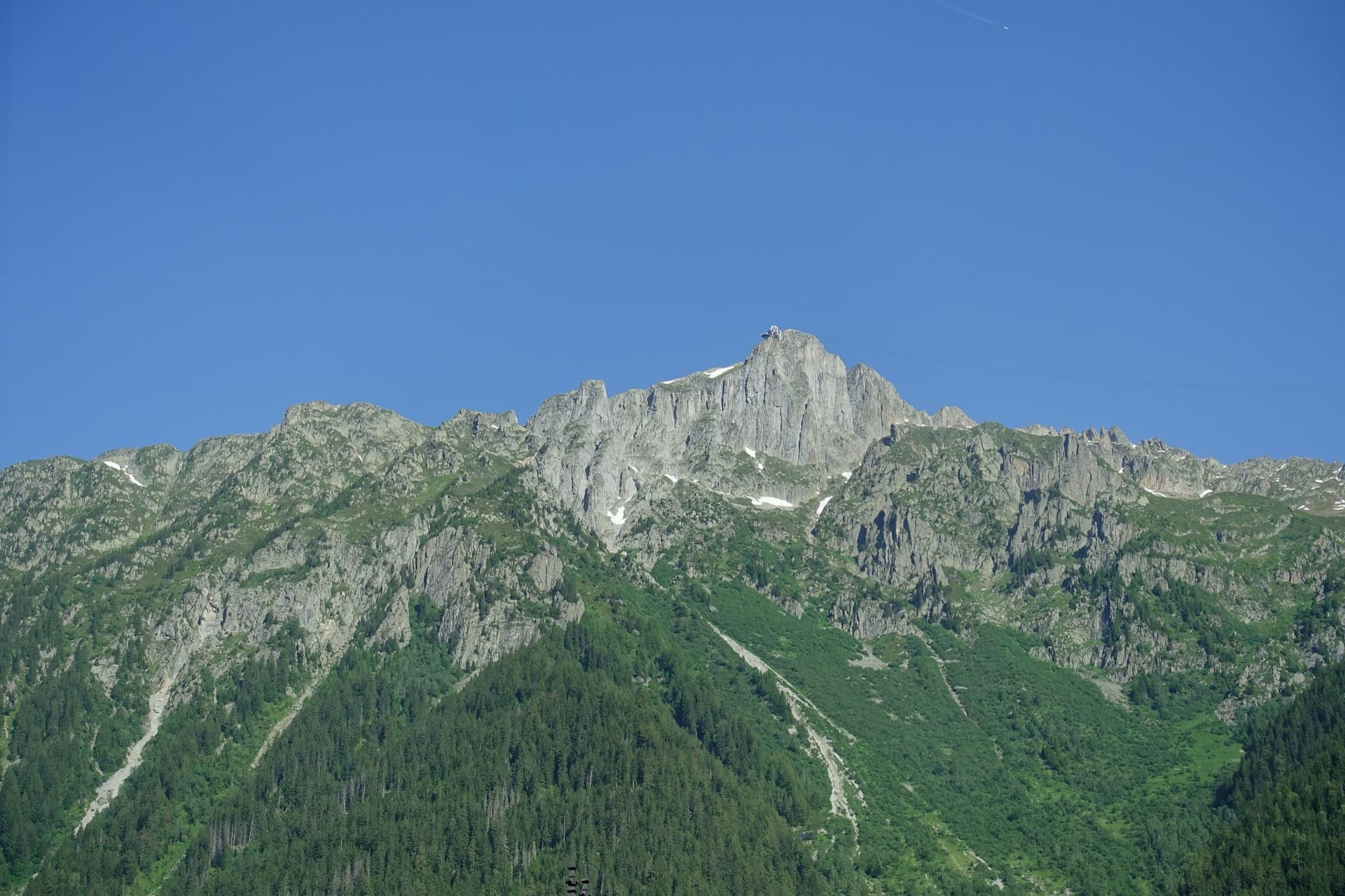
The summit of Le Brévent and the rock face beneath its cable-car station, seen from the Chamonix valley; the Voie Frison-Roche climbs this south-east face, the exact line is not marked.

France · Chamonix valley

Voie Frison-Roche

The great classic of the Aiguilles Rouges: six varied pitches of gneiss, ten minutes downhill from the Brévent cable car and finishing at its top station, with Mont Blanc opposite. The crux is a short, physical corner crack and the last pitch is a long, clean corner. It is extremely popular.

6a+6 pitches200 m

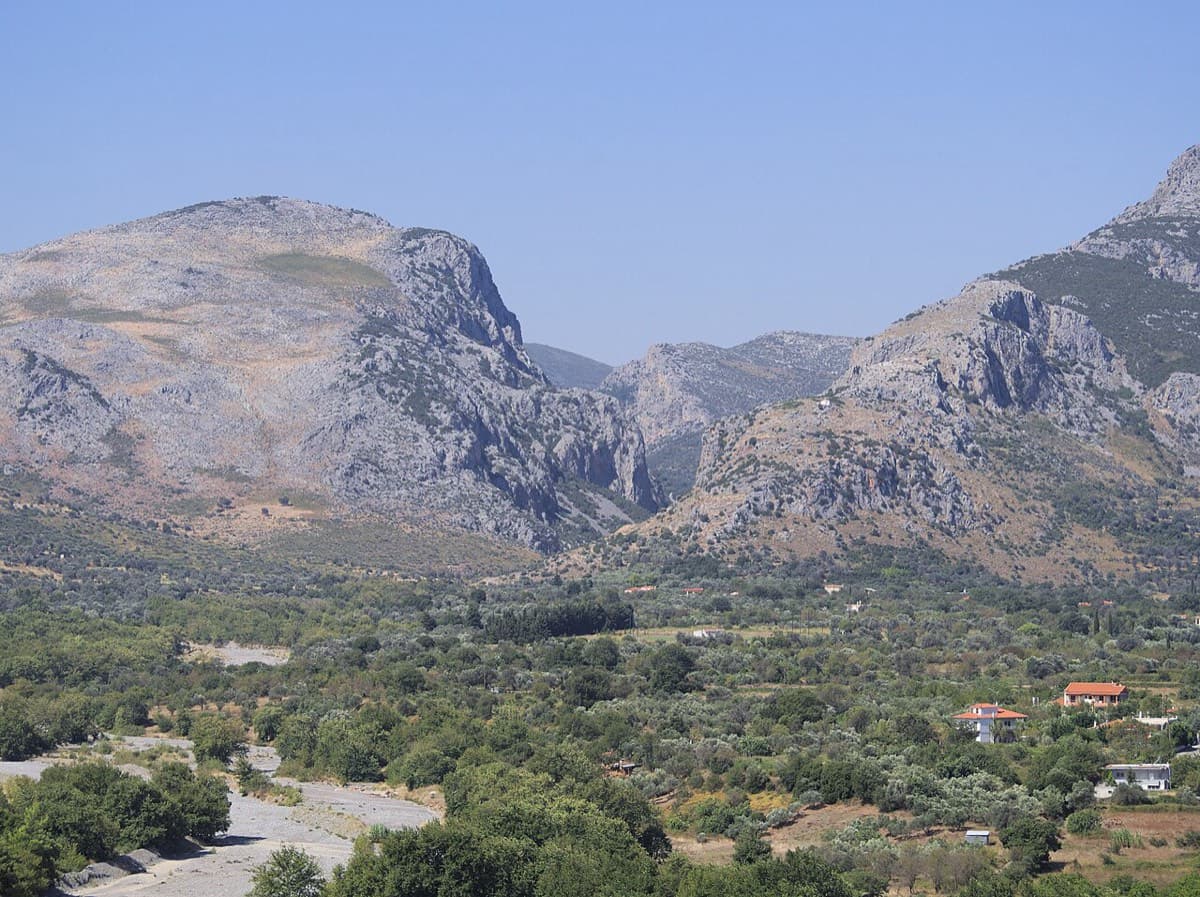
The Manikiatis gorge at Manikia, Evia, seen from Ano Monodry

Greece · Manikia (Evia)

Efcharístisi

An even-graded route in a beautiful gorge setting: pocketed and sculpted slabs below, steeper walls above, with one athletic 6a+ move on P5. There are short walking transitions between the lower tiers.

6a+6 pitches200 m

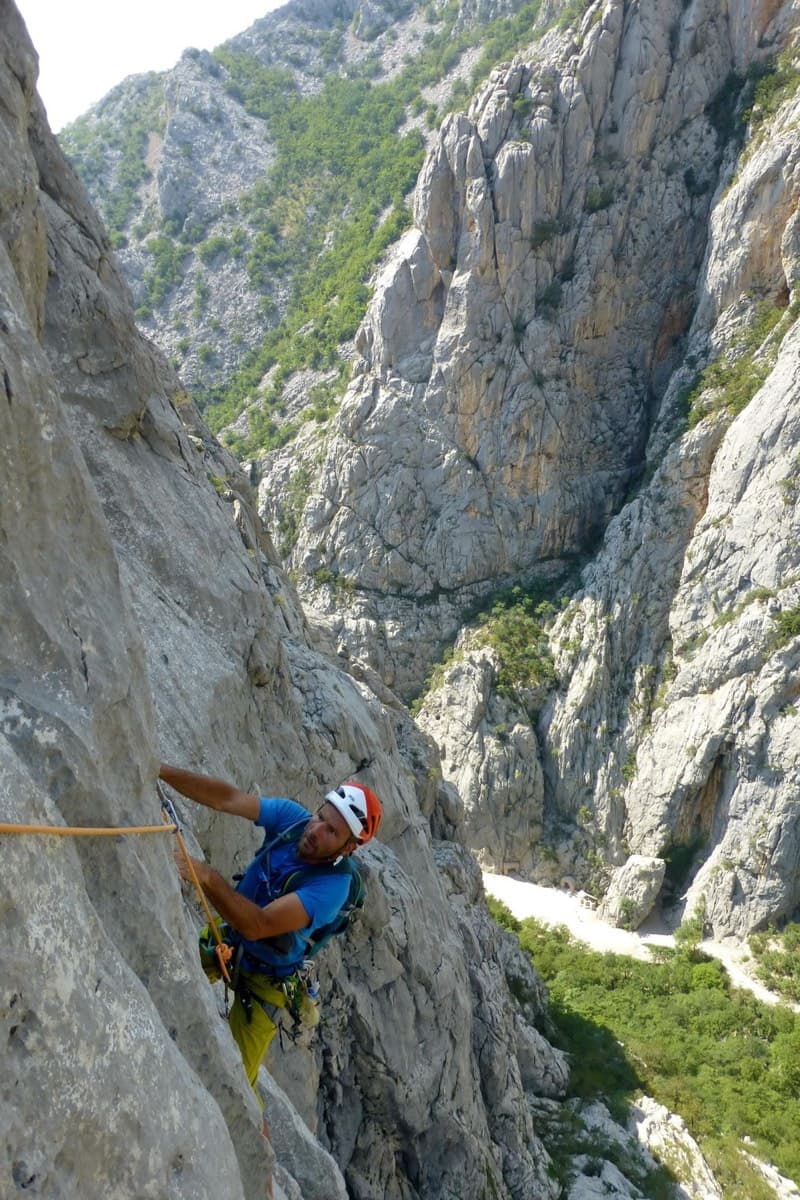
Climber on Water Song, Veliki Ćuk, with the Paklenica gorge behind

Croatia · Paklenica

Water Song

Classic Paklenica water-groove climbing on beautifully sculpted rock. The crux is a rising crack traverse on P5, with delicate slab moves above.

6a+6 pitches160 m

Read the cautions

Compiled from published sources and last verified October 2026. Bolts, anchors and access change. Climbing is dangerous and you are responsible for your own decisions: check a current topo and read the disclaimer.