Morocco · Taghia
Ibtisane
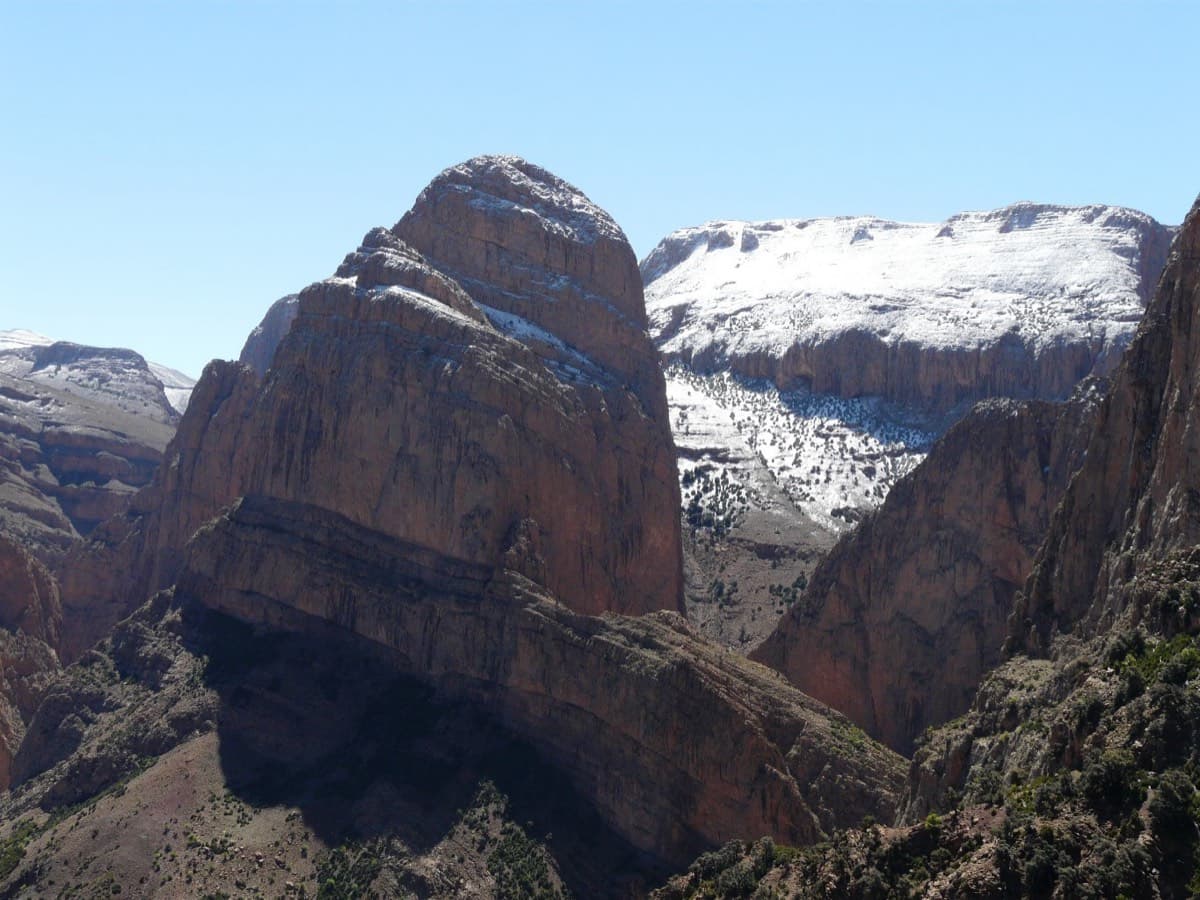
The easiest bolted line at Taghia: three steep 5c walls linked by two long, easy garden pitches. Goes into shade around midday in April.
5c5 pitches235 m
Read the cautions
Paroi des Sources · Taghia · Morocco
CommittingBolting confidence: high
The friendly way into Taghia, starting at the water's edge beside the springs. Seven varied pitches, well bolted by Taghia standards. Go left around the unstable rock below the second belay; fragile blocks are marked in red. In shade until midday.
The route
Seven pitches up the Paroi des Sources, starting at the water's edge by the Taghia springs, bolted in 2023 as a gentle introduction to Taghia. The climbing is varied: slabs and a traverse low down, a long sustained vertical wall on small holds for the crux fourth pitch, and long slabby walls above. Sources agree it is well bolted by Taghia standards and a good first route of a trip. One 2026 blogger found it less continuous and lower in quality than Taghia's bigger classics, with a scrappy second pitch.
The climbing
| Pitch | Grade | Length | Notes |
|---|---|---|---|
| P1 | 6a+ | 35 m | Slab on a vague rib, a traverse right round a small roof, then up to the belay. Gulliver and a 2026 Spanish blog both give 6a. |
| P2 | 5b | 35 m | Link pitch over grassy ledges, the least attractive of the route. Stay roughly in line with the belay and ignore a bolt out left. Near the top there is unstable rock below the second belay: pass it on the left. Gulliver gives 5a. |
| P3 | 6a+ | 30 m | Leave the belay leftwards with a traverse, then a rib and an athletic slab, easing to the belay. A 2024 party warns the left traverse is not far above a ledge. |
| P4 | 6b | 55 m | The crux and one of the best pitches: a long, continuous vertical wall of compact limestone on small holds, closely bolted. Gulliver gives 50 m; the Spanish blog thought 6a+. |
| P5 | 5+ | 55 m | Easier-angled climbing on water-pocked rock with a little vegetation. Other sources give 5b or 5c. |
| P6 | 6a | 50 m | Long, varied and sustained wall or slab with just enough holds; one blogger's favourite pitch. Gulliver gives 6a+ and 55 m. |
| P7 | 6a | 40 m | A rib a few metres above the belay, then diagonally right onto a slab. Ignore a bolt out left. Good rock. Gulliver gives 5c+ and the Spanish blog thought about 5b. |
Getting there
Taghia is a roadless Berber village in Azilal province, central High Atlas. From Marrakech it is about 5 hours by taxi to Zaouiat Ahansal (the gîtes arrange this). From there it has traditionally been about an hour's walk with mules for the bags. A 2024 party reported a newly built track with jeep transfers, but it was blocked by a landslide and they walked in about three hours in rain, so check the current state with your gîte. Several gîtes in the village offer half board.
Under 15 min from the village. Follow the river on its right bank towards the springs. The route starts at the water's edge from the slab left of the entrance to the springs, immediately left of the route 'Belle et Berbère'. Sources differ on whether you cross the river at the end; either way the foot of the route is by the water.
Loading map
The point is approximate: it marks the area, not the crag.
Coordinates · area: approximate
Point from camptocamp waypoint 43748
Contains the route point. Opens in most mapping apps and GPS watches.
Points are compiled from published sources, with the precision stated above. They were not surveyed on the ground: check them against a current topo.
Coordinates: 31.78437, -6.06462 (area)
Getting down
Walk off; do not abseil. From belay 7 follow the ledge left (one bolt), then climb a short gully (grade III, about 20 m; belay on a spike or tree) to a big terrace near the top of 'Le Rêve d'Aïcha'. Pick up the cairns on the summit ledges and follow them left: a wide ledge, a gully down, then a small path back to the village. An account of the neighbouring Rêve d'Aïcha walk-off gives about an hour. Gulliver adds that abseiling is only possible as far down as the second belay because the belays above are not linked.
Retreat
Committing
Only low down. Gulliver states that abseiling is possible no higher than the second belay, because the belays above are not linked. The openers also tell you not to abseil at all: the route stands directly over the springs path and anything you dislodge lands where people walk. Above belay 2 the practical way off is to finish and walk down.
Partly inferred from the route facts
Safety
Sun and weather
West to north-west facing, base at about 1900 m. In shade until about midday in summer. Taghia's season is roughly March to June and September to November.
Sun on the wall · W-facing
Working out the sunlit hours for this month.
Sun on the wallDaylight, wall in shade● Usual season
Estimated from the wall's aspect only. Ignores surrounding terrain, gullies and the wall's exact shape. Clock times are local to the wall (Moroccan time), for the 15th of each month.
Climate figures for Taghia are not available yet
What to carry
60 m rope recommended (two 55 m pitches). Camptocamp says 18 quickdraws including belays; Gulliver and the Spanish blog say 16. About 90 bolts in total. Cams are not needed. Slings to link the upper belays. Helmet.
Derived from the route data; check it against a current topo
From climbers
Reader reports are not being collected yet. Until they are, check a current topo and the local club or guidebook publisher for recent changes to Les babouches de Mostafa.
Worth knowing
Open questions
Provenance
Same area
Morocco · Taghia
The easiest bolted line at Taghia: three steep 5c walls linked by two long, easy garden pitches. Goes into shade around midday in April.
5c5 pitches235 m
Read the cautions
Morocco · Taghia
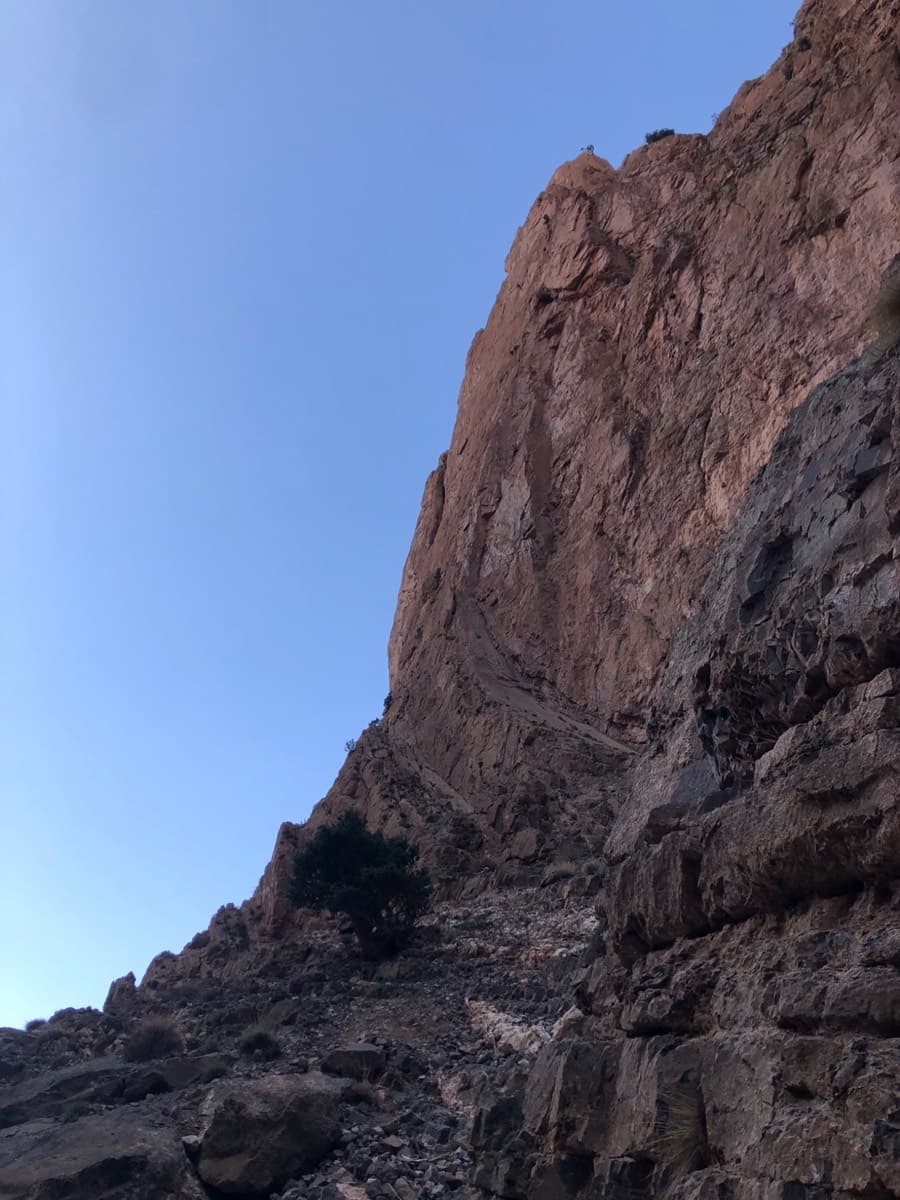
The classic first route at Taghia: steep, water-sculpted red limestone on the west face of the Taoujdad, with a 6c third pitch that is 6b until a short crux below the belay. It is better bolted than most Taghia routes and correspondingly popular, so some pitches are polished.
6c7 pitches300 m
Morocco · Taghia
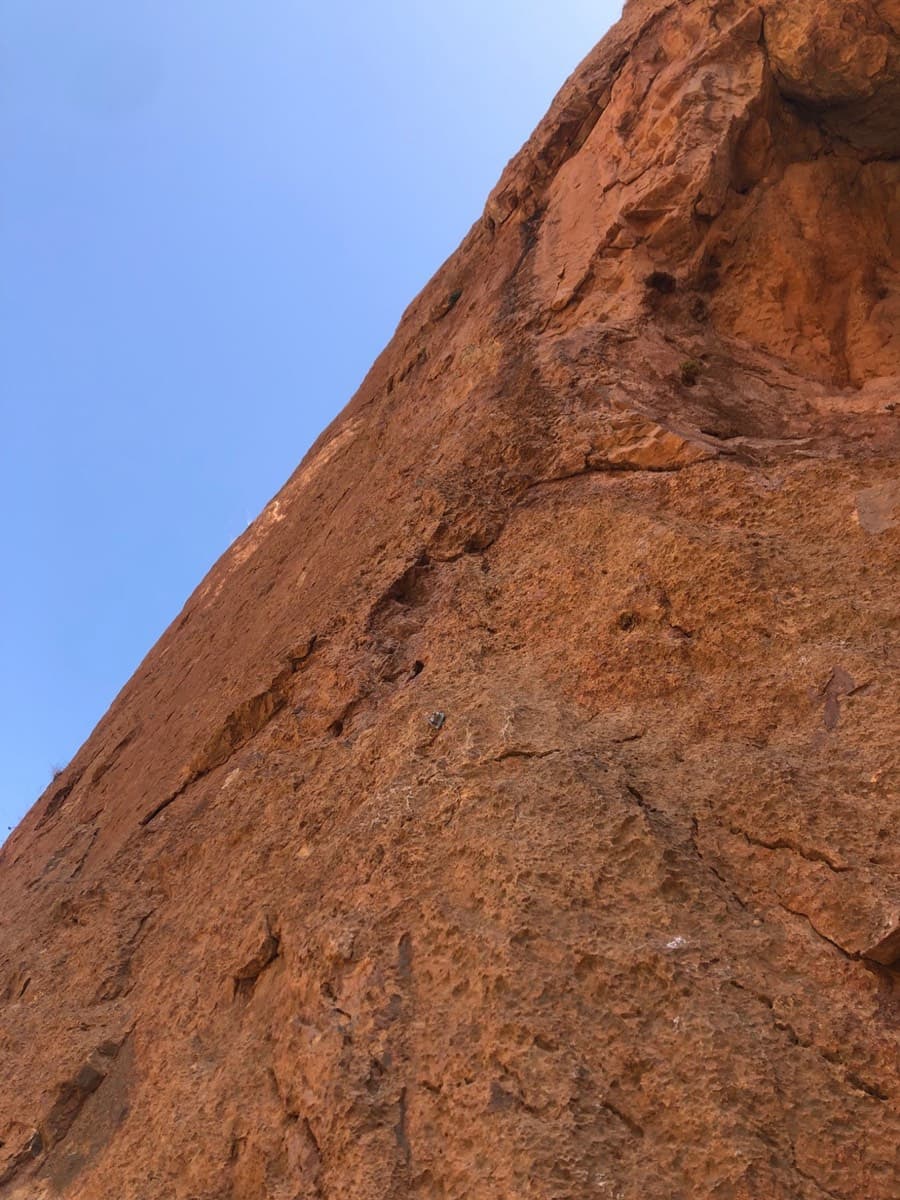
Five pitches on new, very rough red rock just right of Au nom de la Réforme. The first three are steep, fingery and continuous with one short crux each; the last two are much easier. The original grades are 7a+, 7a and 6c+, now widely thought generous, and the cruxes are bolted closely enough to pull through.
6c+5 pitches200 m
Morocco · Taghia
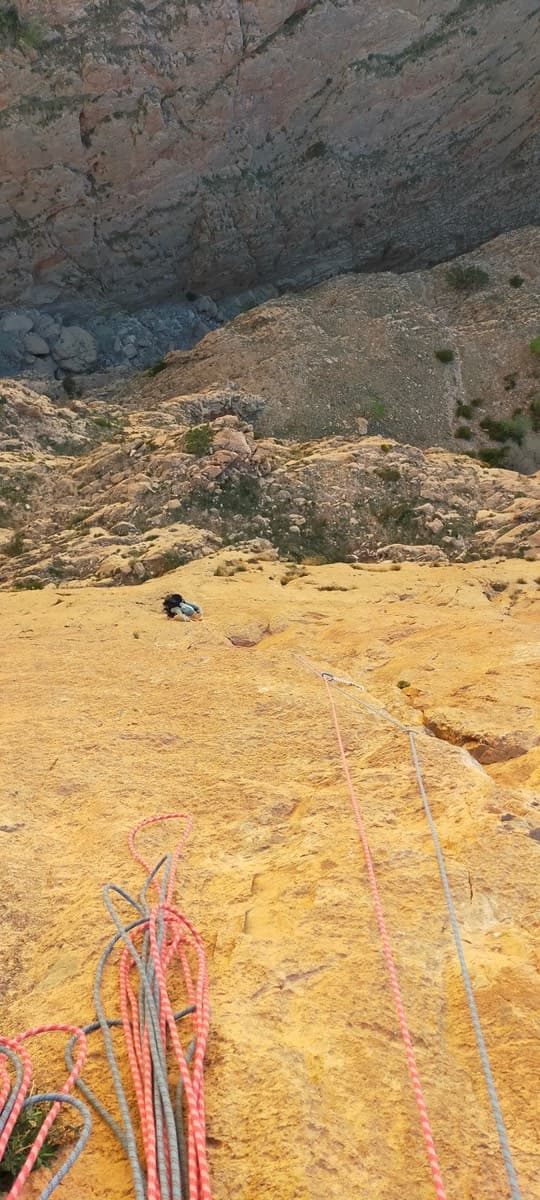
A less-travelled neighbour of Au nom de la Réforme: a sustained 6b crack pitch, an unusual 6c that climbs through a hole and out left with one bouldery move, then three long pitches of 6a to 6a+ up a pillar. Getting off cleanly means either the sparsely bolted summit pitches or a short traverse to the Réforme abseils.
6c6 pitches190 m
Read the cautions
Around 6b · about 7 pitches
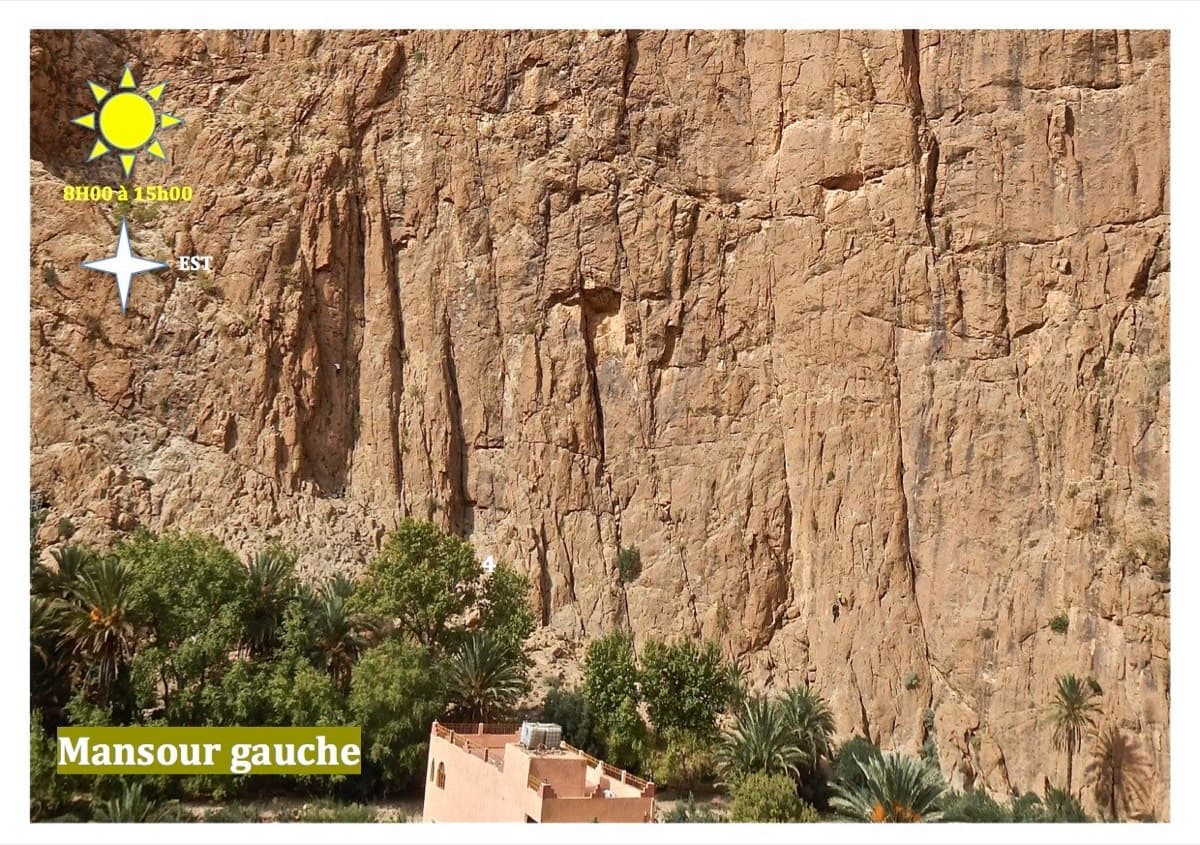
Morocco · Todra Gorge (Todgha)
A long, moderate line above the Mansour palm grove at the upstream end of the gorge. Mostly steady 5c with a 6a crack to start and a harder, very abrasive finish. Big views up the valley.
6b7 pitches300 m
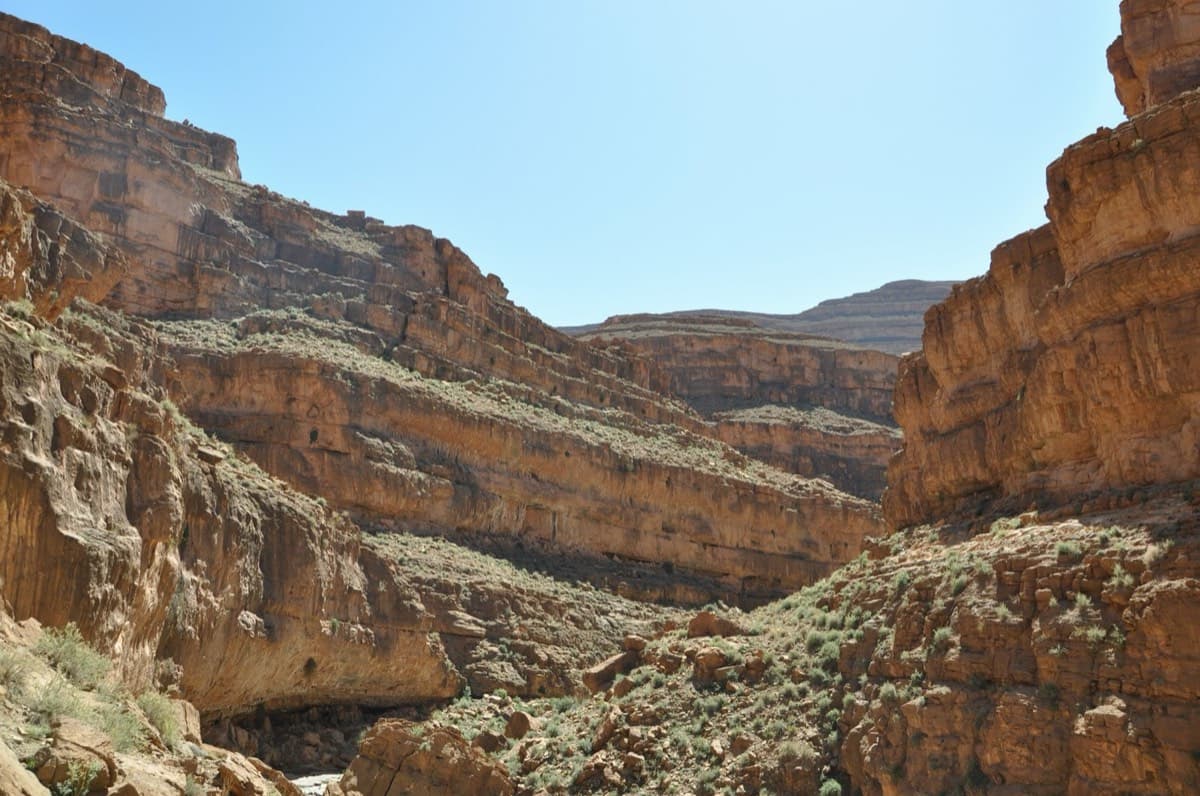
Morocco · Amellago
Seven pitches on very abrasive limestone beside the oued, with swimming holes below. An athletic start to the 6b second pitch; a couple of doubtful flakes on pitches 3 and 4.
6b7 pitches140 m
Read the cautions
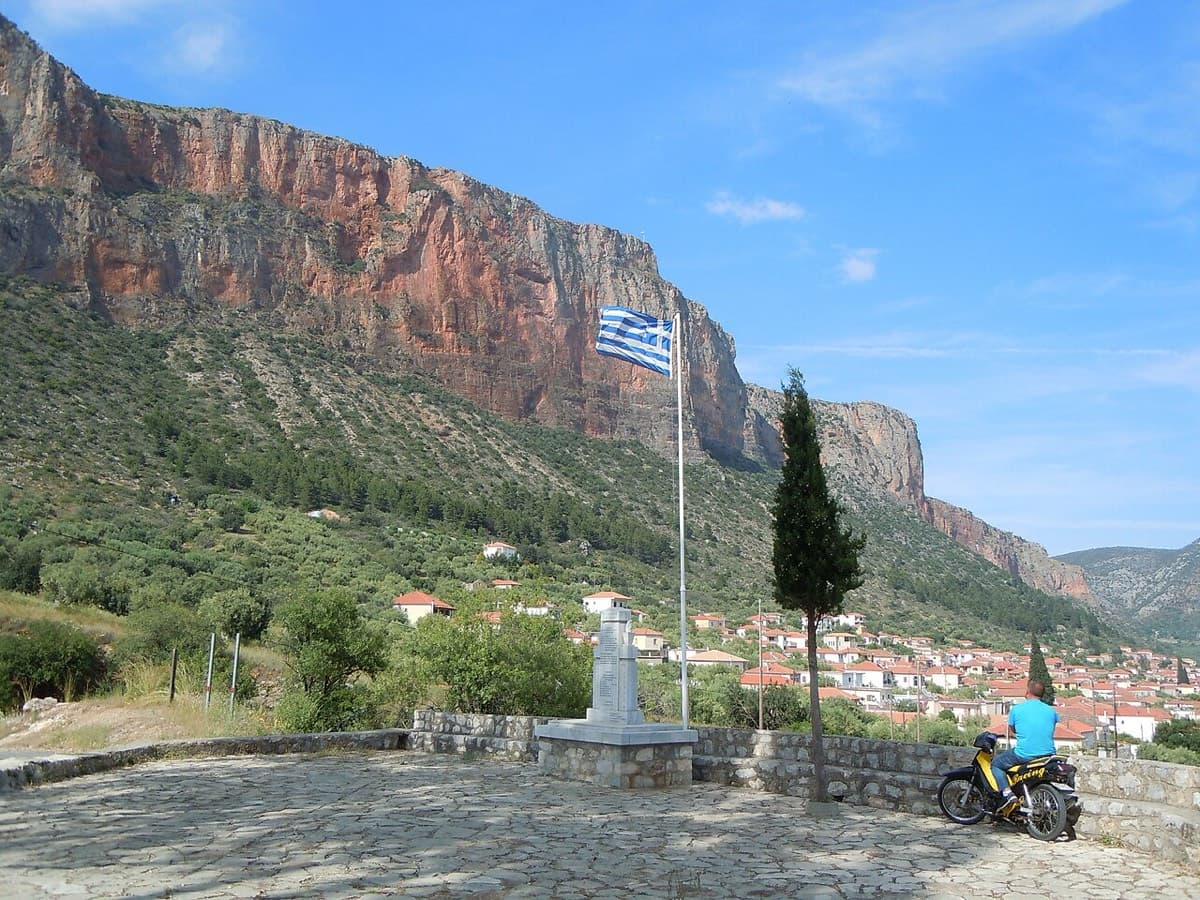
Greece · Leonidio & Kyparissi
Steep climbing on good holds through grey and then orange rock, including a fine steep crack and a sustained bulge out of the big orange niche you can see from town. For the last pitch take the 6b middle exit or the 5c traverse into Mignonette. The direct 'dead wall' exit is 6c+, much harder than the rest of the route.
6b7 pitches200 m
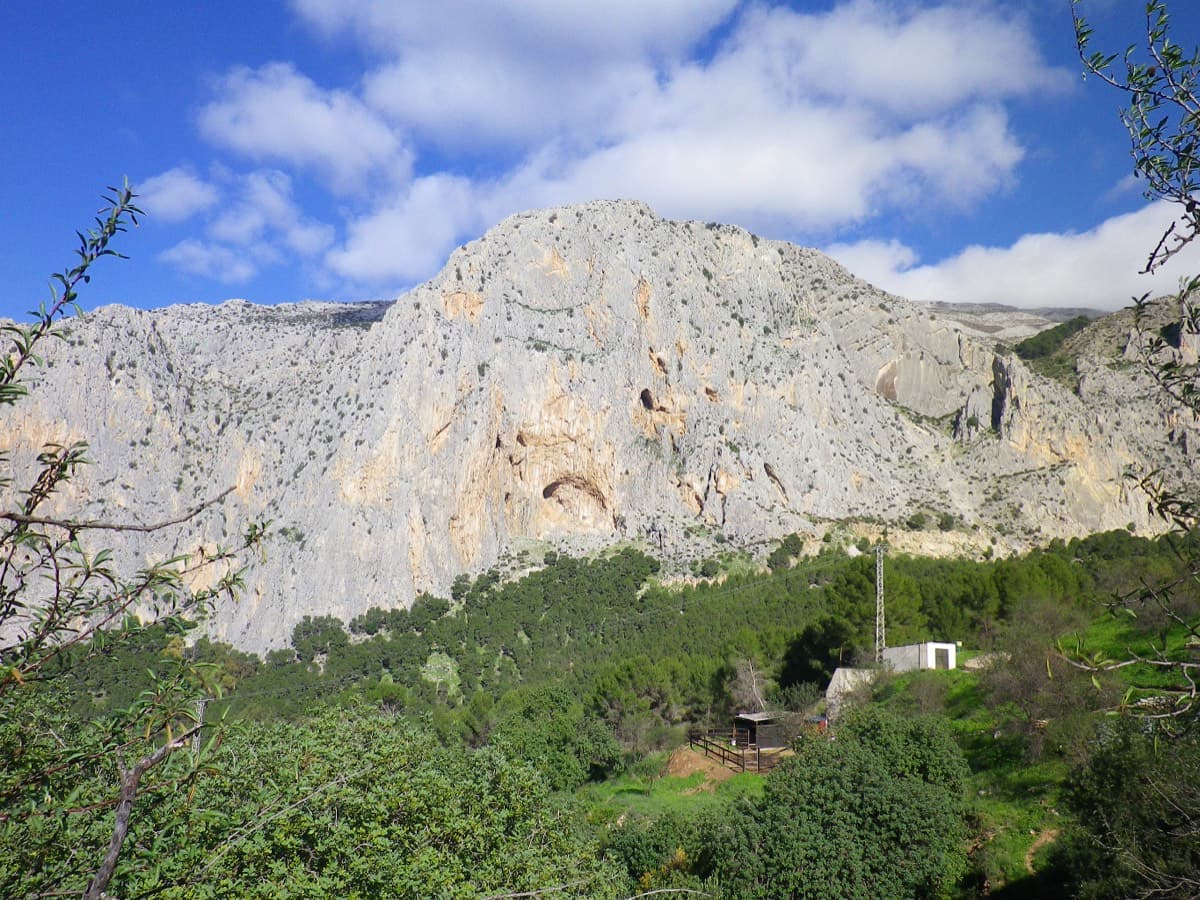
Spain · El Chorro
A good continuation above Nitti. Highlights are a short, thin 6b slab on P4 and a pumpy steep start to the final 6a+ pitch.
6b6 pitches138 m
Read the cautions
Compiled from published sources and last verified October 2026. Bolts, anchors and access change. Climbing is dangerous and you are responsible for your own decisions: check a current topo and read the disclaimer.