Multipitch Atlas

Chica Sputnik

Cabeçó d'Or (Cabezón de Oro), Busot · Costa Blanca (Cabeçó d'Or) · Spain

Read the cautionsBail with caveatsBolting confidence: medium

Five very long pitches of old-school wall climbing: edges, flakes and water pockets where footwork counts more than strength. The 40 m fourth pitch, a steep slab beside a corner, is the highlight and the crux. Remote feeling, in the shade until early afternoon.

The orange and grey limestone walls of the Cabeçó d'Or above the approach track from Busot, with an almond tree in blossom. Chica Sputnik is on this side of the mountain; the exact line is not marked.Photo: Eduardo Manchon · CC BY-SA 3.0

Photo

The orange and grey limestone walls of the Cabeçó d'Or above the approach track from Busot, with an almond tree in blossom. Chica Sputnik is on this side of the mountain; the exact line is not marked.Photo: Eduardo Manchon · CC BY-SA 3.0
Hardest pitch
6c
Pitches
5
Length
200 m
Approach
–
Aspect
SW
South-west-facing
Rope
2×60 m
Read before you go

Fully bolted according to the official guide, but spaced enough on easier ground that one recent party wanted cams, with 60 m pitches and an abseil descent.

The route

Overview

Opened in September 2001 by M. Díaz and J.J. Quesada, this is one of the most repeated routes on the Cabeçó precisely because it is bolted from bottom to top. It climbs continuously for 200 m with pitches of 40 to 60 m, sustained around 6b with one 6c pitch. The bolting is sensible rather than close: a 2021 party suggests 6a+ or 6b obligatory and a 2024 party would have liked a few cams. The setting feels remote, with no sign of the built-up coast.

In pictures

Photos

Approach photo

The climbing

Pitch by pitch

Pitches of Chica Sputnik
PitchGradeLengthNotes
P15+50 mStart above the letters CS on a pleasant slab. Do not stop at the tree; continue leftwards. A 2015 party gives 5c.
P26b60 mA hard, thin start up a fine wall, then much easier through a band of crystals. At the end pick the easiest line up and left to a terrace below a slab. The Spanish description reports a single bolt at this belay.
P36a+40 mDiagonally left to a belay at the foot of a superb steep slab.
P46c40 mTake the left-hand line, near the corner: sustained, technical climbing on flakes and water pockets. Skip the intermediate belay. A 2021 party had heard it called 7a and found it fair at the grade.
P56a50 mA hard start, then diagonally right on easy but run-out ground. Climb to the very top of the sugarloaf to find the belay.

Getting there

Approach

To the parking

From Alicante take the A-7 towards Valencia to the El Campello exit, cross the town and follow signs to Busot. At the roundabout at the entrance to Busot follow 'Cuevas de Canelobre'. About 100 m before the caves a track with PR waymarks leaves on the left; park in the lay-bys at its start (38°31'07"N, 0°24'44"W in the provincial guide). Camptocamp parties used the caves' car park on the bend.

On foot

Take the wide track that sets off level, then climbs on a concreted section. Continue to a brightly painted house with a hen run. The path to the wall leaves on the right, opposite the house. The letters CS are marked at the foot of the route. No source gives a time.

Finding the route · 1 photo

  • OverviewThe Cabeçó d'Or cliff above the pine slopes in evening light, photographed on a day climbing Chica Sputnik (December 2015).Photo: Lulu002 · CC BY-NC-ND 3.0

Approach photo

Map of the walk-in

  • Crag
  • Parking

Loading map

The point marks the crag, not the exact start of the route.

Coordinates · crag

38.52269, -0.40590

Parking

38.51861, -0.41222

Lay-bys at the start of the PR track before the Canelobre caves (Senderos de la Roca guide)

Point from camptocamp waypoint 470970

For your phone or watch

Download GPX

Contains the route point and parking. Opens in most mapping apps and GPS watches.

Points are compiled from published sources, with the precision stated above. They were not surveyed on the ground: check them against a current topo.

Getting down

Descent

From the top scramble easily down the ridge to a small col with two abseil stations. North-east side: two abseils of 30 m, or one of 60 m, then down the scree to the path at the foot of the wall. South-west side: one 60 m abseil (it can be split 20 m plus 40 m) to a huge terrace, walk down it to a pine with a cairn, then a second abseil of 50 m. The provincial guide adds that the route's last three belays also form an abseil line down to the terrace.

Retreat

Bailing off the route

Bail with caveats

The provincial guide says the last three belays give an abseil line down to the big terrace, from where you can reach the base by abseiling from a pine. Pitches are 40 to 60 m, so any retreat needs two 60 m ropes. Retreat from the lower belays is not described, and one of them may be a single bolt.

Retreat from
The upper three belays (stated). Lower belays are not documented.
Point of no return
Not stated.
Carry
Two 60 m ropes; maillons and cord to back up or equip a belay.
Basis
Part stated, part inferredThe abseil line from the upper belays is stated in the 2010 guide; the rope requirement follows from the published pitch lengths.

Partly inferred from the route facts

Safety

Hazards

  • Run-outs on easier ground, notably the end of pitch 5, which is easy but committing.
  • Obligatory climbing of about 6a+ to 6b between bolts.
  • A single-bolt belay is reported at the top of pitch 2 in the Spanish camptocamp description; this may have changed.
  • Very long pitches: rope drag, and communication is difficult.
  • The abseil descent needs two 60 m ropes.

Sun and weather

Conditions

The wall is in the shade until early afternoon (sun at about 15:00 in late October), which makes it a good choice in warm weather. Parties describe excellent, unpolished rock with no sign of traffic.

Usual season · Mar to May, Oct to Dec

Sun on the wall · SW-facing

Working out the sunlit hours for this month.

  • January: not yet worked out
  • February: not yet worked out
  • March (usual season): not yet worked out
  • April (usual season): not yet worked out
  • May (usual season): not yet worked out
  • June: not yet worked out
  • July: not yet worked out
  • August: not yet worked out
  • September: not yet worked out
  • October (usual season): not yet worked out
  • November (usual season): not yet worked out
  • December (usual season): not yet worked out

Sun on the wallDaylight, wall in shade● Usual season

Estimated from the wall's aspect only. Ignores surrounding terrain, gullies and the wall's exact shape. Clock times are local to the wall (Central European time), for the 15th of each month.

Climate figures for Costa Blanca (Cabeçó d'Or) are not available yet

What to carry

Gear

Two 60 m ropes: pitches reach 50 to 60 m and the abseils need the length. Quickdraws for 60 m pitches, including long ones to weave between bolts without drag; no source gives a number. A 2024 party recommends a few cams for peace of mind, and a 2021 party carried a clip stick they did not need.

Checklist

Quickdraws
Number not given in the sources
Rope
2×60 m
Helmet
One each
Abseil device and prusik
The descent or the retreat involves abseiling
Maillons or spare karabiners
To leave behind if you retreat
Cord
Mentioned for retreat

Derived from the route data; check it against a current topo

From climbers

Reader reports

Reader reports are not being collected yet. Until they are, check a current topo and the local club or guidebook publisher for recent changes to Chica Sputnik.

Worth knowing

Tips

  • The provincial guide allows 4 hours for the route; a 2015 party took 2 h 45 min.
  • Delicatessen, on the same wall, is the natural second route but is broken by a big terrace.
  • Use the bolts as a guide rather than a line: weaving to the best holds keeps the drag down.

Open questions

Where sources disagree

  • Overall grade: 6b+ in the provincial guide, 6c on camptocamp.
  • Protection: the provincial guide says fully bolted and quickdraws only; a 2015 party says very well equipped; a 2024 party found some sections committing and suggests cams.
  • Belay at the top of pitch 2: the Spanish camptocamp text says a single point; the French text does not mention it.
  • Parking: the guide uses lay-bys on the PR track about 100 m before the caves; camptocamp says the caves' car park.

Provenance

Sources

Around 6c · about 5 pitches

Similar elsewhere

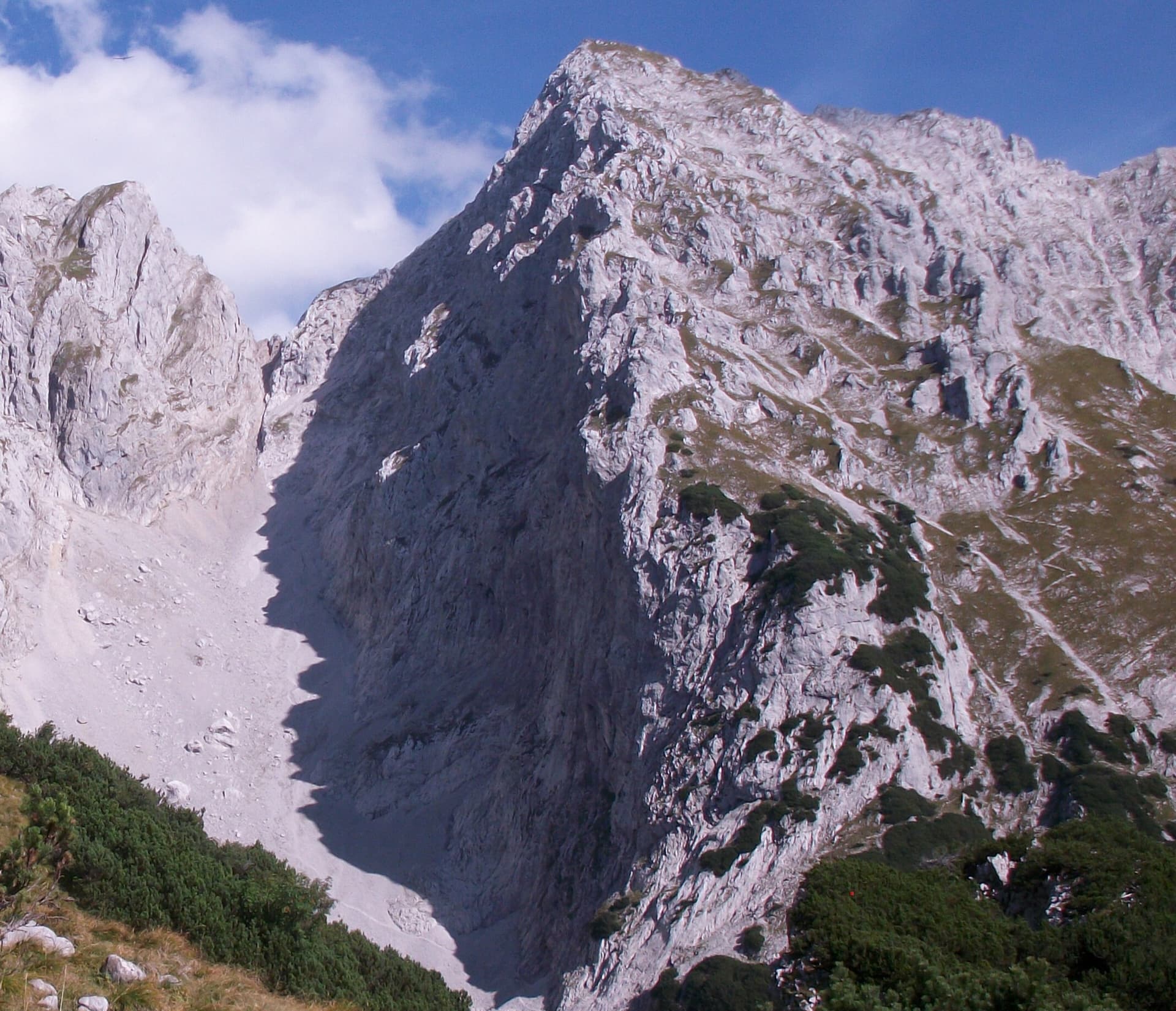
The Schneekar cirque and the north side of the Treffauer in the Wilder Kaiser; the route climbs the lower rocks of this flank, but the exact line is not marked.

Austria · Wilder Kaiser

Via Max

A short alpine sport route in the Schneekar that steepens as it goes: a scrambling start, fine water runnels on rough rock, then a smooth slab into an overhang on pitch 4. The crux is UIAA 7 to 7+ and can be aided on the bolts.

6c5 pitches180 m
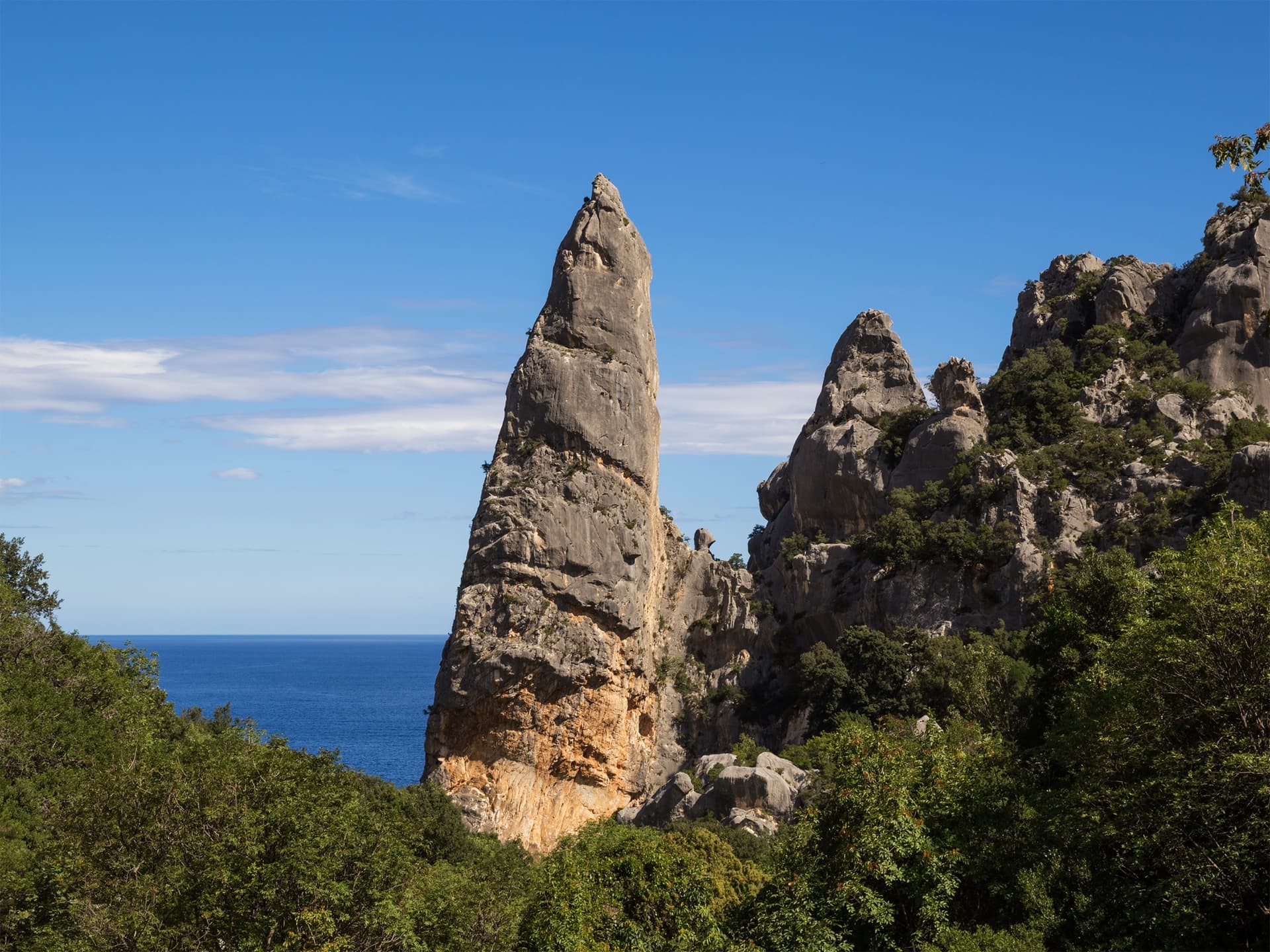
The Aguglia di Goloritzè, the 140 m limestone spire above Cala Goloritzè, seen from the approach path with the Gulf of Orosei behind.

Italy · Sardinia

Sole Incantatore

The harder classic on the Goloritzè spire: compact grey walls and smooth water-drop slabs at 6b to 6b+, then a 6c scoop and an airy finish to a tiny summit above the turquoise bay. Shaded, technical and on the feet.

6c4 pitches135 m

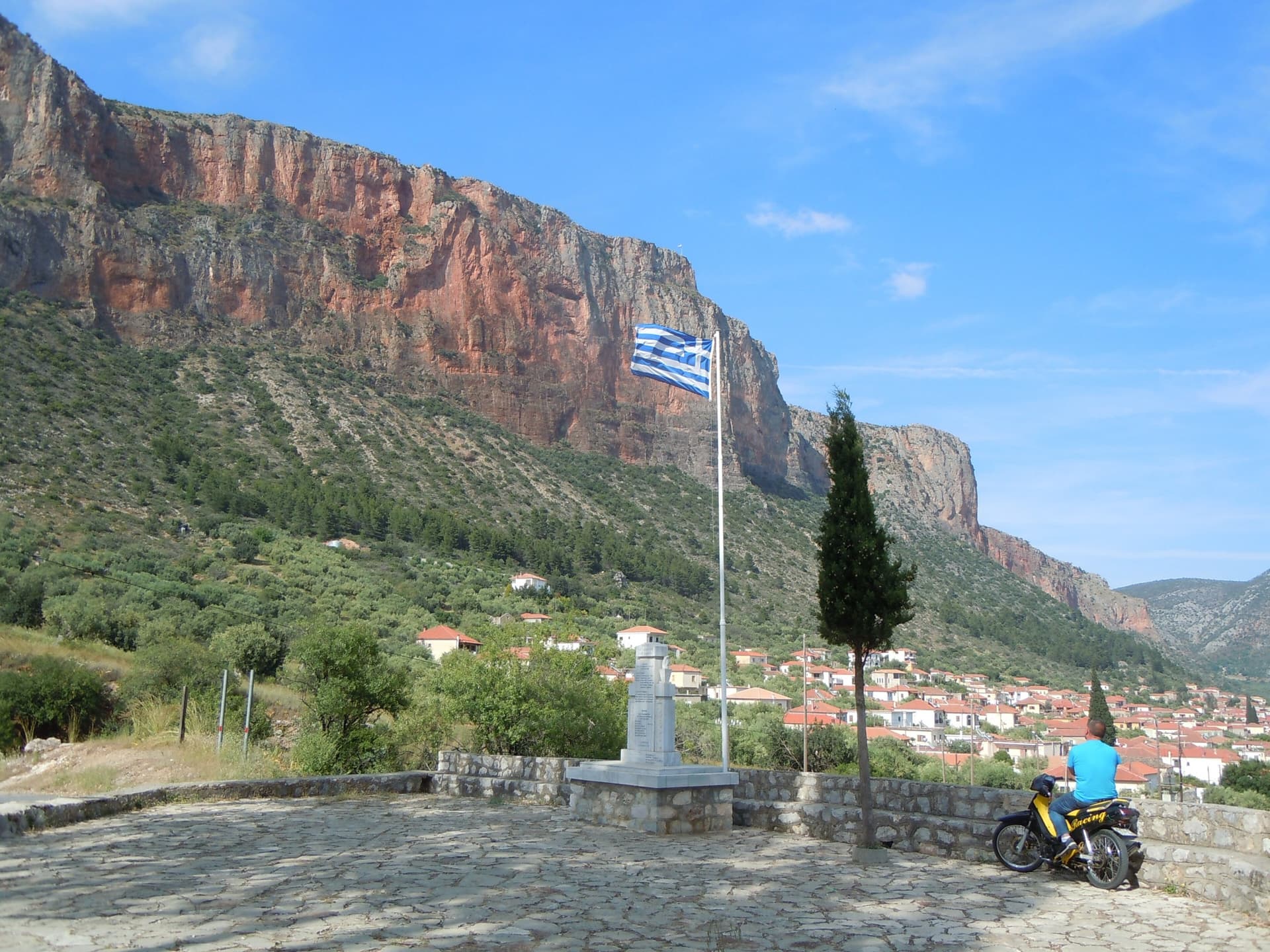
The red Kokkinovrachos wall above the rooftops of Leonidio, seen from Agios Nektarios.

Greece · Leonidio & Kyparissi

Aramis

Six sustained pitches up the red wall above Leonidio, four of them 6c. The climbing is steep and on good holds, with a 3 m boulder problem on the last pitch and a long 6a+ to start. The bolts are close enough to let you concentrate on the moves.

6c6 pitches200 m

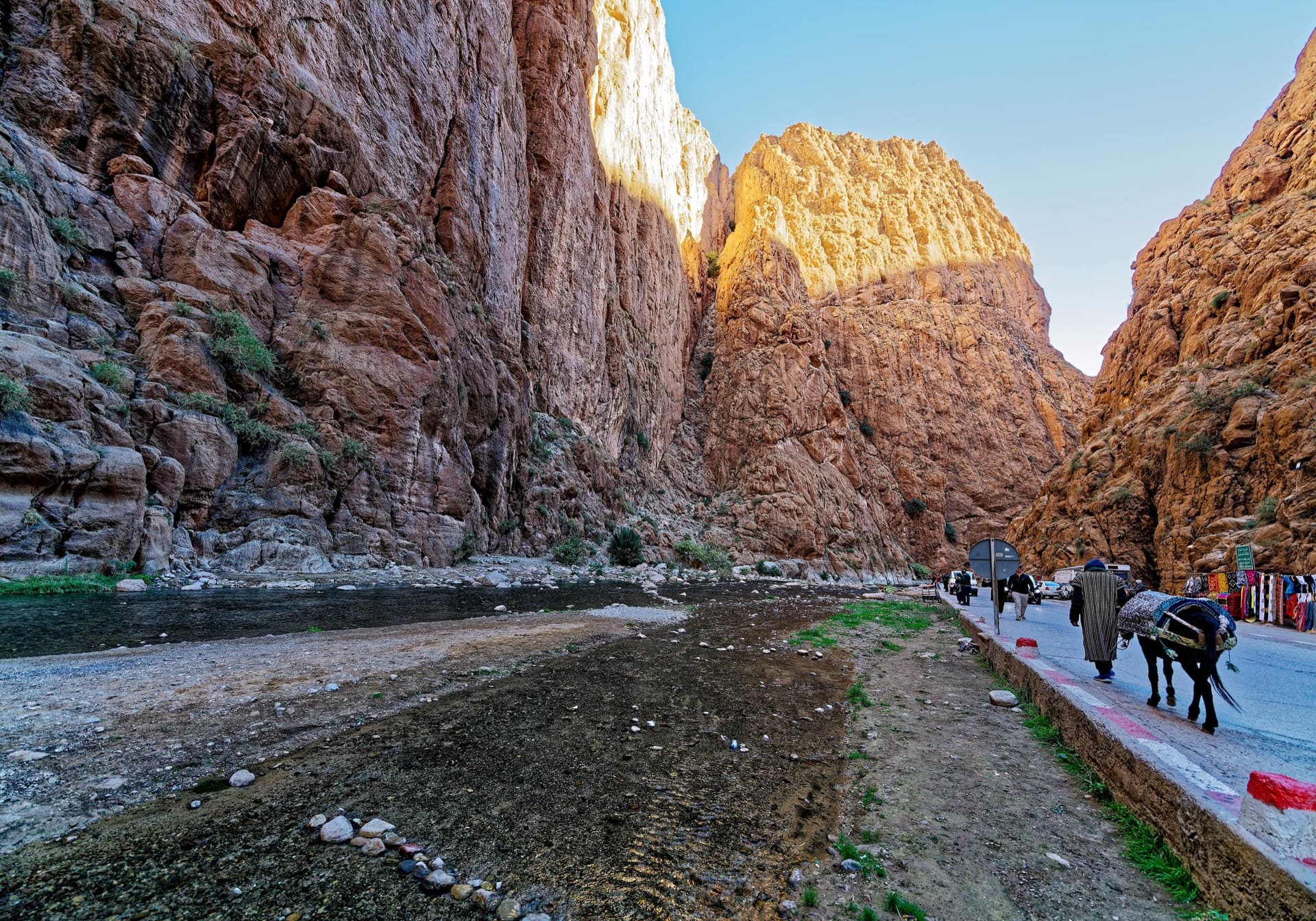
The narrows of the Todra Gorge in late afternoon light, a few minutes' walk upstream of the Mansour wall; a view of the gorge, not of this route's wall.

Morocco · Todra Gorge (Todgha)

Cœur de Palmier

Six pitches of technical wall and corner climbing one minute from the gorge-entrance guesthouses. Easy pitches alternate with three hard ones, and the 6b+ fourth pitch and the 6c last pitch are precise, footwork-heavy climbing on very rough rock. The route stops in the middle of the wall and you abseil off.

6c6 pitches160 m

Compiled from published sources and last verified October 2026. Bolts, anchors and access change. Climbing is dangerous and you are responsible for your own decisions: check a current topo and read the disclaimer.