Multipitch Atlas

Cœur de Palmier

Plage Mansour Gauche · Todra Gorge (Todgha) · Morocco

Easy to bailBolting confidence: high

Six pitches of technical wall and corner climbing one minute from the gorge-entrance guesthouses. Easy pitches alternate with three hard ones, and the 6b+ fourth pitch and the 6c last pitch are precise, footwork-heavy climbing on very rough rock. The route stops in the middle of the wall and you abseil off.

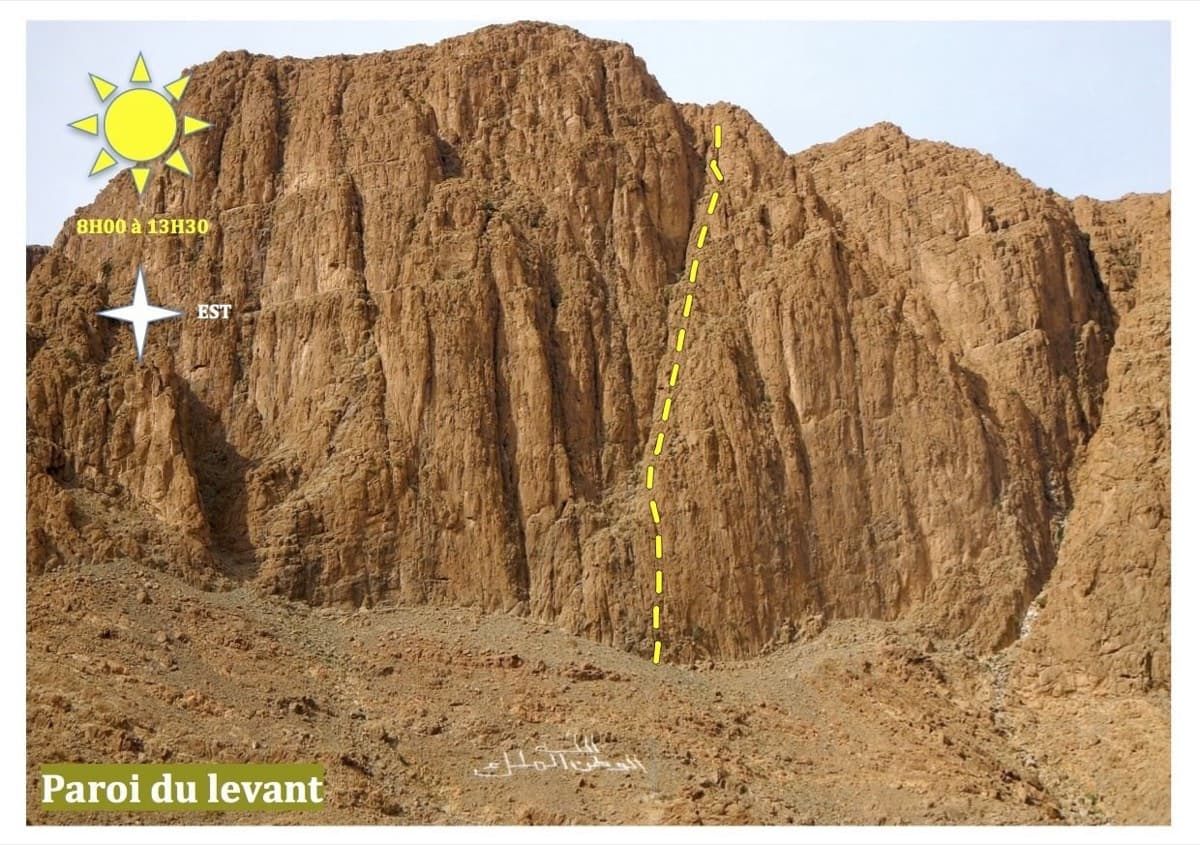
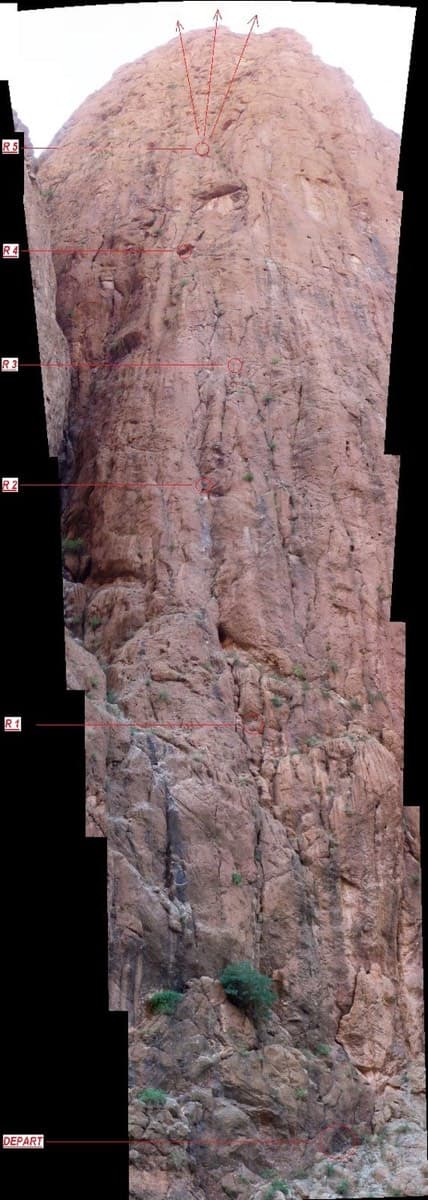
The line of Cœur de Palmier on the Mansour wall at the entrance to the Todra GorgePhoto: Théo · CC BY-SA 3.0

Topo

The line of Cœur de Palmier on the Mansour wall at the entrance to the Todra GorgePhoto: Théo · CC BY-SA 3.0
Hardest pitch
6c
Pitches
6
Length
160 m
Approach
1 min
Aspect
SE
South-east-facing
Rope
2×50 m

The route

Overview

A six-pitch route on the wall immediately left of the gorge entrance, opened ground-up in 1990 and now one of the better-protected harder multipitches in Todra. The grades alternate: 6a, 6a+, 5c, 6b+, 5c, 6c. The fourth and sixth pitches are the reason to come, both sustained and technical in steep corners and walls. It finishes at a belay part-way up the face, not on a summit. You need to be solid on technical 6b+ to enjoy it; the camptocamp obligatory grade is 6a+.

In pictures

Photos

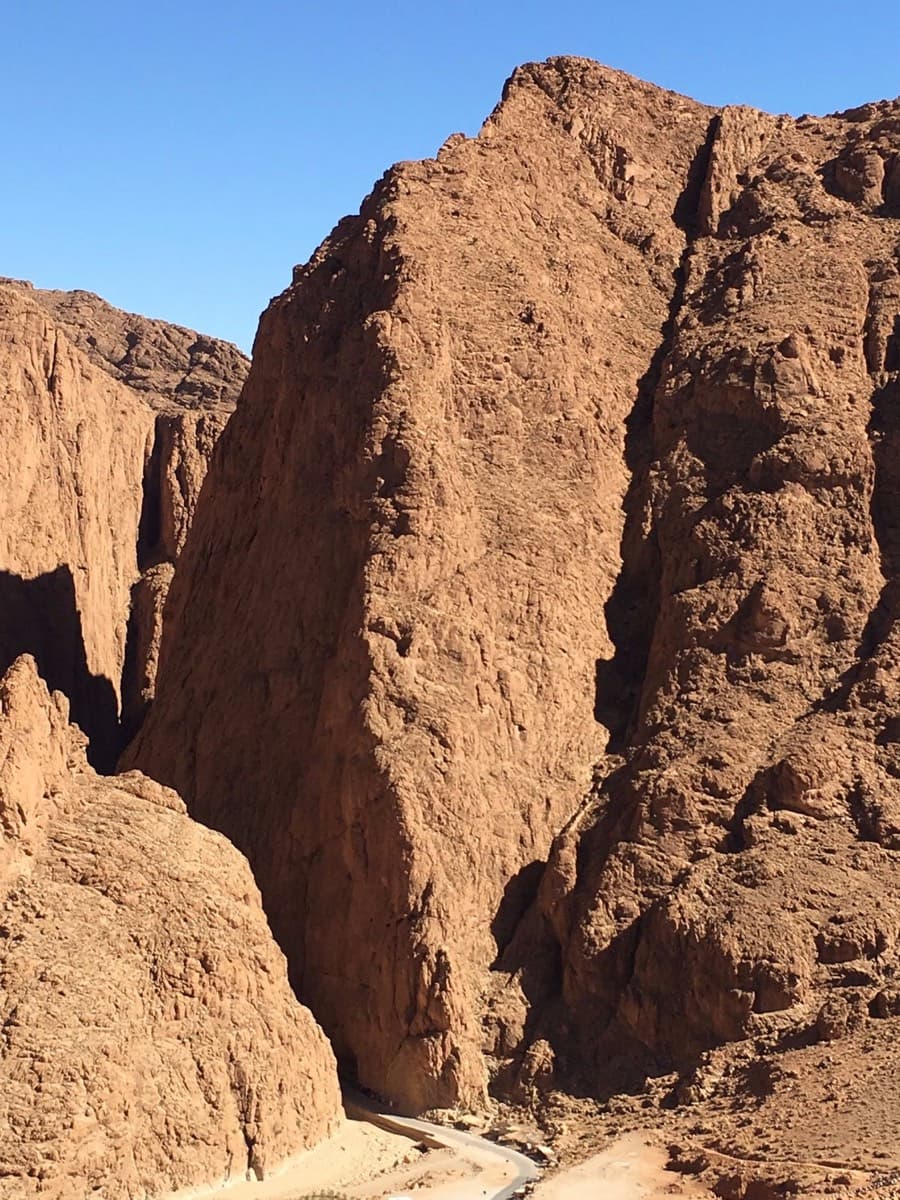
  • The areaThe narrows of the Todra Gorge in late afternoon light, with the river and the road on the canyon floor; a general view of the gorge, not of this route's wall.Photo: Holger Uwe Schmitt · CC BY-SA 4.0

Approach photo

The climbing

Pitch by pitch

Pitches of Cœur de Palmier
PitchGradeLengthNotes
P16a25 mSteep start on good holds at about 5c, then a 6a slab move below the belay. Slightly polished and sometimes dusty, since it doubles as a single-pitch climb.
P26a+25 mA steep corner climbed on balance and positioning, with a hard exit move. A 2018 party thought the exit worth 6b.
P35c30 mA rising line to the right on good rock; a link pitch. Bolts are more spaced on this easier ground.
P46b+30 mTechnical wall, a short traverse right, then a steep crack to finish. Graded 6b/6b+. A 2022 party found the middle traverse less well protected than the rest and slightly committing.
P55c30 mHook left to turn a big overhang. Pleasant, on increasingly rough rock.
P66c25 mA fierce boulder move on sharp holds straight off the belay, then sustained, technical corner climbing to the last belay, which is out to the right. Well protected. Parties call it a stiff 6c, some 6c+.

Getting there

Approach

To the parking

Base yourself at the mouth of the gorge near Tizgui, about 14 km from Tinghir. The gorge-entrance guesthouses are a few minutes on foot from the wall and there is a car park on the left at the gorge entrance, just before the first hotel. Tinghir is reached by road or bus from Marrakech; a taxi covers the last stretch.

On foot · about 1 min

One minute. From the guesthouses at the gorge entrance cross the stream to the 'beach' on its right bank; some parties wade barefoot, others keep dry by walking along the wall of the irrigation channel from the bridge. The route starts left of a big gully and chimney that splits the face.

Finding the route · 3 photos

  • OverviewThe Mansour Gauche wall above the palm grove and the guesthouses at the gorge entrance (labelled sector photo; the wall faces east and is in the sun from about 8:00 to 15:00). Cœur de Palmier starts left of the big gully and chimney that splits the face.Photo: Aventures verticales Maroc · CC BY-SA 3.0
  • OverviewThe gorge entrance seen from the hillside above Tizgui, with the sectors labelled: Mansour is the wall on the left of the gorge mouth, directly behind the palm grove.Photo: Aventures verticales Maroc · CC BY-SA 3.0
  • Walk-inLooking back from the foot of the route (February 2018): the stream you cross from the guesthouses, with the low concrete wall of the irrigation channel in the foreground.Photo: Lulu002 · CC BY-NC-ND 3.0

Approach photo

Map of the walk-in

  • Crag

Loading map

The point marks the crag, not the exact start of the route.

Coordinates · crag

31.58413, -5.59164

Point from Mountain Project area 112010562 (Mansour gauche)

For your phone or watch

Download GPX

Contains the route point. Opens in most mapping apps and GPS watches.

Points are compiled from published sources, with the precision stated above. They were not surveyed on the ground: check them against a current topo.

Getting down

Descent

Abseil the route. With 2×50 m ropes you skip alternate belays: R6 to R4 (50 m), R4 to R2 (47 m), R2 to the ground (45 m). A 2018 party called it quick and efficient.

Retreat

Bailing off the route

Easy to bail

Abseiling the route is the normal descent and every belay is bolted, so you can retreat from any belay. With 2×50 m ropes the abseils go two pitches at a time.

Retreat from
Any belay. The published abseils are R6 to R4, R4 to R2 and R2 to the ground.
Point of no return
None reported. Pitches 3 and 5 trend sideways, so abseil belay to belay if you retreat from an odd-numbered stance.
Carry
2×50 m ropes. With a single rope you would have to abseil every pitch, and pitches are up to 30 m.
Basis
Stated in the sourcesCamptocamp gives the abseil descent with lengths; trip reports confirm three long abseils.

Safety

Hazards

  • Bolts are spaced on the 5c pitches compared with the hard ones (2026 report), and the traverse on pitch 4 needs some commitment (2022 report).
  • The start of pitch 6 is on razor-sharp holds; a fall there can cut your fingers.
  • The foot of the route is a busy tourist spot; expect an audience and people below you.
  • There is no mountain rescue service in Morocco.

Sun and weather

Conditions

South-east facing at about 1500 m, in the sun through the morning; the route page says it goes into shade from about 15:00. Reports run from September to April, including February ascents in warm sun and a September ascent at 30°C started at 16:00 in the shade. The rock is very abrasive above the first pitch.

Usual season · Feb to May, Oct to Nov

Sun on the wall · SE-facing

Working out the sunlit hours for this month.

  • January: not yet worked out
  • February (usual season): not yet worked out
  • March (usual season): not yet worked out
  • April (usual season): not yet worked out
  • May (usual season): not yet worked out
  • June: not yet worked out
  • July: not yet worked out
  • August: not yet worked out
  • September: not yet worked out
  • October (usual season): not yet worked out
  • November (usual season): not yet worked out
  • December: not yet worked out

Sun on the wallDaylight, wall in shade● Usual season

Estimated from the wall's aspect only. Ignores surrounding terrain, gullies and the wall's exact shape. Clock times are local to the wall (Moroccan time), for the 15th of each month.

Monthly climate averages for Todra Gorge (Todgha), 1991-2020
MeasureJanFeb (usual season)Mar (usual season)Apr (usual season)May (usual season)JunJulAugSepOct (usual season)Nov (usual season)Dec
Mean daily high °C121317212529333227221613
Mean daily low °C−104812162019151041
Rain days 1 mm or more223222013322

● marks the usual climbing season. Averages for 1991-2020 at about 1641 m. Area climate from Open-Meteo reanalysis. Temperatures are adjusted to the height of the crag; rain comes from a grid cell of about 10 to 25 km, and summer highs on sea cliffs can read a few degrees low. The wall and valley can differ. Data: Open-Meteo, CC BY 4.0.

What to carry

Gear

13 quickdraws and 2×50 m ropes for the abseils. Helmet.

Checklist

Quickdraws
13
Rope
2×50 m
Helmet
One each
Abseil device and prusik
The descent or the retreat involves abseiling

Derived from the route data; check it against a current topo

From climbers

Reader reports

Reader reports are not being collected yet. Until they are, check a current topo and the local club or guidebook publisher for recent changes to Cœur de Palmier.

Worth knowing

Tips

  • Allow 2 to 4 hours including the abseils.
  • China Perdida on the same wall is the natural second route at a similar grade.
  • Buy the local topo: the proceeds pay for the bolts you are clipping.

Open questions

Where sources disagree

  • Pitch 2 is 6a+ on camptocamp; a 2018 party suggested 6a+/6b. Pitch 6 is 6c on camptocamp and 6c/6c+ in two reports.
  • Pitch 3 is 5c on camptocamp and felt like 5b to a 2018 party.
  • No second website with an independent description was found; the cross-check is between the camptocamp route page, the sector page and seven dated trip reports.

Provenance

Sources

Same area

More in Todra Gorge (Todgha)

All routes in Todra Gorge (Todgha)
Photo-topo of La Classique on the Pilier du Couchant, Todra Gorge, with belays marked

Morocco · Todra Gorge (Todgha)

La Classique

The classic of the gorge, first climbed in 1977. Sustained and physical 6a climbing up cracks, corners and short bulges on the big pillar at the gorge entrance. The first pitch is the 6a+ crux, straight off the ground. Watch for loose blocks on the last pitch, shared with Chibania.

6a+9 pitches300 m

Read the cautions
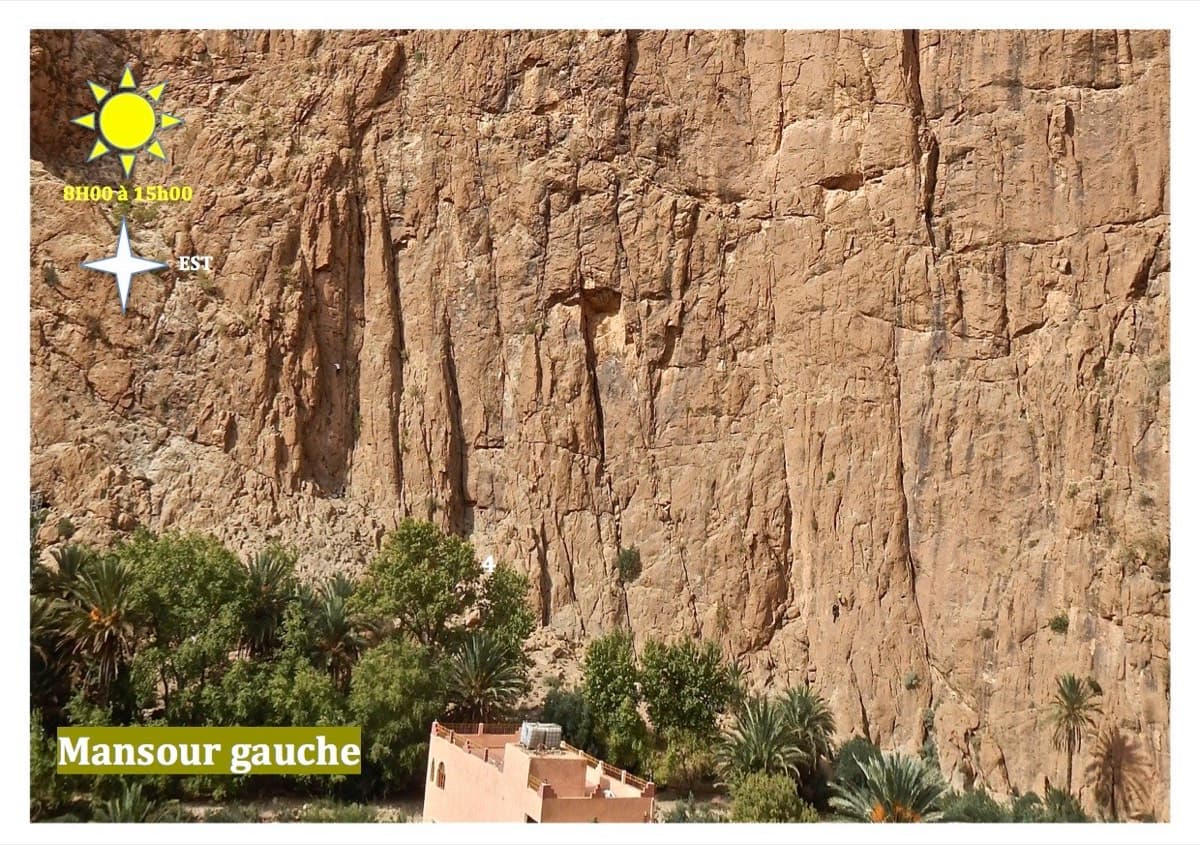
The Mansour Gauche sector, Todra Gorge

Morocco · Todra Gorge (Todgha)

Tiwira

A long, moderate line above the Mansour palm grove at the upstream end of the gorge. Mostly steady 5c with a 6a crack to start and a harder, very abrasive finish. Big views up the valley.

6b7 pitches300 m

Line of Hannah chez les grands drawn on the Paroi du Levant, Todra Gorge

Morocco · Todra Gorge (Todgha)

Hannah chez les grands

Eight pitches up the middle of the Levant wall, with the 6a on the first pitch and steady 5a–5c above. Morning sun. Camptocamp rates the commitment a little higher than the gorge-floor routes because of the length.

6a8 pitches320 m

The Arête Nord, Todra Gorge

Morocco · Todra Gorge (Todgha)

Une arête dans la gorge

The longest route in the gorge: 550 m of easy ridge climbing on the left as you leave the narrows. Sold locally as the beginner's first big bolted route. The first three or four pitches are in shade with a 7 am start; after that you are in the sun.

5c13 pitches550 m

Read the cautions

Around 6c · about 6 pitches

Similar elsewhere

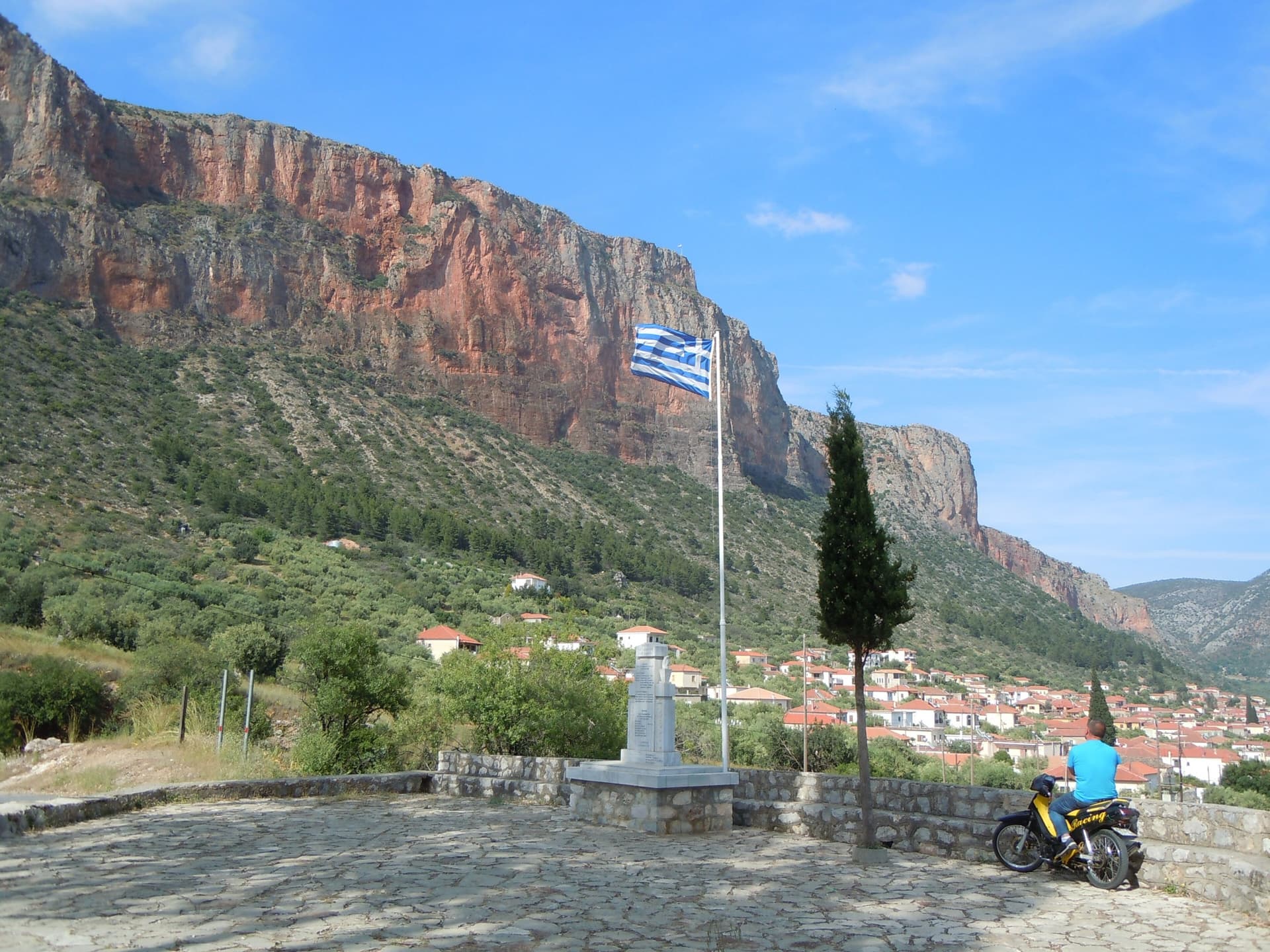
The red Kokkinovrachos wall above the rooftops of Leonidio, seen from Agios Nektarios.

Greece · Leonidio & Kyparissi

Aramis

Six sustained pitches up the red wall above Leonidio, four of them 6c. The climbing is steep and on good holds, with a 3 m boulder problem on the last pitch and a long 6a+ to start. The bolts are close enough to let you concentrate on the moves.

6c6 pitches200 m

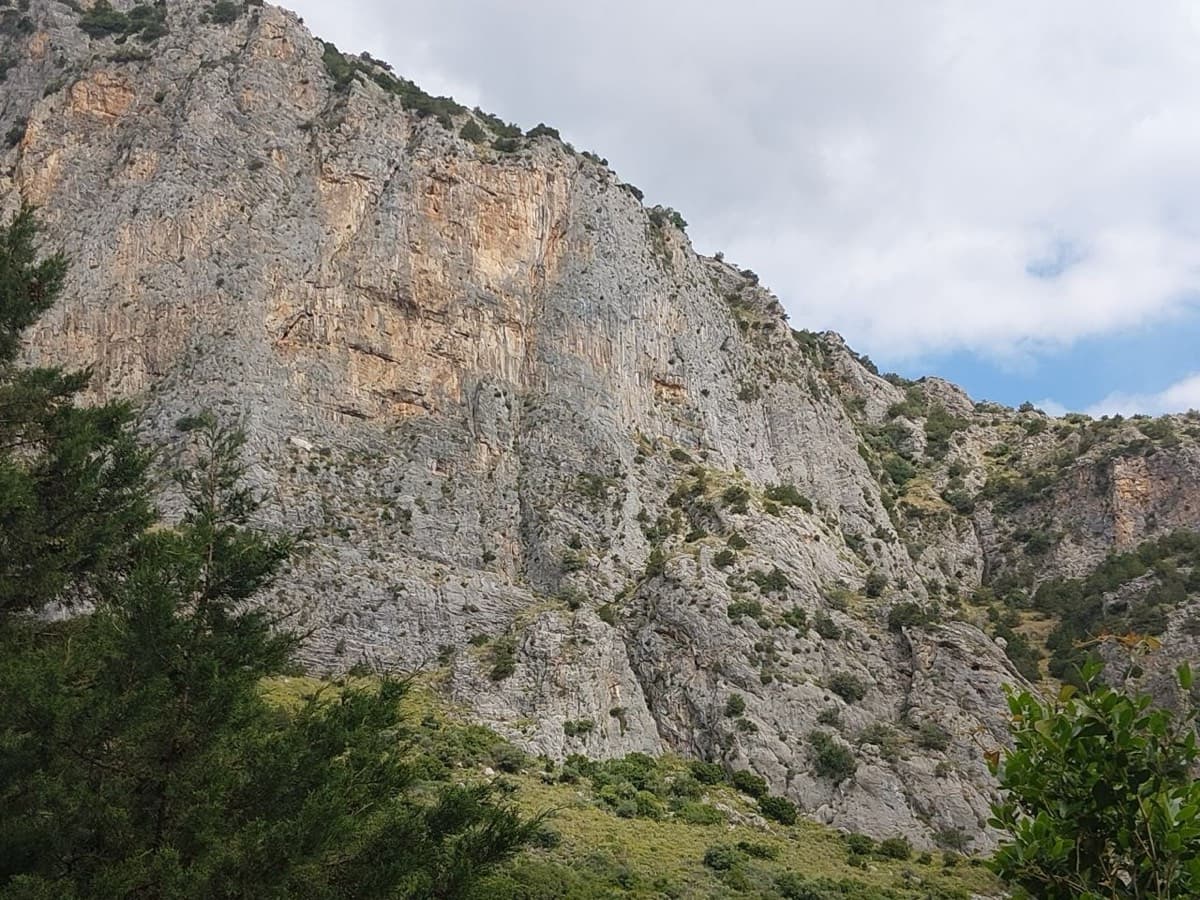
Limestone walls at Manikia, photographed on the day of a May 2026 ascent of To monopáti ton Chelonón

Greece · Manikia (Evia)

To monopáti ton Chelonón

A varied route in two tiers: two pitches of pocketed wall and sculpted slab, a walk across a big ledge, then four longer pitches up the main wall. The upper wall holds the 6c and a superb 40 m pitch of continuous vertical climbing. A quiet valley with a gentle walk down through meadow.

6c6 pitches200 m

Looking down the first hard pitch of El Geonauta to the ledges at the foot of the Taoujdad's west face

Morocco · Taghia

El Geonauta

A less-travelled neighbour of Au nom de la Réforme: a sustained 6b crack pitch, an unusual 6c that climbs through a hole and out left with one bouldery move, then three long pitches of 6a to 6a+ up a pillar. Getting off cleanly means either the sparsely bolted summit pitches or a short traverse to the Réforme abseils.

6c6 pitches190 m

Read the cautions

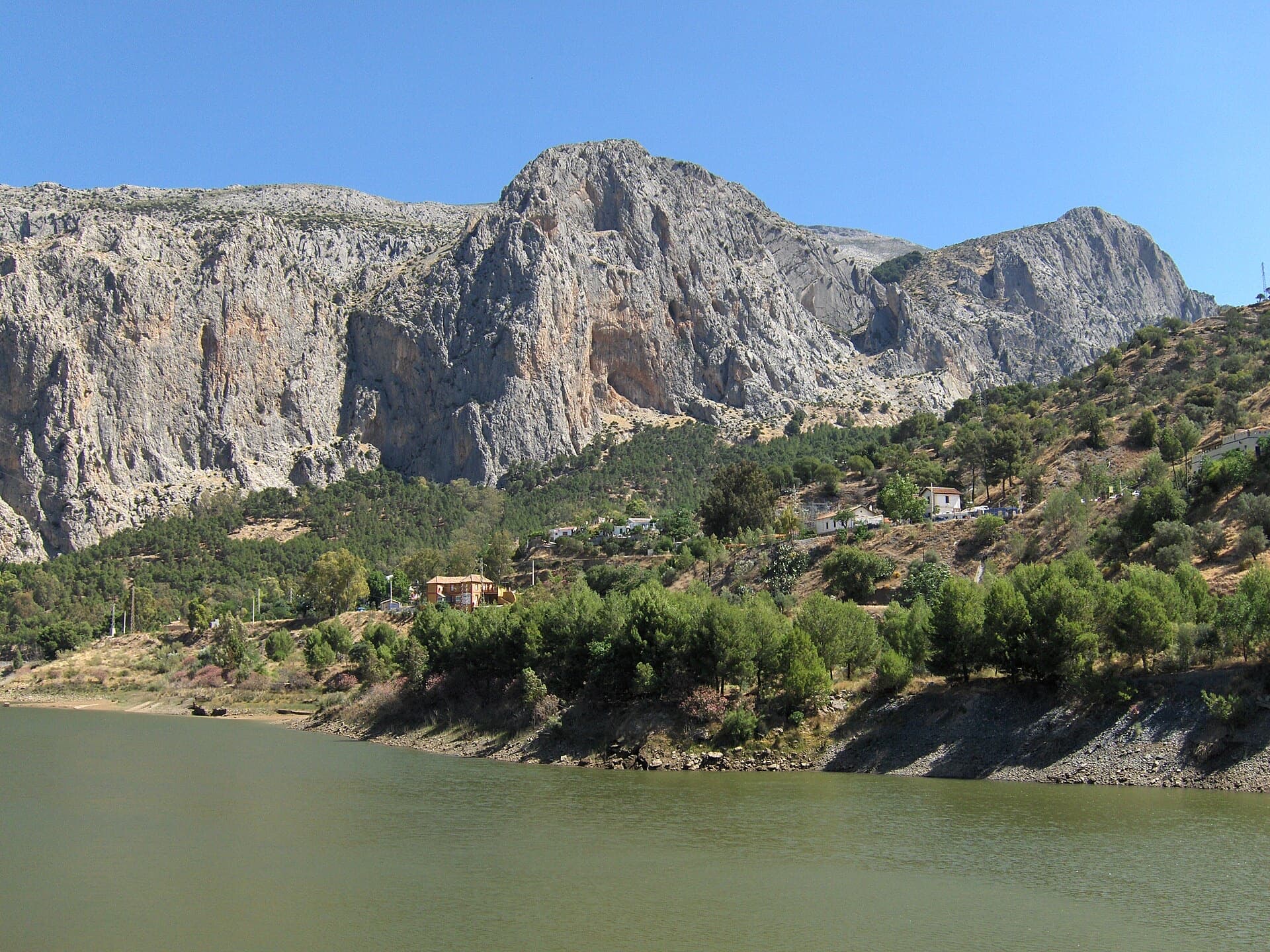
The Frontales cliffs above El Chorro seen across the Tajo de la Encantada reservoir, with the big Poema de Roca cave at the foot of the central dome. Apocalipsis is on this wall; the line is not marked.

Spain · El Chorro

Apocalipsis

Seven pitches up a steep south face at Frontales, sustained, physical and technical on very rough, unpolished limestone. The fifth pitch (6b+) is a thin slab and the sixth (6c) has a strenuous start and a crux on grey rock. It is one of the few 6c multipitch lines here with a clean abseil descent.

6c7 pitches195 m

Compiled from published sources and last verified October 2026. Bolts, anchors and access change. Climbing is dangerous and you are responsible for your own decisions: check a current topo and read the disclaimer.