Multipitch Atlas

Via Pantarei

Monte Colt – Parete San Paolo (Arco) · Arco & Valle del Sarca · Italy

Bail not documentedBolting confidence: medium

Six pitches of steep wall and corner climbing up a pillar, almost never below 6a. Closely bolted and on good rock, so it works as a first 6b+ multipitch. The slightly overhanging slab on the last pitch catches out tired arms.

Hardest pitch
6b+
Pitches
6
Length
170 m
Approach
15 min
Aspect
SE
South-east-facing
Rope
1×55 m or 60 m
walk-off

The route

Overview

A compact sport multipitch on the Parete San Paolo near the path to the hermitage of San Paolo. It starts up a steep wall, follows a pillar by steep corners and finishes on the pillar itself. Both sources praise the bolting, which is as close as on a single-pitch crag, and bergsteigen.com says the rock is always very good. Gulliver.it adds that a few sections have loose material and need a little care.

The climbing

Pitch by pitch

Pitches of Via Pantarei
PitchGradeNotes
P16bThe first wall: 6a climbing with a 6b section.
P26b+6a to a short corner with the 6b+ crux of the route.
P35cA corner and an overhang.
P46b6a, then a 6b corner, then 6a again.
P55aThe one easy pitch.
P66bA 6b section on a slightly overhanging slab, then the final arete at 5c. Gulliver.it warns this can feel hard if you have little in reserve.

Getting there

Approach

To the parking

Arco is at the north end of Lake Garda. By car leave the A22 Brenner motorway at Rovereto Sud (Lago di Garda Nord) and drive via Nago to Arco. Buses serve Arco and Dro. Either drive from Arco along the west bank of the Sarca past the campsites to the Gasthof Laterna, or go to Ceniga (a suburb of Dro) and cross the Roman bridge to the car park before the driving ban. The road between the Laterna and the waterworks near the San Paolo hermitage is closed to traffic, so the last part is on foot or by bike.

On foot · about 15 min

About 15 min. From the start of the access path to the hermitage (Eremo di San Paolo), leave it almost at once and take a path left to the wall. Follow the foot of the wall past a signpost stone until the path drops briefly and comes back to the rock. The start is here: 'Pant' is carved into the trees and there is a block with a bolt stud without a hanger. The route Themis is 6 m to the left; Porci con le Ali is about 20 m right and clearly higher.

Map of the walk-in

  • Route base
  • Parking

Loading map

The point marks the base of the route.

Coordinates · route base

45.94390, 10.89950

Parking

45.94799, 10.90055

Parking marked on bergsteigen.com

Point from bergsteigen.com touren/klettern/via-pantarei-parete-san-paolo-arco

For your phone or watch

Download GPX

Contains the route point and parking. Opens in most mapping apps and GPS watches.

Points are compiled from published sources, with the precision stated above. They were not surveyed on the ground: check them against a current topo.

Getting down

Descent

On foot, about 30 min. From the top take the path that goes right along the wall until it meets the descent trail, and follow that back down to the road and the parking.

Retreat

Bailing off the route

Bail not documented

Retreat is not documented. The normal descent is on foot and neither source describes the belays or an abseil line. The route is short (six pitches) and closely bolted.

Retreat from
Not known.
Point of no return
Not documented. With bolts at crag spacing, aiding to the top is a realistic alternative to retreating from the upper pitches.
Carry
Maillons or old karabiners in case you need to lower off bolts; abseil hardware at belays is not confirmed.
Basis
Inferred from the route factsNo source mentions retreat; inferred from the bolt spacing and walk-off descent.

Partly inferred from the route facts

Safety

Hazards

  • Some loose material in places (gulliver.it); keep a helmet on and watch for parties below, as the wall is popular.
  • The road along the base is closed to cars between the Laterna and the waterworks.

Sun and weather

Conditions

South-east to east facing, base at about 110 m. Morning sun; best in spring and autumn. Bergsteigen.com gives 2 h for the climb.

Usual season · Mar to May, Sep to Nov

Sun on the wall · SE-facing

Working out the sunlit hours for this month.

  • January: not yet worked out
  • February: not yet worked out
  • March (usual season): not yet worked out
  • April (usual season): not yet worked out
  • May (usual season): not yet worked out
  • June: not yet worked out
  • July: not yet worked out
  • August: not yet worked out
  • September (usual season): not yet worked out
  • October (usual season): not yet worked out
  • November (usual season): not yet worked out
  • December: not yet worked out

Sun on the wallDaylight, wall in shade● Usual season

Estimated from the wall's aspect only. Ignores surrounding terrain, gullies and the wall's exact shape. Clock times are local to the wall (Central European time), for the 15th of each month.

Climate figures for Arco & Valle del Sarca are not available yet

What to carry

Gear

13 quickdraws, two slings and a single rope of 55 m or more (bergsteigen.com lists a 50 m rope in the fact box and 55 m in the gear text). No nuts or cams. Helmet.

Checklist

Quickdraws
13
Rope
1×55 m or 60 m (walk-off)
Helmet
One each
Maillons or spare karabiners
To leave behind if you retreat

Derived from the route data; check it against a current topo

From climbers

Reader reports

Reader reports are not being collected yet. Until they are, check a current topo and the local club or guidebook publisher for recent changes to Via Pantarei.

Worth knowing

Tips

  • The obligatory grade is about 6a (gulliver.it) or UIAA 6/6+ (bergsteigen.com), so the cruxes can be rested or pulled through.
  • The topo is also available at the Red Point shop in Arco according to gulliver.it.

Open questions

Where sources disagree

  • Length: 170 m (bergsteigen.com) against 180 m (gulliver.it).
  • Grade: UIAA 7 (about 6b/6b+) on bergsteigen.com against 6b+ on gulliver.it; these agree.
  • Rope: bergsteigen.com lists 1×50 m in its summary and 55 m in the gear text.

Provenance

Sources

Same area

More in Arco & Valle del Sarca

All routes in Arco & Valle del Sarca
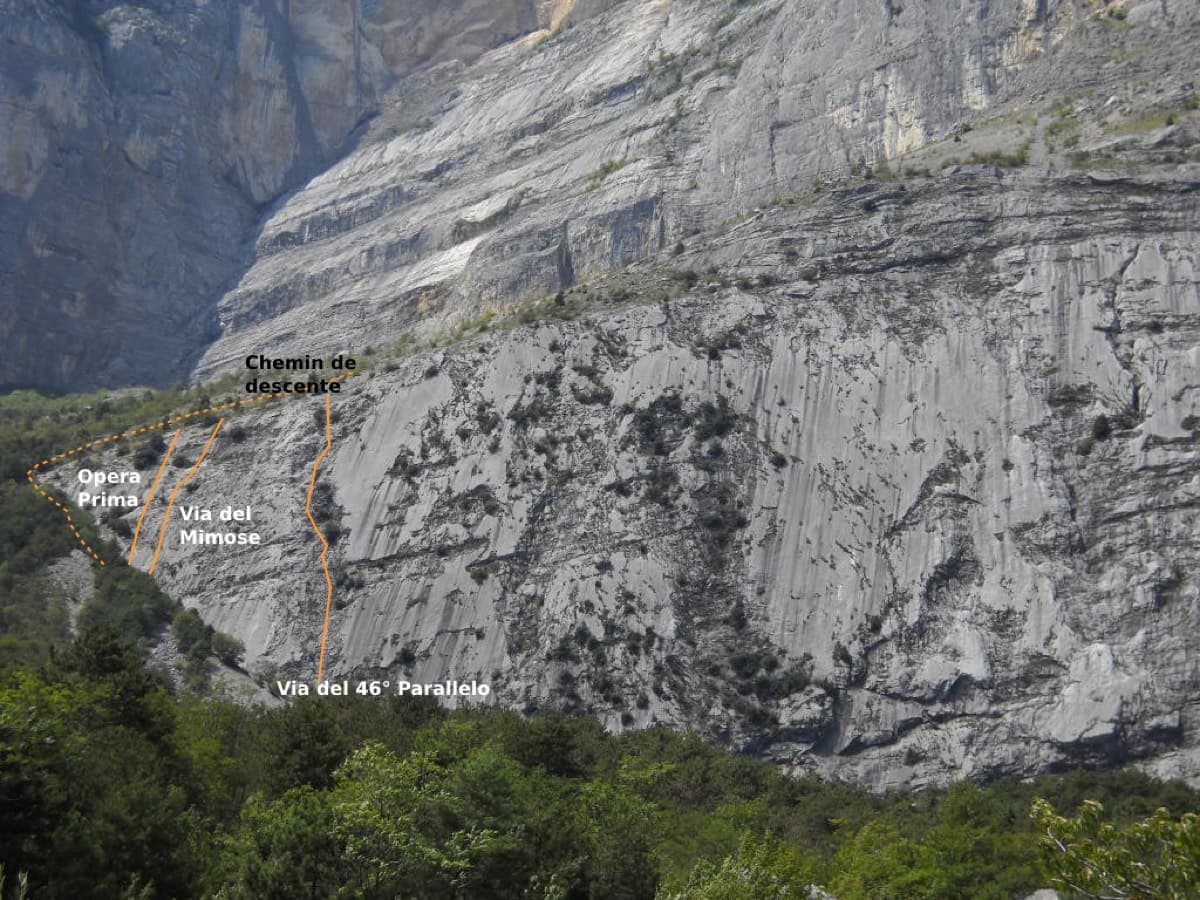
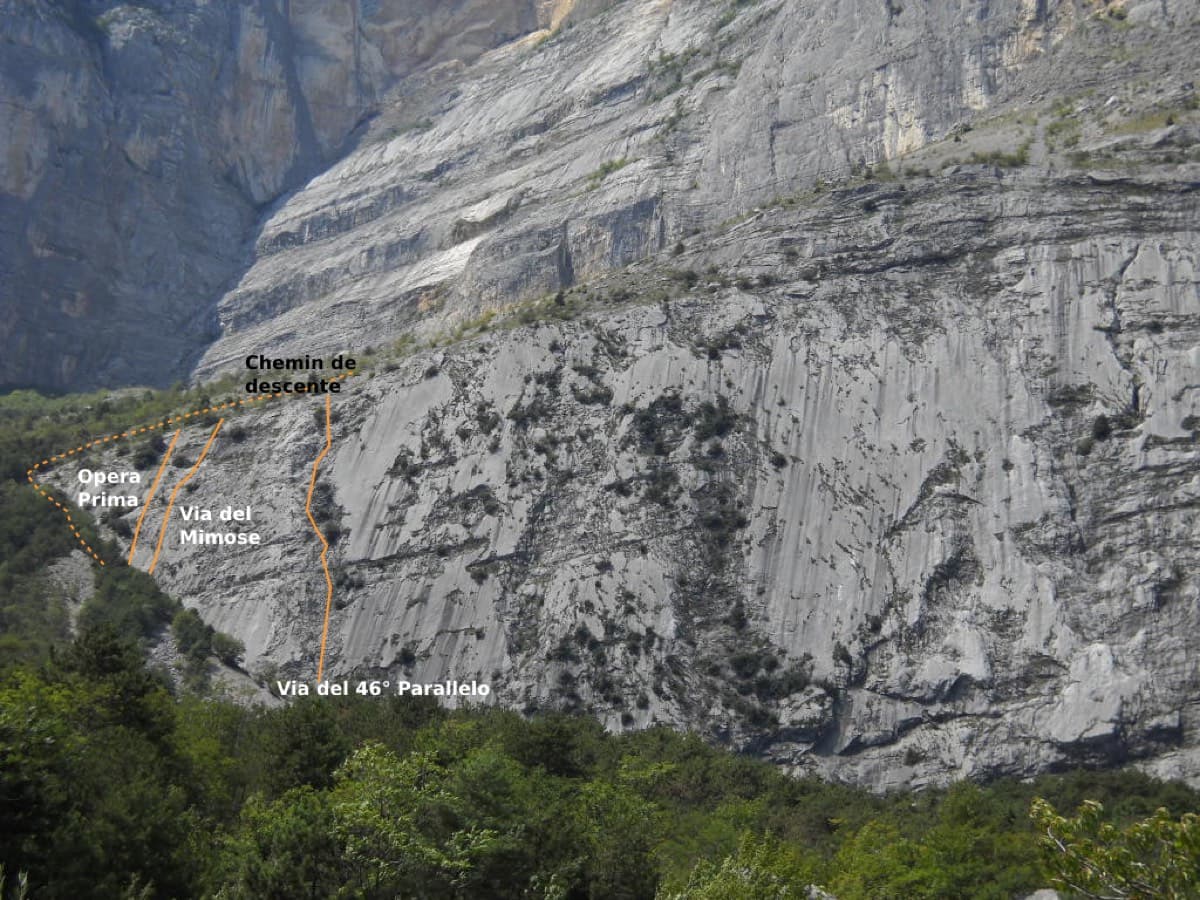
The Parete Zebrata (Placche Zebrate) above Dro, with the lines of three other routes at its left end marked

Italy · Arco & Valle del Sarca

Rita

This is the archetypal long, easy Arco slab, first climbed in 1971. It wanders up the lower bands and then improves into a superb water-worn chimney system in the upper half. It is very polished and very busy, so start early. Original grade 6- UIAA per bergsteigen.com; gulliver gives 5c max.

5c16 pitches400 m

Read the cautions
No photo yet

Italy · Arco & Valle del Sarca

Orizzonti Dolomitici

A succession of short walls and slabs separated by ledges, with the first two pitches shared with Amazzonia. The crux is a single 5c/6a move just below the P5 belay. It's a relaxed, well-protected outing above the Sarche gorge.

5c10 pitches250 m

The Parete Zebrata (Placche Zebrate) above Dro, with the lines of three other routes at its left end marked

Italy · Arco & Valle del Sarca

Man-Ilia

An easy, relaxing sport route on low-angle Zebrate slabs, trending left to right to join Cane Trippa at the fifth belay. It's an excellent first multipitch. Gulliver gives UIAA III / II–III / IV / IV–IV+ for the first four pitches, converted here.

5b6 pitches240 m

No photo yet

Italy · Arco & Valle del Sarca

Via Roberto

Eight sustained pitches up the wall opposite the Laterna restaurant, rarely easier than 6a. The crux is a short overhanging wall on pitch 5 that can be pulled through on the bolts. Less cleaned than its neighbours, with some broken rock on pitch 6.

6c+8 pitches220 m

Around 6b+ · about 6 pitches

Similar elsewhere

Looking down the lower part of Via Manuela on Rujičin kuk, August 2019

Croatia · Dabarski kukovi (Velebit)

Via Manuela

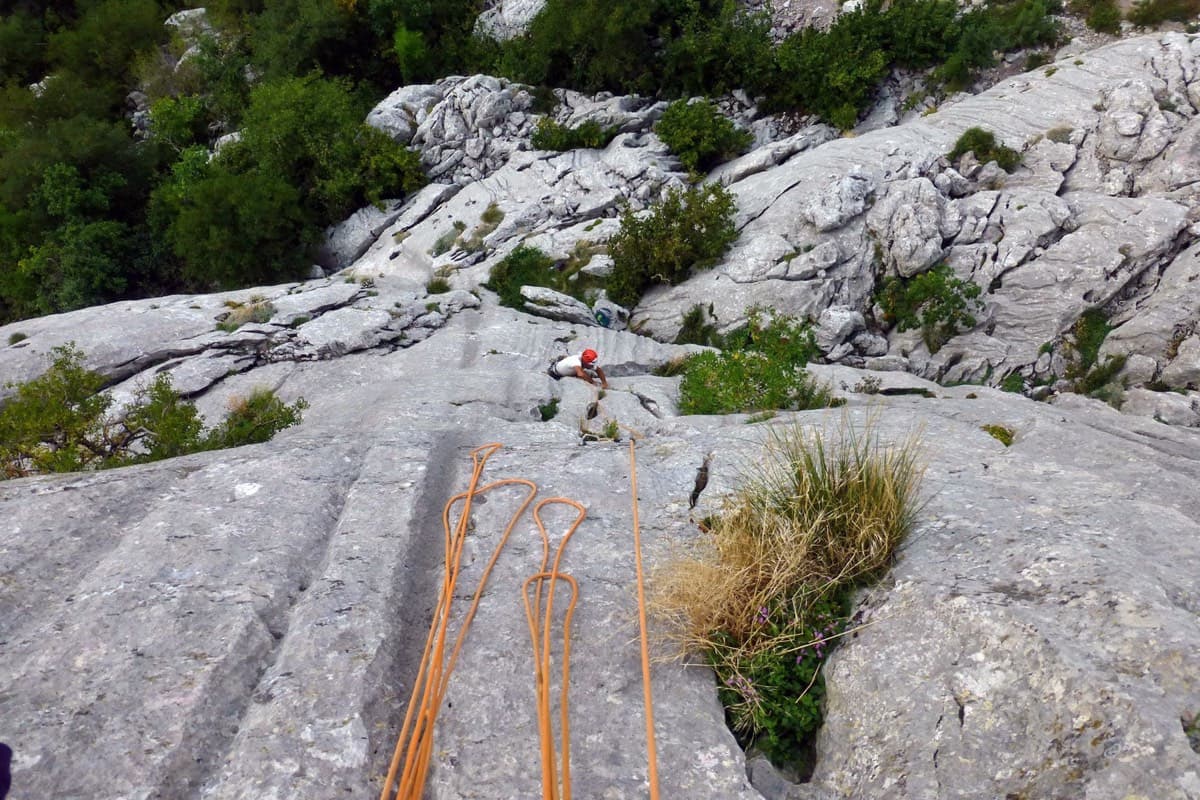
Four steep and technical pitches of 6a to 6b+ followed by two easy ones up the water-runnelled top of Rujičin kuk. The hard climbing is on compact, less featured rock than Paklenica and relies on footwork, including two delicate traverses. A quiet inland crag that is far cooler than the coast in summer.

6b+6 pitches145 m

Read the cautions

The south-east face of Pedra Longa with the line of Cromosomi Corsari and its belays marked

Italy · Sardinia

Cromosomi Corsari

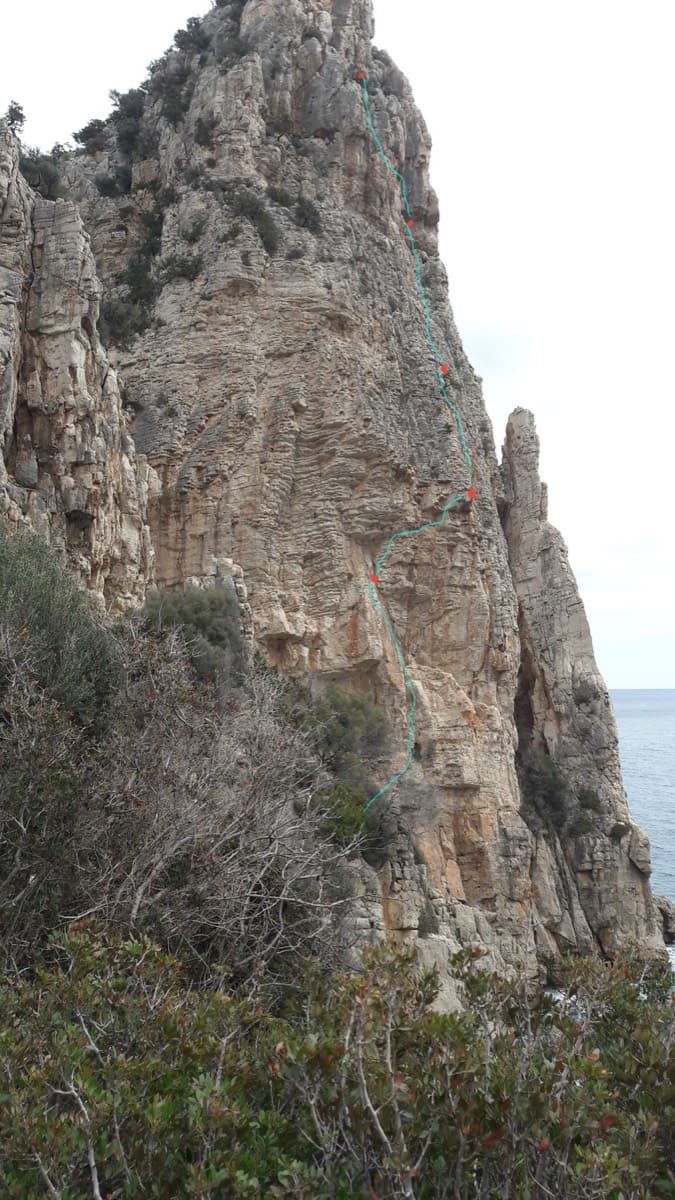
A sea-level start reached by abseil, then seven short pitches up the seaward face of Pedra Longa. The third pitch is a wildly exposed traverse above a line of roofs; two easy pitches on rock that needs care lead to a technical 6b and 6b+ finish on grey slab.

6b+7 pitches175 m

No photo yet

Austria · Ötztal

Caipirinha

A mix of slabs and steep, juggy passages in the Sonnenblume sector, mostly around 5b to 5c+. The one hard move is a small roof on pitch 4 (6b+), which goes easily on aid.

6b+5 pitches170 m

Climbers on the grey limestone of Freedom, Karayalak Towers, as the morning mist clears

Turkey · Aladağlar

Freedom

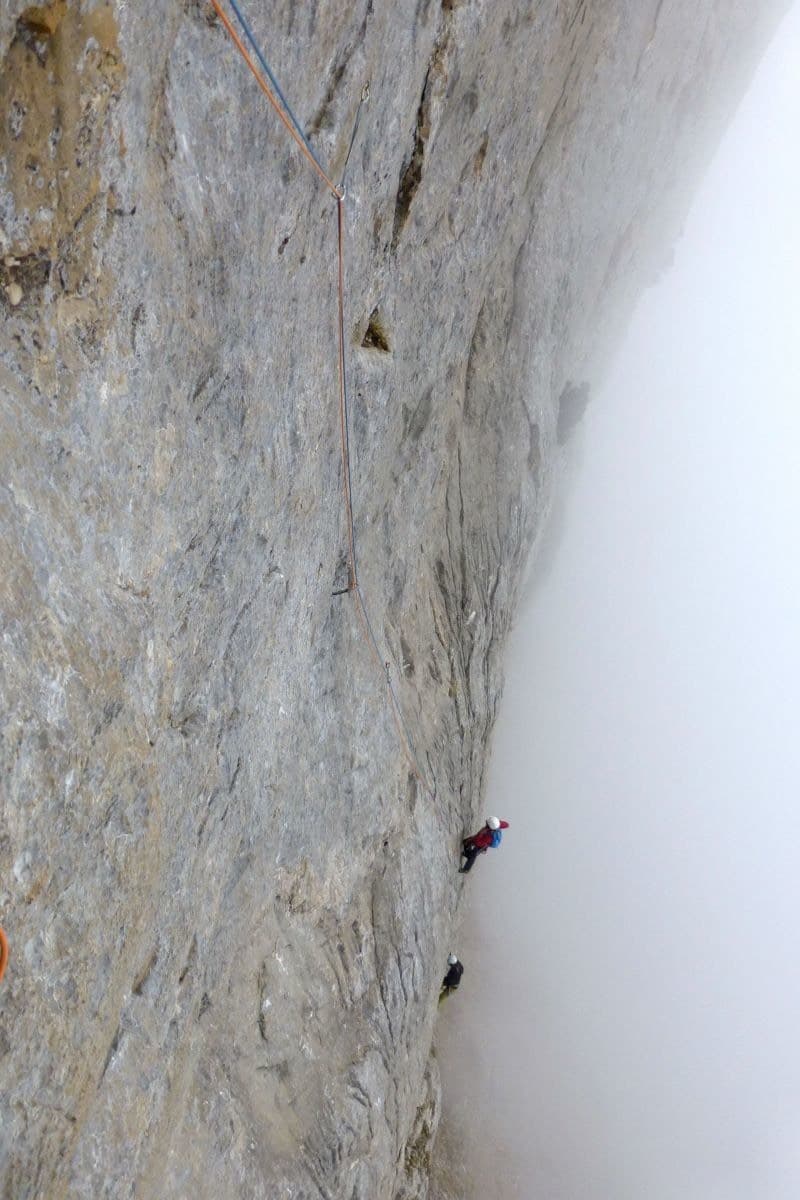
Often named as the best route in the massif: seven even pitches of 6a to 6b+ that move from delicate slabs and giant flutings through a steep, rough wall to mountain-style ground at the top. The 6b pitches are no harder than the 6a ones, but the bolts are far enough apart to keep you thinking.

6b+7 pitches235 m

Read the cautions

Compiled from published sources and last verified October 2026. Bolts, anchors and access change. Climbing is dangerous and you are responsible for your own decisions: check a current topo and read the disclaimer.